
The Thread of Time
A Tale of Lost Moments and Second Chances

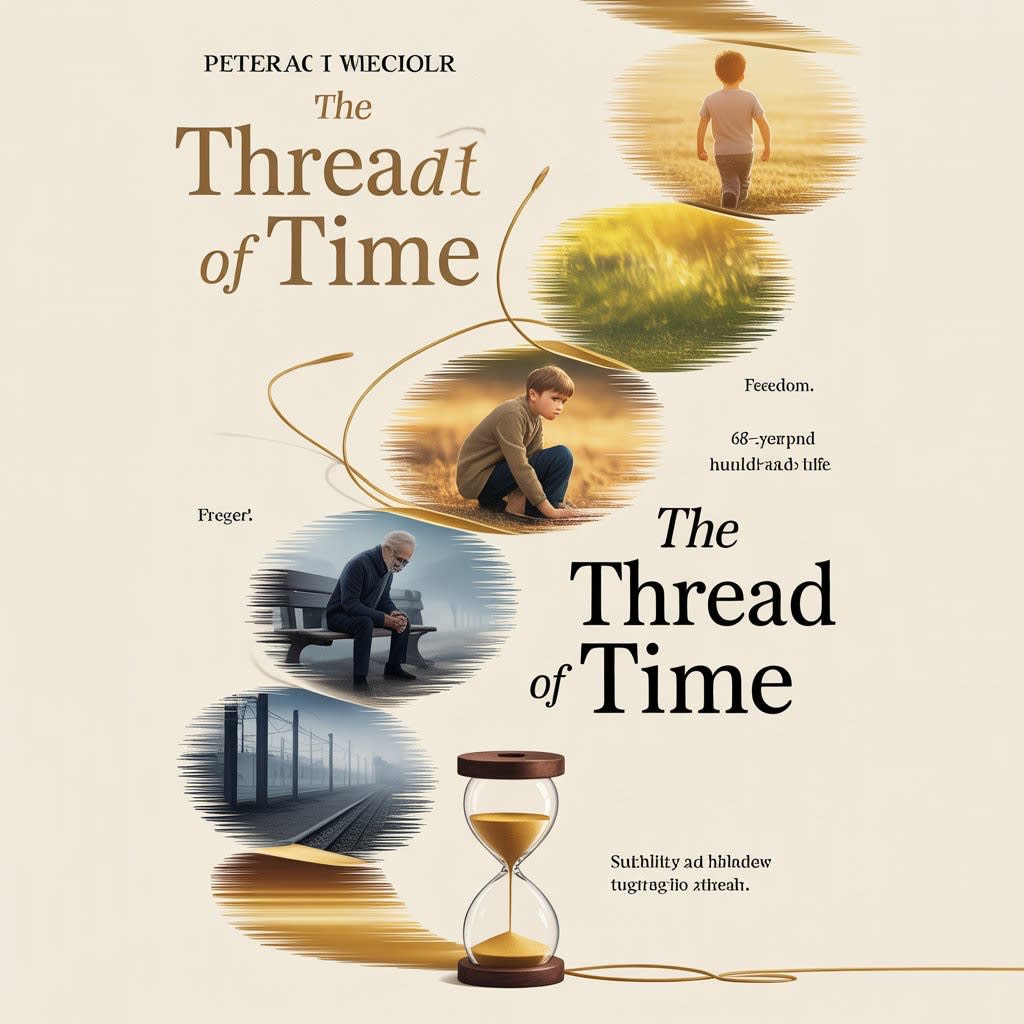
This is Peter's story, the story of Peter from Eastern Europe. Peter was eight years old and lived in a small village in Eastern Europe. His parents were landowners and prosperous, and Peter was their only child. He was handsome, intelligent, and well-mannered. Peter was the most remarkable child in the village, except for one flaw—what was that flaw? Before I get to that, let me tell you, this isn’t just Peter’s story; it’s actually the story of all of us. How is this story our story? To understand that, we must first hear Peter’s tale.
Peter had just one flaw—he was a victim of "daydreaming." He would sit with his eyes open and dream. He didn’t live in the present moment; he would either take time forward or backward. Often, while sitting in class, he would imagine himself as a handsome twenty-year-old young man. He would see himself riding a horse, spurring it on, and the horse would start conversing with the wind. Drifting in his imaginary world, Peter would sometimes fight wars, sometimes reach a princess’s palace, sometimes kidnap a queen and ride away with her on his horse, galloping through valleys, mountains, forests, and plains, feeling the enemies’ horses chasing him. Sometimes, he would become Robin Hood, robbing the rich and distributing among the poor, and sometimes he would even imagine himself as the Pope, standing on the balcony of the Vatican with the whole world gathered below to catch a glimpse of him. He thoroughly enjoyed this game of moving time forward and backward. He would play it for hours. In the world, there was no greater player of this game than Peter. His desire was to learn how to control time—to move it forward or rewind it whenever he wished. He carried this wish with him all the time.
Behold the will of God—one day, Peter was passing through the forest when he tripped, fell, and lost consciousness. When he opened his eyes, he saw an old woman leaning over him. This old woman was Time herself. Time asked Peter about his greatest wish in life. Peter said, "I wish to move time forward or backward whenever I want." The old woman laughed and replied, "Foolish child! Time is a river—it flows forward, not backward. I can only teach you how to move forward in time." Peter agreed. The old woman gave him a ball with a thread hanging from it. She told him, "This thread is as long as your life. However much you pull it out, that much further you will move in time." Peter was delighted. The old woman left. Peter pulled the thread slightly—*trrrrr, trrrrr*—a sound echoed, and Peter moved ten years forward. He was now an eighteen-year-old handsome young man, striding on the heels of youth, with beautiful women watching him from their balconies.
Peter began enjoying his youth. He noticed his parents growing older, the wise and elderly villagers passing away, and the village expanding. He stayed in this timeframe for a few months until boredom set in. Then he took out the ball, pulled the thread, and moved another ten years forward. He was now twenty-eight. The carefree days of youth were over—he wanted to settle down. His parents had grown old and frail. Their lands were being sold, horses auctioned, and savings spent. Servants were leaving. Peter tried finding a job but failed due to lack of education. He attempted business but suffered losses due to inexperience, laziness, and recklessness. He even ventured into politics but failed there too. His frivolous past caused friends to drift away. Now, he wandered the village aimlessly, cursing his purposeless life. Soon, Peter grew tired of this phase too. He took out the ball, pulled the thread, and became thirty-eight. His life had now settled. His hair was thinning, temples graying, and a slight pain lingered in the back of his neck. He had married Rita, a girl from the neighborhood, and had two small children. His mother had passed away two years ago, and his father was now disabled, confined to a wheelchair. The grand mansion and farmhouse were gone—they now lived in a small house. His wife made pickles and chutneys, which he sold in the market. In the evenings, he would sit at the village pub. That was life now.
Panicking, Peter yanked the thread hard—this time, he moved twenty years forward. He was now fifty-eight. His children had grown up and moved to the city. The house had shrunk further. His wife, Rita, suffered from kidney failure and lived with a bag attached to her stomach. All the old neighbors had passed away. The village had turned into a town, constantly bustling with noise. He had once slipped in the bathroom and fractured his hip. Though the bone healed, his gait became uneven—he now limped slightly while walking. His elder son occasionally sent money from the city, allowing them three meals a day. When no money came, they boiled potatoes to survive. The house would plunge into darkness by evening, with only the sounds of their coughs echoing through the night. Terrified of this phase, Peter took out the ball and pulled the thread again. He was now sixty-eight. His wife had passed away, the house was sold, and he lived in an old people’s home. All friends, relatives, and acquaintances were dead. The radio had been replaced by TV, and television was now transitioning to the internet. His lungs often filled with fluid, and phlegm clogged his throat. He was almost immobile. He rarely felt hungry, but when he did, food was scarce. If he got food, his missing teeth made it hard to eat. If he managed to eat, digestion was a problem. If digestion worked, constipation followed—and constipation was more agonizing than hunger. Life had become dreadful, even nightmarish.
Peter would spend entire days sitting at the railway station. He wanted to read books, but his failing eyesight stood in the way. He wanted to listen to music, but his ears no longer worked. He wanted to reminisce about the past, but his memory failed him. One day, while sitting at the railway station, Peter asked himself, *"Peter! What was the most glorious time of your life?"* Instantly, the image of his eight-year-old self flashed in his mind. He realized—the most magnificent time of his life was when he used to run through fields, forests, and valleys, back when shadows of worries and sorrows had not yet darkened his days. Tears welled up in Peter's eyes. With trembling hands, he pulled the thread one last time. A *tick* sound echoed—and the thread snapped.
Now, he stood at the head of his own grave. The grave was old, crumbling, and desolate. It seemed to speak through its condition: *"No one has visited me in ages. No one has come to my headstone. Not a single flower has been offered upon me."* Peter let out a sob—and his eyes snapped open. He was still sitting in the forest, the ball in his hand, and the old woman standing before him, smiling.
Peter handed the ball back to her and asked, *"What is time?"* The old woman laughed and said, *"Time is today. Time is the present moment. Before today, there is regret, and after today, there will be longing."* Peter then asked, *"And what is life?"* She replied, *"Life is about enjoying today—just today, just this present moment. Those who sit in today trying to fix yesterday or dreaming of tomorrow are the greatest fools. A person cannot fix yesterday, nor can they control tomorrow. They can only fix today, live it right, and enjoy it. You are an eight-year-old boy today. Next year, you will be nine. No matter what you do afterward, you can never return to being eight again. So rise and enjoy your eighth year. Do not waste yourself in dreams—because whether you become Robin Hood or King Lear, their stories all end in desolate graves. In this world, both the past and the future die. Only today remains alive. So live in the living—and you will always remain alive."* The old woman laughed and vanished, taking the ball with her.
Peter stood up and began running through the valley. He was now enjoying his eighth year.
About the Creator
Mian Abbas Khan
I am currently pursuing an MPhil in English,Passionate article writer skilled in crafting clear, engaging, and SEO-friendly content. Experienced in diverse topics, committed to quality, research, and meeting deadlines.
Keep reading
More stories from Mian Abbas Khan and writers in Education and other communities.
Billion-Dollar Ethics
Mars is the world's largest chocolate manufacturer. The company's headquarters is located in Mount Olive, New Jersey, with 150,000 employees and an annual revenue of $50 billion. It produces 30 types of chocolates sold worldwide, with Europe being its biggest market due to its European-inspired taste. Founded in 1932 in the UK, the company initially crafted chocolates tailored to European palates before relocating to the U.S., though it retained its flavor traditions. Mars has factories across the globe, including one in the Netherlands that supplies Europe. The business was thriving—owners and workers were content, profits were steady, salaries and benefits increased, and taxes were paid promptly. But in 2016, a minor incident shook this 91-year-old company to its core.**
By Mian Abbas Khan6 months ago in Humans
The Importance of Strong Leadership in IT and Cybersecurity Teams
In today’s rapidly evolving digital landscape, IT and cybersecurity are no longer support functions—they are central to business success and resilience. With growing threats, complex infrastructures, and constant technological change, these departments face intense pressure to perform at the highest levels. At the heart of their performance is a critical factor that often determines whether a team succeeds or struggles: strong leadership.
By Keith Brautigama day ago in Education
The Future of Entrepreneurship: Key Trends Shaping the Next Decade
Entrepreneurship is entering an exciting new era. As technology advances and societal needs shift, business owners must stay adaptable to thrive. The next decade promises transformative change, and understanding the trends shaping entrepreneurship is crucial. Here are the key trends shaping the future of entrepreneurship and how they will impact entrepreneurs and their businesses.
By Greg Warnockabout an hour ago in Education


Comments
There are no comments for this story
Be the first to respond and start the conversation.