
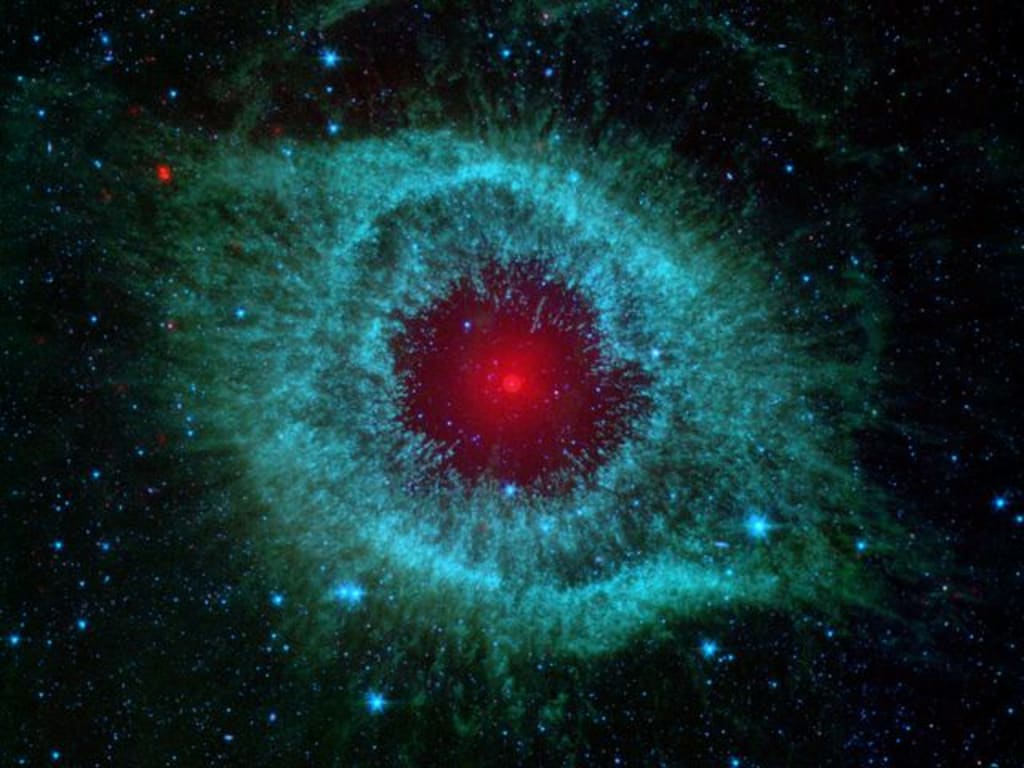
In our exploration of the universe's history, we've uncovered the remarkable story of star formation and the elements that make up our cosmos. But now, we turn our attention to a critical aspect of this cosmic drama: what happens inside a star, from its birth to its inevitable end. Yes, stars do meet their demise, and the nature of this celestial "death" is dependent on the star's mass. So, let's delve into the lifecycle of different kinds of stars, which will equip us to comprehend the next 13 billion years of the universe's development.
The Stellar Timeline: Millions and Billions of Years
The lifespan of any star, from its inception to its final breath, spans millions or even billions of years. To these celestial giants, our human existence appears as but a fleeting moment. The path a star follows in its lifecycle primarily hinges on its mass and the amount of matter collected and collapsed to form the star. The central driving force behind this entire process is gravity.
The Genesis of Stars: From Hydrogen and Helium
Every star originates as a colossal cloud of gas and dust, often spanning a few light-years across. Initially, these clouds are primarily composed of hydrogen and helium, remnants from the universe's earliest moments following the Big Bang. Under the relentless pull of gravity, these particles draw together, compressing into smaller volumes, heating up as they do so.
These rising temperatures are essential because, as per the laws of physics, compressing matter into smaller spaces leads to increased heat. In the case of stars, only when matter becomes incredibly hot can the atomic nuclei within it collide with enough energy to overcome electromagnetic repulsion and fuse. This fusion releases massive amounts of energy, according to the famous equation E=mc².
The amount of matter gathered during this process serves as the star's fuel and plays a significant role in determining its lifetime and ultimate fate. Mass is the key player in this cosmic tale.
The Life of a Low-Mass Star
A low-mass star, ranging from just a few times the mass of Jupiter to roughly our Sun's mass, undergoes a gradual transformation. It begins as a yellow or red main sequence star, primarily fusing hydrogen into helium in its core, sustaining its steady size, temperature, and luminosity for billions of years. As hydrogen reserves deplete, the star evolves into a red giant, burning its remaining hydrogen faster and expanding as it does so.
When almost all the hydrogen is exhausted, the star's core contracts and heats to fuse helium into carbon and oxygen, ushering in a new source of fuel. The star goes through various stages, pulsating and changing size and temperature until the helium is exhausted.
Once the core is predominantly composed of carbon and oxygen, with just a shell of helium and another of hydrogen, the star enters the asymptotic giant branch. It expands rapidly, eventually ejecting its outer layers and leaving behind a tiny, extremely hot core, about the size of Earth. This remnant will gradually cool and contract, becoming a white dwarf, while the ejected outer layers form a planetary nebula, making their material available for future star formation.
The Fiery End of High-Mass Stars
In stark contrast to their low-mass counterparts, high-mass stars burn their fuel more rapidly due to their greater mass. These stars live a short but intense life. Once their core's hydrogen reserves are depleted, they evolve into red giants and continue fusing heavier elements into elements like carbon, oxygen, neon, and silicon. The core eventually becomes primarily composed of iron nuclei, an element that doesn't release energy through fusion.
In an awe-inspiring spectacle, these massive stars meet their fiery end in a colossal explosion known as a supernova. This cataclysmic event generates immense energy, forming elements heavier than iron, such as nickel, copper, and gold. The remnants can vary depending on the core's mass: neutron stars form if the core is below a certain threshold, while black holes emerge if the core's mass surpasses this limit.
A Glimpse into Neutron Stars and Black Holes
Neutron stars are incredibly dense objects, containing the mass of the core of the star, packed into a space roughly the size of a city. A teaspoon of neutron star material would weigh an astonishing ten million tons. In contrast, black holes are even more enigmatic. These gravitational powerhouses warp spacetime to such an extent that not even light can escape, rendering them invisible. All we can detect are the effects of their immense gravitational pull.
The outer layers of a star, which have been ejected during a supernova, create vibrant nebulae filled with heavy elements. The core's remnants become either a neutron star or a black hole, depending on its mass.
Conclusion: A Universe of Cosmic Drama
The universe is a stage where the cosmic drama of stars unfolds, with each star following a unique narrative guided by its mass. The lifecycle of stars is a mesmerizing journey from birth to explosive end, creating and distributing elements essential for the cosmos. Black holes, those mysterious entities, beckon further exploration, inviting us to peer into the heart of darkness.
In our next chapter, we'll delve deeper into the intriguing realm of black holes, uncovering their secrets and unraveling the profound mysteries they hold. Stay tuned for a captivating journey into the enigmatic heart of these cosmic behemoths.
About the Creator
Sagar Gurung
I'm student love to do research and know about new stories, news, mystery
Keep reading
More stories from Sagar Gurung and writers in Education and other communities.
Birth of Stars
For millennia, stars have been a source of wonder and inspiration. Their radiant glow in the night sky has captivated humans, poets, and scientists alike. Yet, the road to becoming a star is a journey as astonishing as the stars themselves. It is a complex and beautiful cosmic dance that begins with nothing more than hydrogen, the relentless force of gravity, and the patient passage of time. In this blog post, we will delve deeper into the extraordinary process of star formation, which showcases the intricate interplay of these cosmic elements.
By Sagar Gurung2 years ago in Education
Effective App Site Design: Tips & Best Practices
In today's digital age, an engaging and effective app site design is crucial for capturing and retaining user interest. The right design not only showcases your app but also enhances user experience, making it crucial for converting casual visitors into loyal users. This article explores various aspects of app site design, from UI design ideas to responsive layouts, and provides actionable tips to help your app stand out.
By nandbox support4 days ago in Education
Best Month to Travel to Barcelona Based on Climate and Events
Choosing the ideal time to explore this vibrant Mediterranean city depends on weather preferences, cultural interests, and the type of experience travelers hope to enjoy. Barcelona offers sunny beaches, historic neighborhoods, and famous festivals year-round, but certain months make for especially memorable visits.
By Juan Monteverdeabout 5 hours ago in Education
Our Song
Evening has given way to night. Gently, I settle next to you on the comfortable, old love seat and reach for your hand. You snatch it away, again. It cuts me to the quick, but I hide the pain, understanding that the reaction is but part of your demented state. Since the accident, your presence here in our cozy home has been clouded by a haze I can't see. Nevertheless, I feel the frigidity of your expressions and it serves as an excruciating reminder of the immeasurable distance between us.
By Dana Crandell6 days ago in Fiction


Comments
There are no comments for this story
Be the first to respond and start the conversation.