
THE SPHINX ONE OF THE MYSTERY OF EGYPT PART 1
THE ORIGINS OF THE SPHINX

Ancient Egypt, with its awe-inspiring structures like the Great Pyramids and the enigmatic Sphinxes, has long fascinated historians, archaeologists, and the general public alike. However, over the years, many misconceptions and misunderstandings have surrounded these ancient monuments. Renowned podcaster Joe Rogan and his guests have recently shed light on the hidden truths about the Sphinxes, prompting further investigations into their origins and age. In this article, we will follow Joe Rogan's journey as he uncovers the terrifying truths about these iconic Egyptian Sphinxes.
Reopening the Avenue of the Sphinxes:
Recently, Egypt reopened the 1.7 Mile Long Avenue of the sphinxes in Luxor, flanked by over 1,000 Sphinx and RAM statutes. This lavish ceremony, attended by Egyptian President Abdel Fattah el-Sisi, rekindled the nation's connection with its rich historical roots. The Avenue of the Sphinxes was discovered in 1949 during excavations in front of Luxor Temple, but there is another Sphinx in Egypt that garners even more attention—the Great Sphinx of Giza.
Exploring the Great Sphinx of Giza:
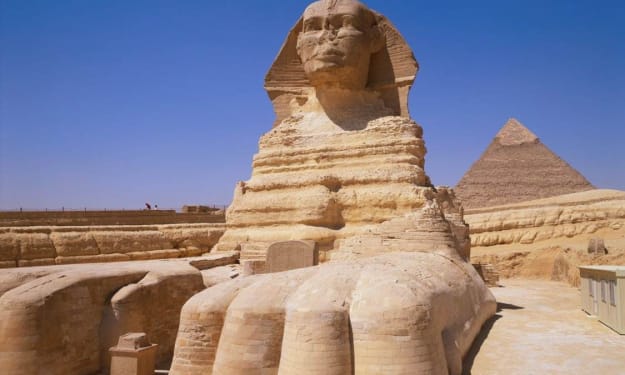
Joe Rogan invites renowned Egyptologist Professor Robert Shock to discuss the origins and age of the Great Sphinx of Giza. Shock presents evidence that challenges the conventional scientific consensus, suggesting that the Sphinx is much older than previously thought. While mainstream Egyptologists disagree with this theory, Shock's findings are intriguing and deserve further investigation.
The Sphinx: A Guardian and Symbol of Power:
Throughout ancient Egyptian, Asian, and Greek mythology, the Sphinx is depicted as a creature with a lion's body and a human head. It played a significant role as a spiritual guardian in ancient Egypt, often portrayed with a pharaoh headdress. Various Sphinx statues, including those of female pharaoh Hatshepsut, have been found in different temples and tomb complexes.
The Mystery of the Great Sphinx's Name and Perception:
The term "Sphinx" comes from Greek mythology, created centuries after the statue's alleged construction, leaving the original name and perception of the Great Sphinx during the Old Kingdom uncertain. Legend has it that Prince Tuthmosis, son of Pharaoh Amenhotep II, dreamed of the statue, leading to its restoration and becoming a symbol of royalty and the power of the sun.
The Great Sphinx's Journey Through Time:
Over the centuries, the Great Sphinx suffered erosion and deterioration due to weather conditions, human actions, and neglect. French and Egyptian archaeologists conducted extensive excavations to uncover the statue from its sandy tomb and preserve it. However, the Sphinx continues to deteriorate due to environmental factors like wind, humidity, and pollution.
The Age of the Great Sphinx: A Debate:
While there is a scientific consensus that the Great Sphinx was built during the Old Kingdom, estimates of its age vary significantly. The most widely accepted theory dates it to Pharaoh Khafre's reign around 2600 BCE, based on hieroglyphic texts. Some scholars argue that the Sphinx served a celestial purpose, channeling the power of the Sun and other gods to resurrect the soul of Pharaoh Khafre.
Professor Robert Shock's Controversial Discovery:
Professor Robert Shock, a geologist, challenged the mainstream dating of the Sphinx and proposed that the monument's Core Body dates back to an earlier period, around 5000 BCE or even to the end of the last ice age, approximately 10,000 BCE. Shock's seismic studies and geological evidence support his theory of heavy weathering caused by rainfall rather than wind or other factors.
Support and Criticisms of Shock's Theory:
Shock's findings garnered both support and criticisms from geologists and Egyptologists. Some questioned the seismic data and proposed alternative explanations for the weathering patterns. Shock's colleague, Graham Hancock, even suggests that the Sphinx's alignment with the constellation Leo could push its date back further to 10,450 BCE.
Conclusion:
The Egyptian Sphinxes remain a captivating mystery, evoking wonder and curiosity among those who seek to understand their true origins and age. Joe Rogan's exploration, along with the groundbreaking research of Professor Robert Shock and others, continues to shed light on these enigmatic structures. As debates persist, future discoveries may yet reveal more hidden truths about these ancient marvels, providing a deeper understanding of one of the world's oldest civilizations.
About the Creator
Keep reading
More stories from Jesus International outreach ministry Wisdom Centre and writers in Education and other communities.
Tomb Of Cleopatra Just Discovered In Egypt Reveals Truth About The Pyramids
The fabled queen of ancient Egypt, Cleopatra, has remained an enigma for thousands of years, and her final resting place even more so. But sixteen hundred years after she died, could researchers have found a clue that will not only lead to her tomb but Marc Anthony's as well? Almost 20 years after research first began, archaeologists may have done just that. Join us as we learn more about the clues that are leading archaeologists closer to Cleopatra's final resting place.
By Jesus International outreach ministry Wisdom Centre3 years ago in Education
Twenty Years of Medical Experience: Knowledge That Will Redefine Future Healthcare
Medicine has changed profoundly over the last two decades. Scientific breakthroughs, digital innovation, and evolving healthcare policies have reshaped how medical professionals diagnose illnesses, treat patients, and manage healthcare systems. Conditions that were once difficult to detect or treat now benefit from advanced imaging, improved medications, and minimally invasive procedures. These developments have significantly improved survival rates and overall patient outcomes.
By Yousuf A. Gaffar, M.D6 days ago in Education


Comments
There are no comments for this story
Be the first to respond and start the conversation.