
The Silent Highway Within: A Deep Dive into Our Blood Vessel Network
Unveiling the Secrets of Our Lifeblood Highways: A Look at Cutting-Edge Vascular Research
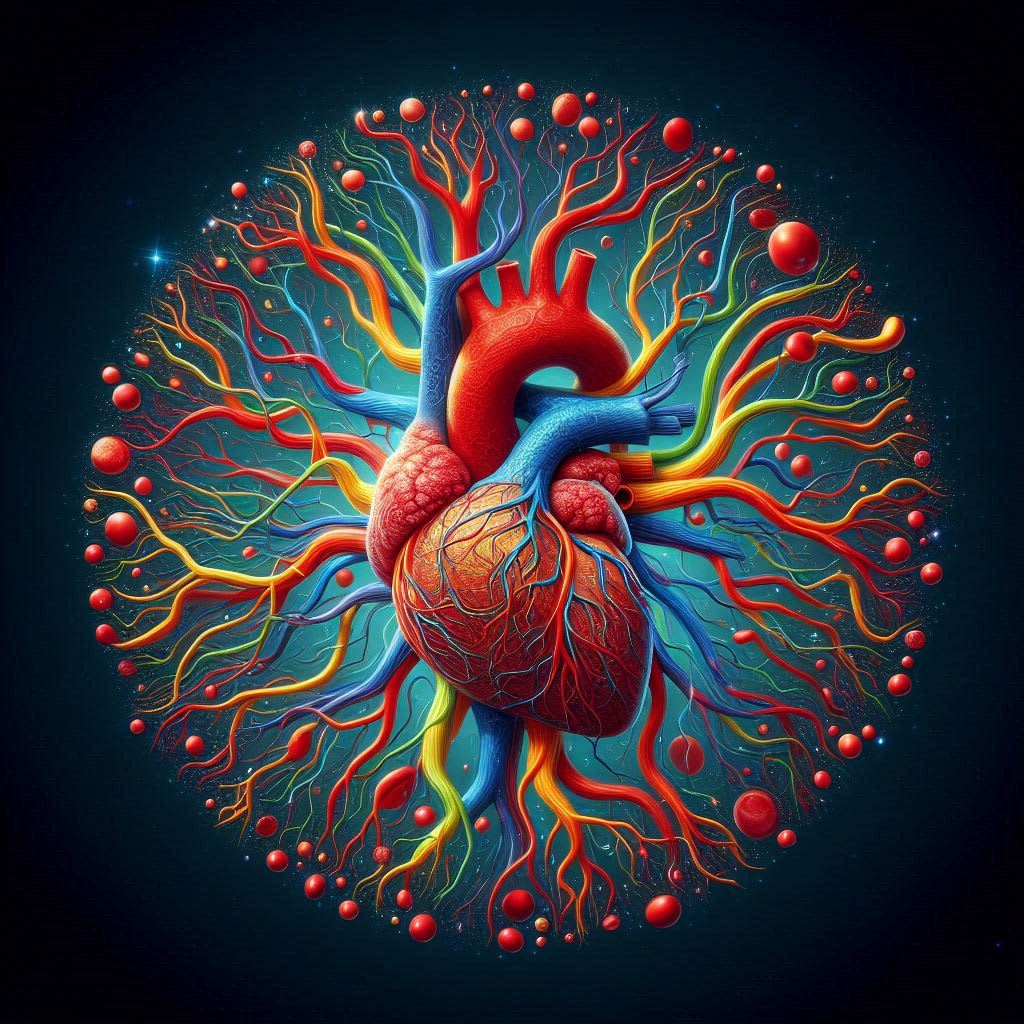
The Silent Highway Within: A Deep Dive into Our Blood Vessel Network
Imagine a complex network of highways crisscrossing a vast city, delivering vital supplies to every corner. This intricate system, silent yet essential, is remarkably similar to our vascular system - a network of blood vessels that plays a critical role in keeping us alive and thriving. Within these vessels flows the lifeblood – a constant stream of oxygen, nutrients, and waste products on the move, ensuring every cell receives what it needs to function. But the magic of blood vessels goes beyond simple transportation. The lining of these vessels, made up of specialized endothelial cells, acts like a control center, influencing everything from blood pressure to immune response.
However, when this intricate system malfunctions, the consequences can be devastating. Vascular dysfunction is linked to a staggering number of diseases, affecting nearly 1 in 3 adults globally. According to the World Health Organization, heart disease, stroke, and peripheral arterial disease (PAD) – all rooted in vascular dysfunction – are the leading causes of death worldwide.
Understanding how blood vessels grow, repair themselves, and respond to injury holds immense potential for improving human health. Researchers around the world are actively unraveling the mysteries of this vital network, and exciting breakthroughs are constantly emerging. This article delves into the fascinating world of vascular research, exploring various areas where scientists are pushing the boundaries of knowledge and developing innovative therapies.
Taming Unwanted Growth: Can We Outsmart Tumors?
Cancer, a disease hallmarked by uncontrolled cell growth, often exploits our blood vessel network to its advantage. Tumors hijack the process of angiogenesis, the formation of new blood vessels, to fuel their expansion and spread throughout the body. Currently, medications called anti-angiogenic drugs are used to treat some cancers by blocking a growth factor called VEGF (Vascular Endothelial Growth Factor). While these medications offer some benefits, their effectiveness has been limited.
Researchers like Dr. Joan Stearns-Joanna of Tufts Medical Center are at the forefront of exploring new avenues. Her team is investigating the role of a different signaling molecule called Notch, which plays a crucial role in not just blood vessel growth but also the communication between endothelial cells and surrounding tissues. By understanding how Notch signaling influences angiogenesis, researchers hope to identify new targets for anti-angiogenic therapy, potentially leading to more effective and specific treatments for various cancers.
Beyond Repair: Unveiling the Causes of Aortic Aneurysms
Aortic aneurysm, a condition where a section of the aorta (the main artery leaving the heart) weakens and bulges outward, poses a significant health risk. If left untreated, a ruptured aneurysm can be fatal. Scientists like Dr. Christine Seiler of the University of Pennsylvania are dedicated to understanding the root causes of this condition. Their research has shed light on the complex interplay between various factors, including genetics, inflammation, and lifestyle habits, that contribute to the development of aortic aneurysms. This newfound knowledge has opened doors for potential therapeutic interventions. Early detection and minimally invasive surgical techniques, like stent grafts, offer hope for patients suffering from aortic aneurysms.
The Battle Within Our Arteries: Combating the Silent Threat of Atherosclerosis
Atherosclerosis, often referred to as hardening of the arteries, is a major contributor to heart disease and stroke. This condition involves the formation of plaque, a fatty buildup within the inner lining of arteries. Over time, plaque buildup narrows the arteries, restricting blood flow and increasing the risk of cardiovascular events.
While preclinical research using animal models has provided valuable insights into the mechanisms of plaque formation, translating these findings to human disease can be challenging. Dr. Eric Perakslis of the University of California, San Francisco, highlights the limitations of solely relying on animal models and emphasizes the need for personalized medicine approaches. By analyzing individual genetic variations and lifestyle factors, researchers are paving the way for more targeted prevention and treatment strategies for atherosclerosis.
A Beacon of Hope: Regenerating the Damaged Heart
One of the most devastating consequences of a ruptured atherosclerotic plaque is a heart attack. This event starves a portion of the heart muscle of oxygen and nutrients, leading to cell death and heart dysfunction. In the most severe cases, heart failure can result.
The field of cardiac regeneration offers a glimmer of hope for treating heart attack patients. Researchers like Dr. Doris Taylor of the Cedars-Sinai Medical Center are exploring the promising possibilities of using stem cells, the body's own repair system, to regenerate damaged heart tissue. This cutting-edge research, drawing from advancements in stem cell biology, developmental biology, and tissue engineering, holds the potential to one day help hearts heal themselves after a heart attack.
Conclusion
The world of vascular research is a vibrant and ever-evolving field. By delving deeper into the intricate workings of our blood vessels, scientists are unlocking new avenues for treating a wide range of diseases, from cancer and heart disease to chronic wounds and even dementia. This ongoing research holds immense promise for improving human health and extending lifespans. As we continue to unravel the secrets of our blood vessel network, new possibilities emerge on the horizon. One exciting area of exploration is the potential of gene therapy to address genetic mutations that contribute to vascular diseases. Additionally, the development of bioprinting technology offers the potential to create personalized blood vessel grafts for patients undergoing surgery. The future of vascular research is brimming with potential, and the discoveries made today have the power to shape a healthier tomorrow for generations to come.
About the Creator
suren arju
Hi there! I'm Suren, your startup guide. Entrepreneur, writer, dreamer - I share insights, tips & stories to fuel your startup journey. Ready to explore, learn & win together? Join me & let's redefine how we launch, learn & leap!
Keep reading
More stories from suren arju and writers in Education and other communities.
Unlocking Potential: How Occupational Therapy Empowers Children with Autism
Unlocking Potential: How Occupational Therapy Empowers Children with Autism Imagine a world where everyday sights, sounds, and textures feel overwhelming. Social interactions are confusing, and simple tasks like getting dressed seem like insurmountable challenges. This is the reality for many children with Autism Spectrum Disorder (ASD). But there's hope. Occupational therapy (OT) can be a powerful tool, unlocking a world of possibility and empowering children with ASD to thrive.
By suren arju2 years ago in Education
Was Alexander the great really that great?
Order, order! Who do we have on the stand today? Alexander... the Great, eh? Well, what’s so great about him? Your honor, the better question is, what's not great about him? He was the King of Macedon and considered a living demigod by Egyptians and Greeks alike. He conquered Persia when it was one of Earth's largest empires. And he was a thoughtful student of Aristotle, creative enough to untie the impossibly tight Gordian knot by cutting it in half. The Gordian knot is a myth— just like the countless other stories invented to enhance Alexander’s legend!
By Munesh Yadav4 days ago in Education
The 1793 Chain Cent: America's First Large-Scale Copper Coin
Holding a 1793 Chain Cent is like holding the first argument of a new nation. More than just America’s first mass-produced penny, this coin is a piece of history that sparked public debate, fueled by a design many found utterly wrong. Its story—from a chaotic mint to a collector's dream—explains why it remains one of the most coveted pieces in all of American numismatics. This guide will walk you through its turbulent birth, teach you to spot the tiny detail that can mean a fortune, and explain what truly makes it valuable.
By Laura Bennett7 days ago in Education
Center Stage with Paul Stewart
*** I'm keen to republish the interviews I did for my series with Vocal creators. It's been a few years and I thought it might be nice to revisit these wonderful conversations. I'll be releasing them one at a time for a few weeks/months.
By Heather Hubler4 days ago in Interview




Comments
There are no comments for this story
Be the first to respond and start the conversation.