
The Significance of Music in Early Childhood Development
Does Music really have a role to play in the Development of Young Children?

It's no secret that most preschoolers enjoy listening to and participating in music. Not only does it entertain them, but studies have shown that creating a musically enriched environment helps children develop important musical skills.
Music holds a vital place in our culture, permeating various social and educational activities in our daily lives. We encounter music on television, in movies, during governmental ceremonies, birthday celebrations, and religious worship. Given its importance, it's no wonder that parents instinctively use music to express joy, engage their children, and promote a sense of calm.
What Children Gain from Musical Exposure
Research conducted in the 1990s revealed that exposure to music from an early age enhances children's speech clarity, vocabulary development, and social-emotional skills. Psychologist Howard Gardner even argued back in 1983 that musical intelligence is as crucial as logical and emotional intelligence. Music has the unique ability to foster a connection between the body and brain, promoting their harmonious collaboration. For example, dancing and moving to music contribute to the development of motor skills, while singing along with a song helps children practice their singing voices. In general, exposure to music aids children in learning the sounds of tones and words.

The Impact of Music on Early Childhood Development
Numerous studies have explored the significance of music in early childhood development since the 1950s. Two widely accepted facts are that children express music differently from adults and that the period from birth to age six is the most critical phase for a child's musical development. Even the youngest toddlers absorb musical tones and instinctively differentiate in frequency, melody, and stimuli. Researchers assert that the early years of childhood are pivotal for learning to discern musical tones and establishing a mental organizational system for memorizing music. Similar to language development, toddlers refine their musical skills through imitation and memorization of rhythms and melodies, such as clapping to a beat and singing in tune. Without this ability, children would struggle to develop their musical skills.
However, the development of musical abilities can be influenced by positive and negative factors. Therefore, it is essential to provide children with sufficient stimulation and exposure to music and musical play to enable them to realize their musical potential. In terms of instruction, one common negative influence on musical growth is when parents lack musical orientation and fail to actively expose their children to music.
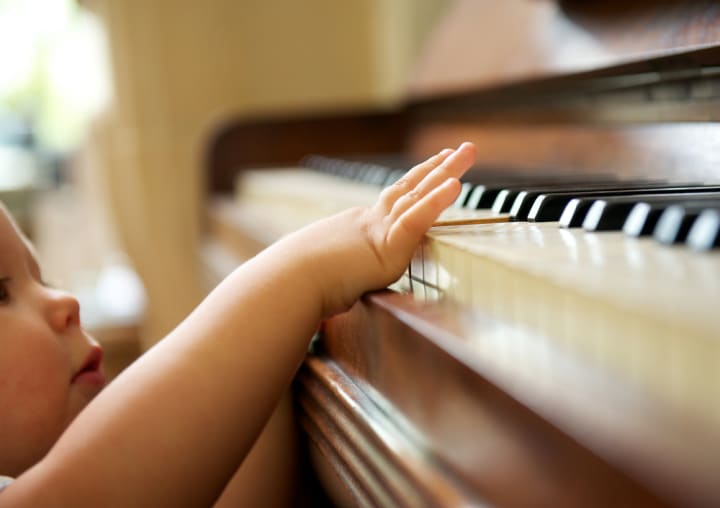
The Crucial Role of Parents in Musical Education
Parents play a pivotal role in expanding their child's musical horizons. Research has consistently shown that children from musically oriented families exhibit significantly greater musical development than those in less musically inclined environments. A study by Kelley and Sutton-Smith provides a clear illustration of this phenomenon. The researchers conducted case studies on the early childhood years of three girls from families with different musical backgrounds. The findings revealed that the family with professional musician parents, as well as the family with non-professional musical engagement, had notable differences in their girls' musical behaviors compared to the family without any musical involvement. The study concluded that a rich musical environment at home enhances a child's exposure to music and improves their musical abilities. Further research also suggests that parents form stronger bonds with their children through shared musical experiences. Thus, music serves not only as a tool for a child's growth and development but also as a means for families to spend quality time together and have fun.
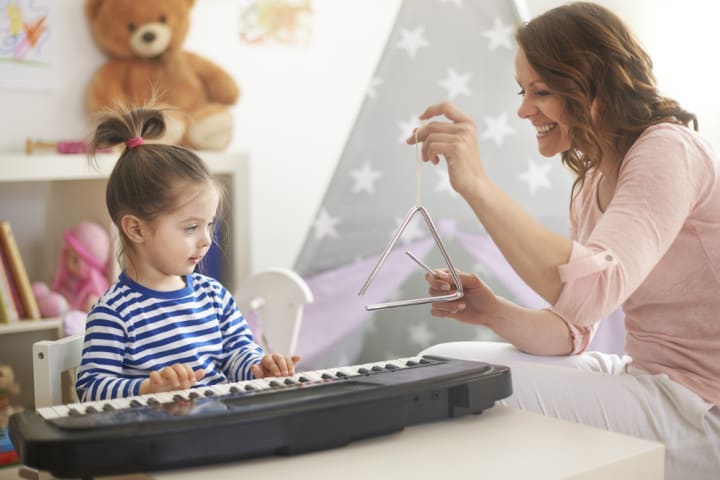
The Grand Finale
Since there are no negative consequences to introducing children to music, parents can engage in this activity with their children as frequently as possible. Although regular exposure to classical music may not result in sudden improvements in ability, it positively impacts a child's rhythm, movement, and social and listening skills in the long run. Moreover, there are numerous short-term benefits. Listening to music can be calming, entertaining, and enjoyable.
About the Creator
Keep reading
More stories from expository and writers in Education and other communities.
How to Enhance Your Running Experience with Music
Music has always been a part of our lives, influencing our daily moods and activities. Whether it’s boosting your motivation during errands, setting the mood for dinner preparation, or providing a pleasant background for some relaxation time, music can make a difference. However, running with music is a personal choice that works for some and not for others.
By expository3 years ago in Education
What should you do if you accidentally cut off your finger
After a long day helping patients in the emergency room, Priya is calmly preparing dinner when her knife slips and cleanly severs her finger. Fortunately, as an ER doctor, she knows exactly how to respond. First, she carefully cleans the wound with a wet paper towel and bandages her finger— making sure not to wrap it too tightly. To manage the pain, she knows not to take ibuprofen, which could interfere with clotting, and instead chooses acetaminophen. Then she gently rinses the severed finger, wraps it in a clean, slightly moist towel, and places it in a cooler while avoiding any direct contact with ice. Finally, she rushes to the hospital, where, fortunately, a skilled hand surgeon is available. Thanks to the clean cut and Priya's quick reaction, the surgeon can begin immediately. They set the bones and secure them with wires before repairing the tendons, nerves, blood vessels, and finally, the skin. The entire procedure is completed in about eight hours, and after a few months of occupational therapy, Priya's hand is fully functional again. This represents the ideal outcome for reattaching a body part. Unfortunately, it’s also extremely rare— and not only because most people aren’t as prepared as Priya. In reality, many complications arise with most accidental amputations. First, there’s the injury itself. Unlike Priya's clean cut, most traumatic amputations happen in car crashes or industrial accidents that cause severe, uneven tissue damage and contaminate the wound in ways that prevent reattachment. Additionally, more than half of all limb amputations in the United States are caused by disease, and limbs removed for medical reasons clearly aren’t safe to reattach. Then comes preserving the limb. When a body part is severed, its blood circulation stops, cutting off oxygen and essential nutrients. Surprisingly, severed tissues can survive for a limited time without these resources. Keeping them cool further slows tissue death, generally giving surgeons a 6-to-12-hour window for reattachment. But once the tissues die, reconnecting them won’t restore function. This narrow timeline is especially difficult for surgeons. Because of the challenges already mentioned, reattachment surgeries are relatively uncommon. As a result, many hospitals lack the tools and expertise needed to perform these time-sensitive procedures. And even when they can, nerve repair remains extremely complex. With perfectly clean cuts, surgeons may attempt to stitch nerves back together directly. When a cut is jagged, they might use nerve conduits— tunnels between nerve ends that allow nerves to reconnect gradually. However, neither these nor any other surgical methods reliably restore full movement and sensation. These limitations make successful reattachment unlikely. Fortunately, medical technology has developed another reliable solution for amputation: prosthetics. Today, prostheses come in many forms designed to replace different body parts. Prosthetic legs perform well for walking and running. Prosthetic arms have long struggled to replicate fine hand movements. However, modern myoelectric prostheses can detect electrical signals from nearby muscles and translate them into more precise movements. Perhaps the most dramatic advancement in prosthetic technology is transcutaneous osseointegration. First successfully performed in 1990, this procedure surgically anchors a metal implant into the remaining bone. Over time, the bone grows into the metal’s surface, creating a permanent connection. These implants extend through the skin and attach to prosthetic devices, solving several common prosthetic challenges. Where traditional prosthetics can feel heavy, a direct skeletal connection makes their weight feel more natural. Osseointegrated prosthetics are also less likely to irritate the skin and can provide more sensation by transmitting vibrations through the implant to the bone. Even with these advances, not everyone chooses to replace or reattach a lost limb. After an amputation, some people prefer to rely on their remaining limbs, with or without the support of mobility aids and other adaptive equipment.Follow for more stories like this.
By Munesh Yadav3 days ago in Education
How Social Media Helps Small Businesses Grow Faster
Small businesses need smart ways to grow without large budgets. Social media offers one of the fastest and most affordable paths. When used well, it helps small brands reach new customers, build trust, and drive steady sales. Growth that once took years can now happen in months.
By Michael Kazma3 days ago in Education
The Devil's Cut
“Comrade, finally you’re awake.” The voice was smooth, sensual. A flickering incandescent bar was all that lit the white, sterile room. All Vladimir remembered was everything going black. He tried to move his arms and found them strapped to the gurney.
By Matthew J. Fromm5 days ago in Fiction


Comments
There are no comments for this story
Be the first to respond and start the conversation.