
The Science of Wound Healing
How Antiseptics Play a Crucial Role
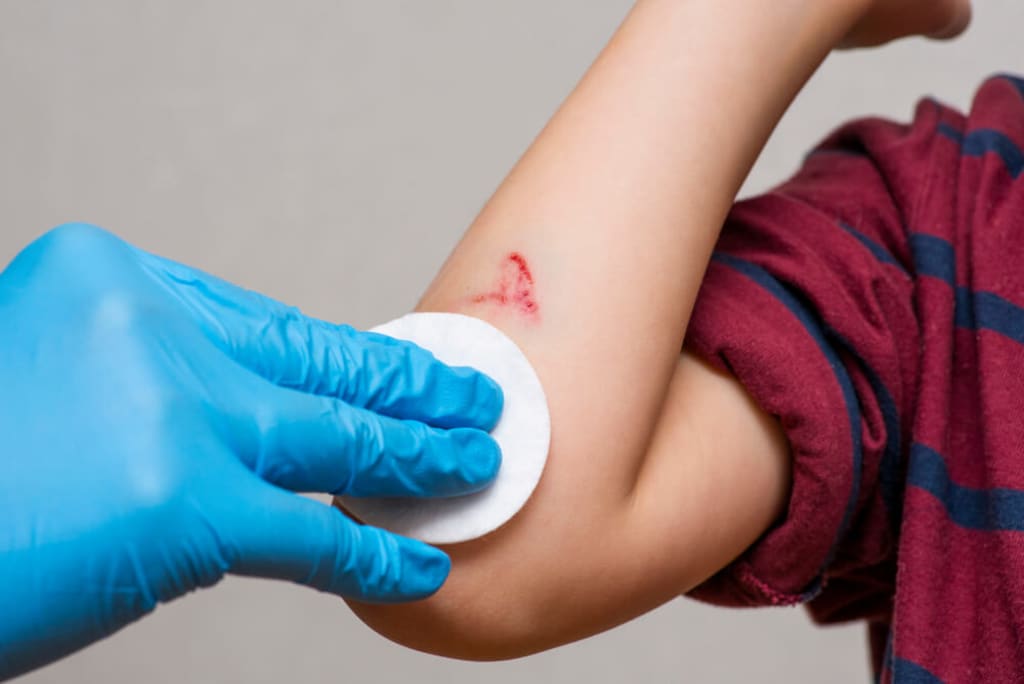
Wound healing is a fundamental biological process that allows the body to repair itself after injury. Effective management of wounds, including the use of antiseptics, is essential for preventing complications and ensuring optimal recovery. This article delves into the intricacies of wound healing and highlights the significant role antiseptics play in this process.
Understanding Wound Healing
Wound healing involves a series of well-coordinated phases:
1. Hemostasis (Initial Response)
Objective: Stop bleeding and initiate the repair process.
Process: Immediately following an injury, blood vessels constrict to reduce blood loss. Platelets aggregate at the site to form a clot, which acts as a temporary barrier and releases signals to initiate the healing process.
2. Inflammation (Days 1 to 4)
Objective: Prevent infection and clear debris.
Process: The inflammatory phase involves the migration of white blood cells, such as neutrophils and macrophages, to the wound site. These cells work to combat pathogens, remove dead tissue, and prepare the area for tissue repair. This phase is marked by redness, heat, swelling, and pain.
3. Proliferation (Days 4 to 21)
Objective: Rebuild and restore tissue integrity.
Process: During this phase, new tissue formation occurs. Fibroblasts produce collagen and extracellular matrix, while epithelial cells migrate across the wound to cover it. New blood vessels form (angiogenesis) to provide essential nutrients and oxygen to the healing tissue.
4. Maturation and Remodeling (Weeks 3 to 2 Years)
Objective: Strengthen and refine the newly formed tissue.
Process: The final phase involves the remodeling of collagen fibers to enhance tissue strength and elasticity. Although the tissue gains strength, it may not fully match the original skin, and some scarring may occur.
The Role of Antiseptics in Wound Healing
Antiseptics are substances used to prevent infection by eliminating or inhibiting the growth of microorganisms. Their role in wound care is critical for several reasons:
1. Prevention of Infection
Mechanism: Antiseptics work by disrupting the cellular structure of bacteria, viruses, and fungi. For example, iodine-based antiseptics like Betadine and alcohol-based solutions kill pathogens by denaturing proteins and compromising their cell membranes.
Benefit: By preventing infection, antiseptics help reduce the risk of complications, such as delayed healing or systemic infections, which can significantly impair the wound recovery process.
2. Reduction of Contamination
Mechanism: Antiseptics clean the wound by removing contaminants and reducing the microbial load. This is essential for minimizing the chances of infection and ensuring a cleaner wound environment.
Benefit: A reduced microbial load accelerates the healing process and contributes to better overall wound management.
3. Supporting the Healing Environment
Mechanism: Some antiseptics also help in maintaining a moist wound environment, which is conducive to faster healing. For instance, modern antiseptics often come in forms that help keep the wound hydrated while providing antimicrobial protection.
Benefit: A moist environment supports cellular migration and tissue regeneration, leading to quicker and more efficient healing.
Types of Antiseptics and Their Applications
Different antiseptics are suited for various types of wounds and scenarios:
1. Iodine-Based Antiseptics
Examples: Betadine (Povidone-Iodine)
Use: Effective against a broad spectrum of pathogens. Ideal for cleaning and disinfecting wounds.
2. Alcohol-Based Antiseptics
Examples: Isopropyl Alcohol, Ethyl Alcohol
Use: Commonly used for sanitizing skin and surfaces. Effective in killing bacteria but can be drying and irritating to open wounds.
3. Hydrogen Peroxide
Use: Often used for initial wound cleaning. It has antimicrobial properties but should be used with caution as it can damage healthy tissue if used excessively.
4. Antiseptic Ointments
Examples: Neosporin (contains Bacitracin, Neomycin)
Use: Applied to wounds to prevent infection and promote healing. Often used for minor cuts and scrapes.
Best Practices for Using Antiseptics
1. Initial Wound Cleaning
Recommendation: Rinse the wound with clean water to remove debris. Use mild soap if necessary. Apply an antiseptic to the surrounding skin rather than directly on the wound to minimize irritation.
2. Application
Recommendation: Follow the instructions on the antiseptic product. For topical antiseptics, apply a thin layer to the wound and cover it with a sterile bandage. Avoid overuse, which can delay healing.
3. Monitoring
Recommendation: Regularly check the wound for signs of infection, such as increased redness, swelling, or discharge. If any of these symptoms occur, seek medical advice promptly.
4. Avoiding Irritants
Recommendation: Use antiseptics that are appropriate for the wound type and avoid those that may cause excessive dryness or irritation.
Conclusion
Betadine Antiseptics play a vital role in wound healing by preventing infection, reducing contamination, and supporting a favorable healing environment. Understanding how different antiseptics work and following best practices for their use can significantly enhance the wound healing process. Proper wound care not only accelerates recovery but also minimizes the risk of complications. Always consult healthcare professionals for guidance on the best antiseptic options and wound care practices tailored to your specific needs.
About the Creator
Analyn
Blogging for people wellness
Striking the Right Balance: Modern Tech and the Human Touch in Harmony
As technology continues to reshape every corner of business and daily life, the balance between innovation and personal interaction becomes increasingly important. Automation, artificial intelligence, and digital communication have allowed companies to operate faster, smarter, and more efficiently. These tools improve productivity and offer consumers greater convenience, transforming how services are delivered and experiences are shaped.
By Ian Schenkel Haliburtonabout 21 hours ago in Education




Comments
There are no comments for this story
Be the first to respond and start the conversation.