
The Role of Assessments in Education: Enhancing Learning and Teaching
Role of Assessments in Education
Assessments are a cornerstone of the educational process, playing a pivotal role in shaping both teaching and learning. They provide valuable insights into students' progress, helping educators tailor their instruction to meet individual needs. At Ecole Globale Schools, we understand the importance of assessments in fostering a conducive learning environment and ensuring academic excellence.
The Importance of Assessments
Assessments help students demonstrate their understanding, skills, and knowledge. They serve as a motivational tool, guiding students through their learning journey and providing essential feedback for improvement.
Guiding Instruction: Assessments provide teachers with crucial information about student learning, enabling them to adjust their teaching strategies accordingly.
Identifying Learning Gaps: By highlighting areas where students struggle, assessments help educators address these gaps and provide targeted support.
Motivating Students: Regular feedback from assessments encourages students to stay engaged and strive for improvement.
Providing Accountability: Assessments ensure that both teachers and students are accountable for the learning outcomes.
Types of Assessments in Education
Diagnostic Assessments
Diagnostic assessments are conducted before instruction begins to identify students' existing knowledge and skills. They help teachers tailor their teaching strategies to address specific learning gaps.
Purpose: To establish a baseline understanding of students' abilities and knowledge.
Methods: Pre-tests, student surveys, and initial observations.
Examples:
Short quizzes on prior knowledge
Student interviews to gauge understanding
Concept maps to visualize students' mental models
Formative Assessments
Formative assessments are ongoing evaluations that provide immediate feedback to both students and teachers. They help in adjusting instructional practices to improve student learning outcomes.
Purpose: To monitor student learning and provide ongoing feedback.
Methods: Classroom activities, observations, quizzes, and interactive discussions.
Benefits:
Real-time insights into student progress
Opportunity for immediate instructional adjustments
Encouragement for student participation and engagement
Examples:
Exit tickets at the end of lessons
Interactive class discussions
Regular short quizzes to check for understanding
Summative Assessments
Summative assessments occur at the end of a unit or course, measuring student learning against predefined standards. They provide a comprehensive overview of student performance and achievement.
Purpose: To evaluate student learning at the conclusion of an instructional period.
Methods: Final exams, end-of-term projects, standardized tests.
Benefits:
Provides a summary of student achievement
Identifies strengths and areas for improvement
Informs future instructional planning
Examples:
End-of-unit tests
Final projects or presentations
Standardized assessments
Alternative Assessments
Alternative assessments include projects, portfolios, and performance tasks. They focus on practical application of knowledge, encouraging students to demonstrate their skills in real-world scenarios.
Purpose: To assess students' abilities through practical application and creative expression.
Methods: Portfolios, presentations, project-based learning, and performance tasks.
Benefits:
Encourages critical thinking and problem-solving
Allows for diverse demonstrations of learning
Provides a comprehensive view of student skills
Examples:
Research projects
Art portfolios
Science experiments and reports
Benefits of Using Multiple Assessment Methods
Using a variety of assessment methods provides a holistic view of student learning. It allows educators to address different aspects of student abilities and create a more comprehensive evaluation process.
Holistic Understanding: Multiple methods capture a fuller picture of student abilities and learning progress.
Targeted Support: Different assessments highlight various learning needs, enabling tailored support.
Balanced Evaluation: Combining formative, summative, diagnostic, and alternative assessments ensures a well-rounded evaluation of student performance.
Creating Effective Assessments
Use Multiple Methods
Incorporate various assessment techniques to capture different dimensions of student learning.
Benefits:
Provides a comprehensive evaluation
Addresses diverse learning styles
Reduces the limitations of a single assessment method
Specify the Objectives
Clearly define the learning objectives and align assessments with these goals.
Steps:
Identify the key skills and knowledge to be assessed
Design assessments that directly measure these objectives
Communicate objectives to students
Eliminate Biases
Ensure assessments are free from biases to provide fair and accurate evaluations.
Strategies:
Use a variety of question types and formats
Regularly review and update assessment materials
Involve multiple evaluators when possible
Involve Students
Engage students in the assessment process to promote self-assessment and peer assessment.
Benefits:
Encourages student ownership of learning
Enhances self-reflection and critical thinking
Provides additional perspectives on performance
Record the Results
The primary objective of assessments is to gather data regarding student performance. The entire assessment point is lost if the results are not recorded for interpretation.
Strategies:
Maintain detailed records of assessment results
Use data to track progress over time
Share results with students and parents to provide transparency
Give Your Opinion
Feedback is a crucial link in the chain of education that instructors often neglect. It gives students a direction to work towards. It engages students to encourage them to overcome their inhibitions and achieve their potential. It helps to build trust between teachers and students, which is imperative for effective teaching and learning.
Strategies:
Provide constructive feedback promptly
Highlight both strengths and areas for improvement
Encourage open dialogue about assessment results
Conclusion
Assessments are essential tools in education, providing critical information about student learning and guiding instructional practices. By using a variety of assessment methods and creating effective evaluation strategies, educators can enhance the learning experience and help students achieve their full potential. At Ecole Globale Schools, we are committed to employing comprehensive and effective assessment practices to ensure the highest standards of education for our students. Through continuous evaluation and feedback, we aim to foster a learning environment that promotes growth, development, and academic excellence.
About the Creator
Keep reading
More stories from Priyangini and writers in Education and other communities.
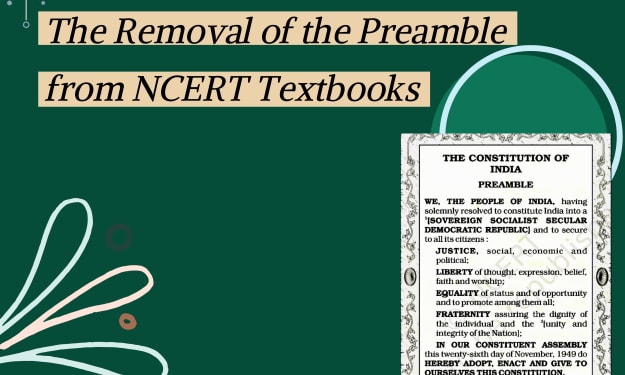
The Removal of the Preamble from NCERT Textbooks: An Educational Perspective
Recent changes in the National Council of Educational Research and Training (NCERT) textbooks have sparked a significant debate. The removal of the Preamble to the Constitution from some Class 3 and Class 6 textbooks has raised questions and concerns among parents, educators, and students. As an educational expert, it is crucial to analyze these changes, understand the rationale behind them, and provide a balanced perspective on their implications.
By Priyangini about a year ago in Education
📢 Raise Your Voice Thread: 01/22/2026
Our “Raise Your Voice Threads” are hosted most alternating Thursdays at 12PM ET to offer creators more avenues to uncover exceptional stories on Vocal. As we are continuously searching for fresh creators and inspiring stories, this thread provides an opportunity to exchange and discuss the stories that have moved and motivated us on Vocal.
By Raise Your Voice by Vocal5 days ago in Resources



Comments (2)
Thanks for sharing
Well written