
The Role of Artificial Intelligence in Industry
introduction, application, challenges, reference

Introduction
Artificial Intelligence, or AI, is changing the way businesses operate, produce goods, and interact with customers in a variety of industries. From manufacturing and healthcare to finance and logistics, AI is reshaping traditional processes, increasing efficiency, and enabling innovation. This assignment explores the role of AI in modern industry, its applications, benefits, and challenges, along with a glimpse into the future of industrial AI.
Applications of AI in Industry
Many industrial applications have benefited greatly from AI's capacity to process vast amounts of data, learn from it, and make predictions. Predictive maintenance is a prominent application. By using sensors and AI algorithms, manufacturers can monitor the condition of equipment in real-time and predict failures before they occur, thereby reducing downtime and maintenance costs (Lee et al., 2018).
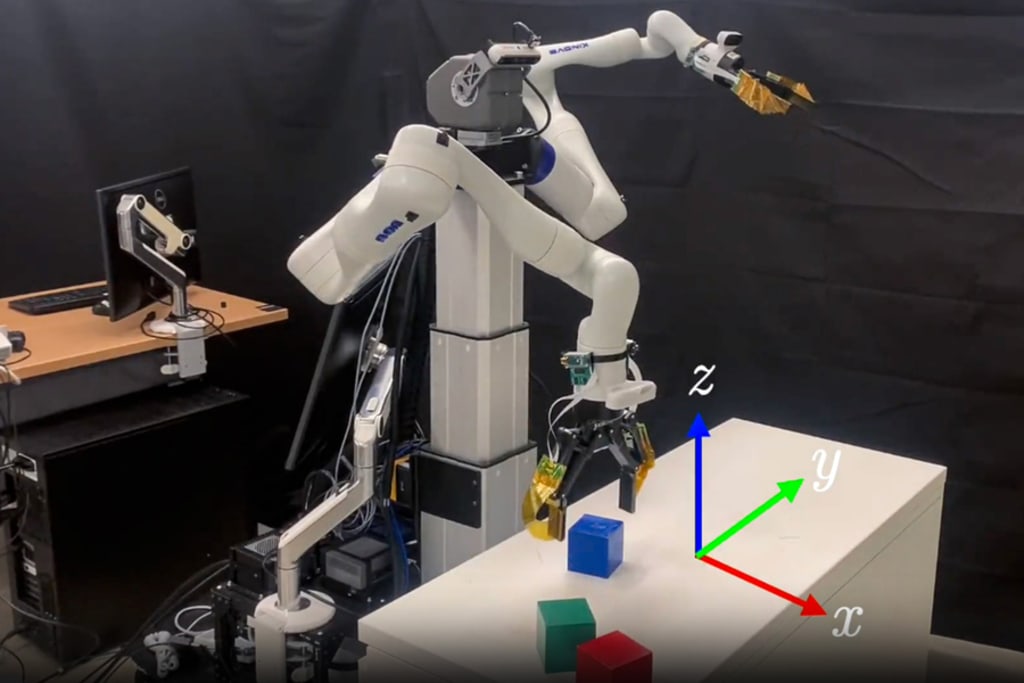
AI-driven robots and automation systems are increasing precision and productivity in manufacturing. These systems can adapt to changes in production lines, identify defects, and even optimize supply chain processes. According to McKinsey & Company (2019), AI has the potential to boost global manufacturing and supply chain management by as much as $2 trillion. The logistics and transportation sector also benefits from AI, particularly in route optimization, warehouse automation, and delivery management. AI is used by FedEx and Amazon to manage logistics more effectively, lowering costs and providing better service to customers (Chui et al., 2018).
AI in Healthcare and Pharmaceuticals
AI is making significant contributions to the healthcare industry, particularly in the areas of personalized medicine, drug development, and diagnostics. Medical images can be analyzed by machine learning algorithms, which can find anomalies and help doctors make more accurate diagnoses. According to Esteva et al. (2017), AI systems can now detect certain types of cancer from imaging data with an accuracy comparable to that of experienced radiologists. In pharmaceuticals, AI accelerates drug discovery by predicting how different compounds will interact with the body, thereby reducing the time and cost involved in bringing new drugs to market. During the COVID-19 pandemic, when AI was utilized to quickly identify potential treatment options and analyze virus structures, this was especially evident.
AI in Finance and Business Operations
Fraud detection, risk assessment, algorithmic trading, and customer service automation are all applications of AI in the financial sector. AI models can detect unusual patterns in transactions, helping prevent fraud in real-time. Natural language processing (NLP)-powered chatbots and virtual assistants provide customer support, lowering operational costs and increasing client satisfaction (Ghosh, 2020). AI is also being used by businesses to analyze data and make decisions. AI tools can analyze market trends, customer behavior, and financial data to help companies make more informed strategic decisions. This enables a more agile and responsive business environment.
Benefits of AI in Industry
The integration of AI into industry brings numerous advantages:
1. Increased Productivity and Efficiency: AI systems are able to work continuously without getting tired, which results in significant increases in output.
2. Cost Reduction: Operational costs can be reduced through the use of predictive analytics and automation.
3. Improved Quality and Accuracy: AI minimizes human error and improves the quality of products and services.
4. Innovation Enablement: AI opens doors to new products, services, and business models that were not possible before.
Challenges and Ethical Considerations
• Job displacement: The loss of human labor as a result of automation is a major concern, despite its benefits, in the industrial sector. AI creates new job opportunities, but it also makes some jobs obsolete, necessitating workforce reskilling.
• Bias and Fairness: AI systems can perpetuate biases present in training data, leading to unfair outcomes in areas like hiring and credit scoring (O'Neil, 2016).
• Data Privacy and Security: As businesses rely on data more and more, they need to make sure that strong data protection mechanisms are in place to stop breaches and misuse.
• Regulation and Accountability: There aren't enough comprehensive frameworks in place to regulate AI use in many industries, which raises questions about accountability and openness.
The Future of AI in Industry
The application of AI in business looks promising. As machine learning, robotics, and quantum computing advance, AI capabilities are anticipated to grow exponentially. Through the Internet of Things (IoT), industries will become increasingly interconnected, with AI acting as the ecosystem's brain. In addition, as AI becomes more explicable and ethical standards advance, its adoption will become easier and more dependable for the general public. Investments in AI research and development will likely increase, and governments will play a pivotal role in creating supportive policies that encourage innovation while ensuring ethical use.
Conclusion
By facilitating innovation, increasing productivity, and reshaping conventional business models, AI is reshaping numerous industries. The difficulties, particularly in the areas of governance, employment, and ethics, are just as significant as the advantages. In order to guarantee that the technology will benefit everyone in society, stakeholders from all sectors must work together on ethical AI deployment as we move toward a world that is becoming increasingly automated and driven by data.
________________________________________
References
Chui, M., Manyika, J., & Miremadi, M. (2018). AI adoption advances, but foundational barriers remain. McKinsey & Company. https://www.mckinsey.com
Esteva, A., Kuprel, B., Novoa, R. A., Ko, J., Swetter, S. M., Blau, H. M., & Thrun, S. (2017). Dermatologist-level classification of skin cancer with deep neural networks. Nature, 542(7639), 115–118. https://doi.org/10.1038/nature21056
Ghosh, I. (2020). How AI is revolutionizing customer service. Harvard Business Review. https://hbr.org
Lee, J., Davari, H., Singh, J., & Pandhare, V. (2018). Industrial AI: Applications with sustainable performance. Springer Nature.
McKinsey & Company. (2019). The future of work in Europe: Automation, workforce transitions, and the potential for inclusive growth. https://www.mckinsey.com
O'Neil, C. (2016). Weapons of math destruction: How big data increases inequality and threatens democracy. Crown Publishing
About the Creator
Ahmad shah
In a world that is changing faster than ever, the interconnected forces of science, nature, technology, education, and computer science are shaping our present and future.
Keep reading
More stories from Ahmad shah and writers in Education and other communities.
AI in Education and Accessibility
Introduction Nearly every industry, including education, is being transformed by artificial intelligence (AI). AI is redefining how students learn and educators teach by enhancing personalization, automating administrative tasks, and creating inclusive environments. Moreover, AI has the potential to make education more accessible to students with disabilities and those from underrepresented groups. AI provides scalable and novel solutions to the accessibility gap as the global demand for inclusive and equitable education grows. This assignment looks at how AI affects education and accessibility, focusing on its uses, advantages, drawbacks, and potential applications. This paper aims to highlight the significant role that artificial intelligence (AI) plays in fostering inclusive learning environments by analyzing existing practices and reviewing previously published research.
By Ahmad shah9 months ago in Education
Effective Mentorship Strategies to Help Clinicians Lead Patient-Centered Healthcare Innovation
Healthcare organizations today face growing expectations to deliver higher-quality care while improving efficiency and patient satisfaction. Innovation is often discussed at the leadership level, yet some of the most valuable ideas originate from clinicians working directly with patients. These professionals understand daily challenges in care delivery and recognize opportunities for improvement that others may overlook. When healthcare leaders actively mentor clinicians, they unlock the potential for meaningful, patient-centered innovation.
By Dr. Janet Chollet3 days ago in Education
A Knight of the Seven Kingdoms Series Review (Season 1)
As one of the biggest properties in fantasy, A Song of Ice and Fire remains immensely popular with audiences. After reaching far into the past with House of the Dragon, a second spin-off was on the cards. A Knight of the Seven Kingdoms serves up a bite-sized slice of action and drama, but it still claims a spot among the best small-screen titles.
By Robert Cain7 days ago in Geeks




Comments (1)
AI's changing industries big time. Predictive maintenance in manufacturing is great. And in healthcare, it's helping with diagnoses. But we also need to watch out for the challenges it brings.