
AI in Education and Accessibility
introduction, review of litrature, application of AI in education, challenge and etics reference

Introduction
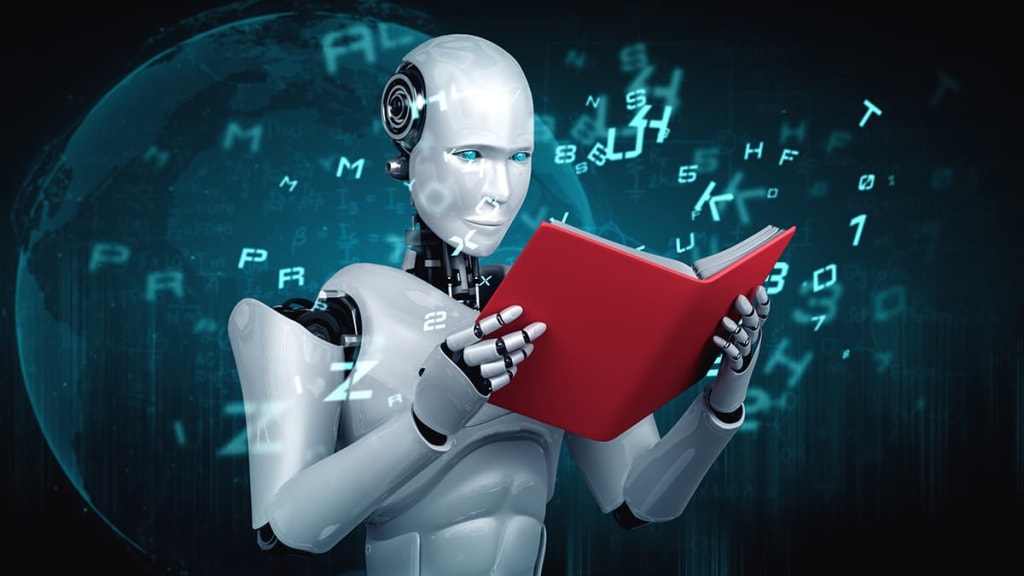
Nearly every industry, including education, is being transformed by artificial intelligence (AI). AI is redefining how students learn and educators teach by enhancing personalization, automating administrative tasks, and creating inclusive environments. Moreover, AI has the potential to make education more accessible to students with disabilities and those from underrepresented groups. AI provides scalable and novel solutions to the accessibility gap as the global demand for inclusive and equitable education grows. This assignment looks at how AI affects education and accessibility, focusing on its uses, advantages, drawbacks, and potential applications. This paper aims to highlight the significant role that artificial intelligence (AI) plays in fostering inclusive learning environments by analyzing existing practices and reviewing previously published research.
Literature Review
Over the past ten years, AI education research has gained momentum. Holmes et al. claim that (2019) AI technologies in education (AIEd) primarily aim to customize educational experiences and improve learning efficiency. Intelligent tutoring systems, adaptive learning platforms, tools for natural language processing, and automated grading systems are among these technologies. According to Luckin et al. (2016), AI makes it possible to move away from a one-size-fits-all model and toward a more learner-centered approach, in which individual differences are taken into consideration and accommodated. This is especially significant when it comes to accessibility. Students with physical, visual, or auditory impairments can benefit from AI-powered tools like speech-to-text and text-to-speech applications (Almalki, 2020). UNESCO (2021) emphasized the necessity of ethically and inclusively integrating AI, ensuring that technological solutions do not exacerbate existing educational disparities. As a result, while the research shows that AI has the potential to change education and make it more accessible, it also raises important questions about equity, ethics, and data privacy.
Applications of AI in Education and Accessibility
1. Personalized and Adaptive Learning
AI systems adjust instruction based on the learning behavior and performance of students in real time. Machine learning algorithms are used by platforms like Carnegie Learning in the United States and Squirrel AI in China to adjust difficulty levels, suggest resources, and provide feedback. Students with learning disabilities like dyslexia and attention deficit hyperactivity disorder (ADHD) benefit most from this adaptive approach because it allows them to learn at their own pace and with content tailored to their specific needs (Chen et al., 2020).
2. Intelligent Tutoring Systems (ITS)
ITS uses artificial intelligence to provide one-on-one tutoring without the use of humans. By providing hints, correcting mistakes, and tracking progress, these systems resemble human tutors. For example, AutoTutor and Knewton are AI-based platforms that provide guided learning paths, particularly in math and science subjects. It has been demonstrated that these systems enhance student outcomes, particularly for those who require additional assistance (VanLehn, 2011).
3. AI for Physical and Learning Disabilities
Natural language processing (NLP), speech recognition, and optical character recognition (OCR) are all examples of AI technologies that contribute significantly to enhancing accessibility. Students with limited mobility can use voice commands to access educational content thanks to voice assistants like Siri, Alexa, and Google Assistant. AI-based transcription tools such as Otter.ai provide real-time captions and notes for deaf or hard-of-hearing students.
Additionally, AI-powered screen readers like NVDA (NonVisual Desktop Access) and JAWS (Job Access With Speech) enable visually impaired students to independently navigate digital environments. Institutions can use these tools to comply with accessibility guidelines like the Web Content Accessibility Guidelines (WCAG), making education more accessible to all students.
4. Automated Translation and Multilingual Support
In multilingual classrooms, AI-powered language translation tools like Google Translate and Microsoft Translator aid in overcoming language barriers. By providing translations in real time, these tools make it easier for non-native speakers to follow lessons. This feature is especially useful in refugee and international education settings, where language barriers can make learning difficult (UNESCO, 2021).
5. Administrative Automation for Teachers
Time-consuming administrative tasks like scheduling, attendance tracking, and grading can be automated with AI. This enables teachers to concentrate more on instruction and student engagement. For instance, automated essay scoring systems can quickly evaluate written responses for content, coherence, and grammar. Even though these tools aren't directly related to accessibility, they free up time that can be used to help students with different needs.
Challenges and Ethical Concerns
Despite its many benefits, the integration of AI into education presents several challenges.
1. Data Privacy and Security
For AI systems to work well, they frequently need to collect a lot of personal data. Concerns about student privacy, consent, and data misuse arise from this. According to Holmes et al. (2019), stringent security measures must be in place to prevent the commercial use of sensitive data.
2. Algorithmic Bias
Biases in training data can be reflected and maintained by AI systems. Students may be treated differently because of their race, gender, or disability. For example, facial recognition technologies may have lower accuracy for people with darker skin tones or facial differences, affecting their access to learning platforms (Buolamwini & Gebru, 2018).
3. Access to Technology
Ironically, AI has the potential to widen the digital divide while also promising to make education more accessible. A lot of underserved communities don't have reliable internet access or digital devices, so they can't use AI-powered educational tools to their full potential. Equal access to AI technologies and the infrastructure needed to use them effectively must be ensured.
Future Directions
Future efforts should concentrate on the following in order to fully utilize AI's potential in education and accessibility:
• Inclusive Design: In order to guarantee AI tools' usability and relevance, developers should involve individuals with disabilities in the design and testing processes.
• Ethical AI Policies: Institutions and governments should set rules for how data is used, avoid bias, and make AI applications more transparent.
• Teacher Education: Teachers should be taught not only how to use AI tools, but also about the limitations of those tools and the ethical implications of using them.
• Open Access Resources: Schools with limited resources may benefit from free and open-source AI tools.
Stakeholders can ensure that AI becomes a catalyst for inclusive, equitable, and high-quality education for all by addressing these aspects.
Conclusion
Tools that personalize learning, make it more accessible, and make administrative work more efficient are changing the educational landscape. AI provides a lifeline to previously inaccessible learning opportunities and resources for students with disabilities. However, careful consideration of ethical, social, and infrastructure issues is necessary for realizing its full potential. Equity, inclusion, and responsible innovation are crucial as AI is increasingly adopted by educational systems worldwide. AI can truly democratize education and make learning more accessible to everyone, regardless of ability or background, with thoughtful implementation.
References
• Almalki, A. (2020). Assistive technology and artificial intelligence in education. International Journal of Advanced Computer Science and Applications, 11(5), 370–375. https://doi.org/10.14569/IJACSA.2020.0110546
• Buolamwini, J., & Gebru, T. (2018). Gender shades: Intersectional accuracy disparities in commercial gender classification. Proceedings of the Conference on Fairness, Accountability and Transparency, 77–91. https://proceedings.mlr.press/v81/buolamwini18a.html
• Chen, L., Chen, P., & Lin, Z. (2020). Artificial intelligence in education: A review. IEEE Access, 8, 75264–75278. https://doi.org/10.1109/ACCESS.2020.2988510
• Holmes, W., Bialik, M., & Fadel, C. (2019). Artificial intelligence in education: Promises and implications for teaching and learning. Center for Curriculum Redesign.
• Luckin, R., Holmes, W., Griffiths, M., & Forcier, L. B. (2016). Intelligence unleashed: An argument for AI in education. Pearson Education.
• UNESCO. (2021). AI and education: Guidance for policy-makers. United Nations Educational, Scientific and Cultural Organization. https://unesdoc.unesco.org/ark:/48223/pf0000376709
• VanLehn, K. (2011). The relative effectiveness of human tutoring, intelligent tutoring systems, and other tutoring systems. Educational Psychologist, 46(4), 197–221. https://doi.org/10.1080/00461520.2011.611369
About the Creator
Ahmad shah
In a world that is changing faster than ever, the interconnected forces of science, nature, technology, education, and computer science are shaping our present and future.
Keep reading
More stories from Ahmad shah and writers in Education and other communities.
Effectiveness of AI in Social Media Sentiment Analysis
Introduction The way people communicate, voice their opinions, and participate in public discourse has been profoundly altered by the rise of social media. With billions of daily posts on platforms like Twitter, Facebook, Instagram, and Reddit, social media has become a rich source of real-time public sentiment. Businesses, political organizations, and researchers are increasingly turning to sentiment analysis to interpret this data and make informed decisions. However, manual analysis of such a vast, fast-paced, and linguistically diverse space is not feasible. Herein lies the value of Artificial Intelligence (AI), particularly Natural Language Processing (NLP), in automating and enhancing sentiment analysis. This paper explores the effectiveness of AI in social media sentiment analysis, focusing on its ability to process massive datasets, understand human emotions, and generate actionable insights. Context comprehension, sarcasm detection, and bias in training data are just a few of the issues it addresses. It also draws attention to important recent developments in the field of artificial intelligence.
By Ahmad shah9 months ago in Education
How the Sun Shapes Planetary Orbits: The Gravitational Power Behind the Solar System
The Sun’s Gravitational Dominance The Sun contains more than 99.8% of the total mass of the solar system. Because gravity depends on mass, the Sun’s enormous mass gives it overwhelming gravitational influence.
By shahkar jalal4 days ago in Education
Review of 'Man on the Run'
My wife and I saw Man on the Run, a nearly 2-hour documentary on Amazon Prime, about Wings, Paul McCartney's group that flew around the world from shortly after The Beatles broke up in early 1970 to shortly after John Lennon was murdered at the end of 1980, making a Beatles reunion forever impossible.
By Paul Levinson7 days ago in Beat



Comments
There are no comments for this story
Be the first to respond and start the conversation.