
The Rising Inflation
Causes,Impacts Strategies to fight this.


Introduction:
Inflation, the sustained increase in the general price level of goods and services, is a significant concern for economies worldwide. In recent times, the global economy has experienced a surge in inflationary pressures, affecting businesses, consumers, and governments alike. This article explores the causes behind the rising inflation, its potential impacts, and strategies that can be adopted to mitigate its adverse effects.
Understanding the Causes of Rising Inflation:
Increased Money Supply: One of the primary causes of inflation is the excessive growth of money supply in an economy. Central banks, in an attempt to stimulate economic growth, may adopt expansionary monetary policies that involve increasing the money supply. This infusion of liquidity into the market can lead to an increase in aggregate demand, eventually driving up prices.
Supply Chain Disruptions: The COVID-19 pandemic and subsequent lockdown measures disrupted global supply chains, causing shortages and bottlenecks in various industries. These disruptions, coupled with increased demand as economies reopen, have led to supply shortages and higher production costs. Businesses may pass on these increased costs to consumers through higher prices, contributing to inflationary pressures.
Rising Commodity Prices: The prices of key commodities such as oil, metals, and agricultural products have witnessed significant increases in recent times. Factors like geopolitical tensions, supply disruptions, and changing weather patterns have contributed to the surge in commodity prices. As commodities are essential inputs in various industries, higher prices for raw materials can result in increased production costs and subsequently push up consumer prices.
Wage Growth: Wage growth can also contribute to inflationary pressures. When labor markets tighten, and the demand for workers surpasses the available supply, employers may raise wages to attract and retain talent. While higher wages are beneficial for workers, they can increase production costs for businesses, leading to price hikes passed on to consumers.
Impacts of Rising Inflation:
Reduced Purchasing Power: As prices rise, consumers find their purchasing power eroded. The cost of goods and services increases, making it more challenging for individuals and households to afford essential items. This reduction in purchasing power can have a detrimental effect on the overall standard of living and increase economic inequality.
Uncertainty and Financial Instability: Inflation introduces uncertainty into financial markets, making it difficult for businesses and investors to plan for the future. Higher inflation erodes the real value of assets and savings, leading to a loss of confidence in the currency. Financial instability can result in reduced investment, hampering economic growth and job creation.
Impact on Fixed-Income Earners: Individuals dependent on fixed incomes, such as pensioners and low-wage workers, are particularly vulnerable to the effects of inflation. As prices rise, the purchasing power of their fixed incomes diminishes, making it harder to cover living expenses and maintain a decent standard of living.
Mitigating Inflationary Pressures:
Monetary Policy: Central banks can employ tighter monetary policies, such as raising interest rates or reducing the money supply, to rein in inflation. These measures aim to reduce excess liquidity in the market, curbing aggregate demand and slowing down price growth.
Supply-Side Reforms: Governments can implement structural reforms to enhance the efficiency and productivity of industries. Removing bottlenecks in supply chains, investing in infrastructure, and promoting competition can help alleviate supply shortages and reduce production costs.
Fiscal Policy Measures: Governments can also use fiscal policy tools to manage inflation. This involves adjusting taxes and government spending to control aggregate demand. Targeted fiscal policies can help redirect resources to areas with supply shortages, stimulate production, and stabilize prices.
International Cooperation: Global coordination and cooperation are crucial in addressing inflationary pressures, especially in the case of commodity price spikes
About the Creator
How Digital Signage Improves Communication in Schools
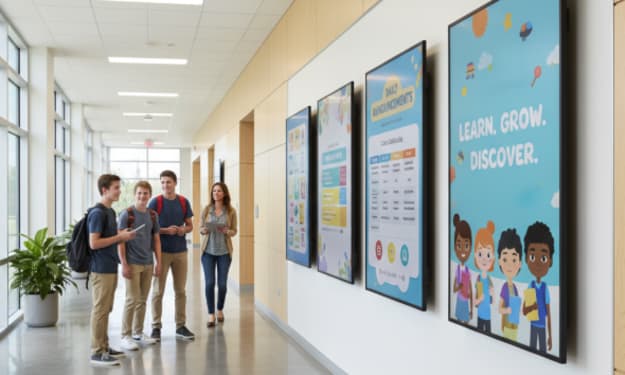
Picture this: It's 7:45 AM, and students are flooding through the school entrance. Instead of clustered bulletin boards with overlapping flyers and outdated announcements, sleek digital displays showcase today's lunch menu, remind students about the basketball game, and celebrate yesterday's science fair winners. No one's squinting at faded paper or missing crucial information buried under last month's notices.
By Jerry Kane 5 days ago in Education



Comments
There are no comments for this story
Be the first to respond and start the conversation.