
The Rise of Personalized AI Companions
How Emotionally Intelligent AI Is Redefining Human-Technology Relationships in 2025

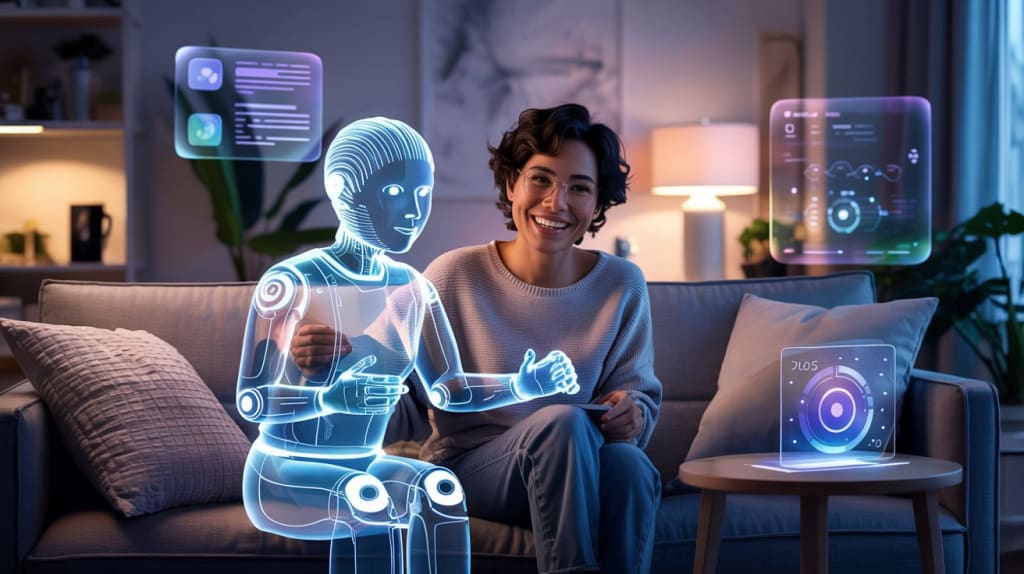
In recent years, the rise of artificial intelligence has transformed how we live, work, and even feel. But in 2025, one trend is standing out from the rest — the rise of personalized AI companions. No longer just digital assistants or cold robotic tools, these companions are becoming deeply personal, emotionally intelligent, and surprisingly human-like. And they’re not just changing our devices — they’re changing us.
From voice-activated helpers to AI friends who remember your birthday, favorite meal, and even how you felt last week, this evolution is nothing short of revolutionary.
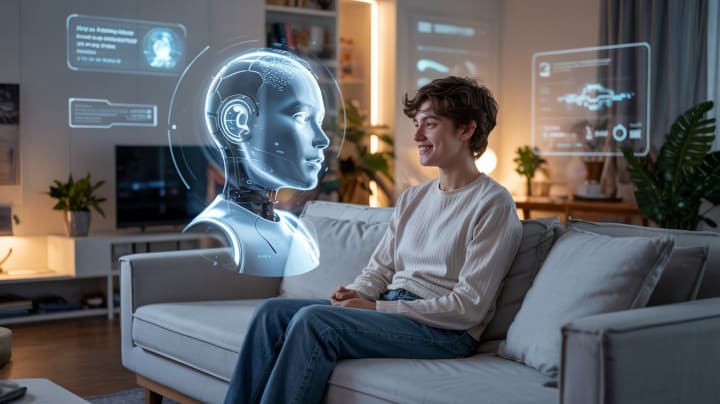
From Tools to Companions
When AI first entered our homes through assistants like Siri or Alexa, it was functional — timers, weather updates, music requests. But it wasn’t personal.
Now, companies like Microsoft, Google, and startups around the world are pushing the boundaries. Microsoft’s latest version of Copilot, for example, has memory features that allow it to recall your preferences, relationships, and even help you shop for gifts based on what someone liked months ago. Imagine an assistant that actually knows you.
This level of personalization is powered by advances in machine learning, natural language processing, and emotional AI — systems trained to understand human tone, context, and emotion. These systems are beginning to offer something very human: connection.
Why People Want Emotional AI
It’s no secret — we live in a fast-paced, often isolating world. Many of us are overwhelmed with schedules, choices, and digital overload. A personalized AI companion brings calm to that chaos. It can say, “Hey, you’ve been working for 6 hours — want to take a break?” Or remember that on Fridays you like to order sushi and watch old sci-fi movies. It can even check in on your mood.
There’s comfort in being remembered. In being seen.
Real-World Use Cases
1. Mental Health Support
Apps like Replika and Woebot are already offering therapeutic chats and mental health check-ins through AI. These companions are trained in cognitive behavioral therapy, helping users cope with stress, anxiety, and loneliness.
2. Personalized Learning
Education platforms like Duolingo are evolving too. With AI-powered tutors, learners can practice speaking to a “real” AI teacher, one that remembers your strengths, weaknesses, and learning style — no more one-size-fits-all education.
3. Elderly Care
In Japan and parts of Europe, AI companions are helping elderly people remember medication schedules, offering conversation, and reducing feelings of isolation. They may not replace human caregivers, but they add value and companionship where needed.
Challenges & Ethical Concerns
But with all this innovation, we also need caution.
Privacy is the biggest concern. For an AI to be truly personal, it needs access to your calendar, texts, voice, preferences, and emotions. That’s a lot of data — and a lot of responsibility for developers and platforms.
Then there’s the question of emotional dependency. If someone grows too attached to an AI, what happens to their real-world relationships? Are we trading human bonds for synthetic ones?
And finally: authenticity. No matter how human-like it becomes, an AI is not truly alive. We need to stay aware of that distinction — especially as these companions become more emotionally intelligent.
The Future is Emotional AI
The next big step in tech isn’t faster processors or smarter apps — it’s technology that feels. AI companions that understand you. Remember you. Support you in real ways. It’s not science fiction anymore — it’s happening.
But here’s the most important part: these AI companions don’t aim to replace humans. They’re here to enhance our experience, help us become more connected, more aware, and maybe even a little more human ourselves.
We’ve always dreamed of talking to machines. Now, they’re talking back — and they know our name.
Final Thoughts
As someone deeply interested in both human behavior and technology, I, Muhammad Hameedul Haq, believe that AI companions are not just a trend — they are a reflection of our collective desire for connection in a digital world. They are mirrors to our needs, teachers for our children, companions for the lonely, and assistants to the busy.
If we treat this innovation with care — ethically and humanely — we can build a future where machines don’t divide us, but bring us together.
The future is not just smart — it’s personal.
About the Creator
Muhammad Hameedul Haq
2nd-year student & story writing enthusiast. I craft captivating tales, blending imagination & emotion to bring characters to life. Always exploring new ideas to create narratives that touch the heart. 📖✍️
Keep reading
More stories from Muhammad Hameedul Haq and writers in Education and other communities.
How Can We Reduce the Aging of Our Brain?
Introduction: The Ageless Mind Imagine your brain as a high-performance engine. With proper care, it can run smoothly for decades, but neglect can lead to wear and tear. As we age, cognitive decline—memory lapses, slower thinking, and difficulty learning new things—can become a concern. But what if you could slow down, or even reverse, brain aging?
By Muhammad Hameedul Haq11 months ago in Education
The Power of Fellowship: Strengthening Faith Through Shared Moments and Unity
The Power of Fellowship in Everyday Faith The power of fellowship plays an important role in many faith communities. It brings people together through shared beliefs, prayer, and support. Fellowship is not only about gathering in one place. It is about building meaningful relationships that help people grow in faith.
By World Olivet Assembly4 days ago in Education
I asked Gemini, Claude, and ChatGPT to create a website, and there was one obvious winner
Vibe-coding seems to be on the rise, and it is fast democratizing software and web development. Not too long ago, a huge barrier of syntax errors separated the average user from developing a website that worked. Times have changed over the last few years. The latest generation of LLMs are powerful and capable enough to turn plain language descriptions into functional code, allowing even non-coders like myself to put together HTML pages with nothing more than a prompt
By Rosalina Jane7 days ago in Education



Comments (1)
Nice work! 🌟 I really enjoyed reading your Vocal post. 😊📖 Keep it up! 💪✍️