
The Rise of Decathlon in India
A Masterclass in Business Strategy



The Indian sports industry is one of the fastest growing in the world, outpacing the global growth rate of five percent over the last five years. However, a significant roadblock for many young athletes is the availability and affordability of sports equipment and gear. This is where Decathlon steps in, offering a solution to these challenges through its mega stores, such as the one in Bangalore.
Decathlon: The Unsung Giant
Decathlon has managed to outshine global sports giants like Nike, Adidas, and Reebok in the Indian market. Despite not having starstudded celebrity endorsements or extensive TV advertising, Decathlon’s revenue in India surpassed that of Nike, Adidas, and Reebok combined. In recent years, while Adidas earned a revenue of 1551 crores,Nike 814 crores, and Reebok 417 crores, Decathlon achieved a staggering 2936 crores. The question arises: how did Decathlon achieve this remarkable success without a hefty marketing budget?

The Market Landscape of the Early 2000s
To understand Decathlon’s success, we need to look back at the Indian market of the 1990s and early 2000s. Back then, sports equipment was typically purchased from local neighborhood shops rather than branded stores. These local shops offered a limited range of products, often catering to the middle-class household budget. On the other hand, high- end brands like Nike and Adidas were confined to malls, offering mostly shoes and apparel.
Segmentation of the Sports Market
The Indian sports market can be broadly categorized into four types of customers:
- Hopeful Customers: Skilled individuals with a tight budget, preferring affordable options.
- Beginners: Individuals with less skill and a smaller budget, trying out various sports.
- Casual Enthusiasts: Less skilled but financially capable individuals who view branded products as fashion statements.
- Elites: Highly skilled and financially flexible individuals, including professional players, seeking performance-enhancing products.
In the early 2000s, 75% of the Indian sports goods market was unorganized. Decathlon identified this gap and decided to target the hopefuls and beginners, focusing on providing affordable, high-quality sports equipment.
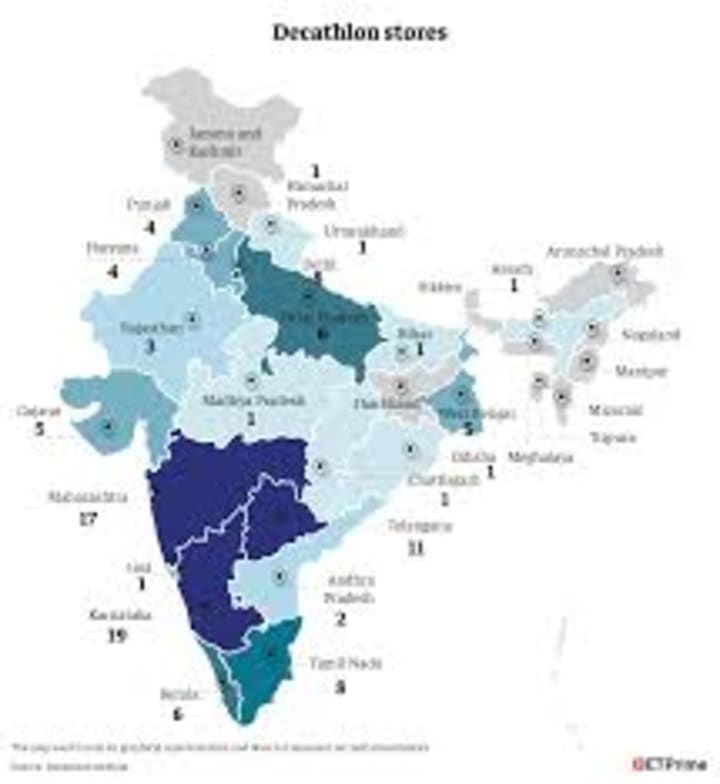
Decathlon’s Store Strategy
Decathlon’s stores are designed to offer an immersive shopping experience. Each section of the store is dedicated to a specific sport, allowing customers to try out the equipment. This strategy leverages the endowment effect, where customers feel a sense of ownership over a product after touching or using it, increasing the likelihood of purchase. Research shows that shoppers who touch products are willing to pay more than those who only view them.
Decathlon employs sports enthusiasts as store executives, ensuring that customers receive knowledgeable advice and recommendations tailored to their needs. This builds trust and enhances the shopping experience, reducing the pressure of upselling.
Product Placement and Pricing
Decathlon strategically places its cheapest products at the entrance to create an impression of affordability. Frequently bought items are positioned deeper within the store to encourage impulse buying. This layout ensures that customers spend more time in the store, increasing the likelihood of making a purchase.

The Innovation Quadrant
Decathlon’s success also lies in its focus on product innovation. Their products fall into four categories:
- Small Improvements: Enhancing basic products with better specifications.
- Technical Innovations: Introducing advanced features that improve performance.
- User Experience Innovations: Making products lighter and more user-friendly.
- Breakthrough Innovations: Groundbreaking products that revolutionize user experience, such as the two-second pitch tent.
Decathlon’s commitment to innovation, combined with local manufacturing, allows them to offer high-quality products at competitive prices. They do not invest heavily in marketing or fancy store designs, focusing instead on delivering value to their customers.
Lessons from Decathlon’s Success
1. Tapping into the Unorganized Market: Decathlon’s success highlights the potential of the unorganized market in India, a segment often overlooked by new entrepreneurs.
2. The Power of Touch and Feel: In an era dominated by ecommerce, the tactile experience of physical stores remains a powerful sales tool.
3. Prioritizing Product Innovation: Great products inherently attract customers, reducing the need for aggressive marketing.
Decathlon’s journey in India is a testament to the power of strategic market targeting, immersive store experiences, and relentless product innovation. Their approach provides valuable lessons for businesses aiming to succeed in competitive and diverse markets.
About the Creator
Sachin Nomula
Passionate about transforming complex data into actionable business insights. With a deep understanding of data science and a knack for solving real-world business problems.
Keep reading
More stories from Sachin Nomula and writers in Education and other communities.
Why Online Learning is Cost-Effective Compared to Batch Learning
Why Online Learning is Cost-Effective Compared to Batch Learning Resource Efficiency Memory and Computational Costs: Online learning processes data incrementally, using smaller subsets at a time, which reduces memory requirements and computational costs. Batch learning processes the entire dataset at once, demanding more resources.
By Sachin Nomula2 years ago in Education
Redefining the Deal: How Modern Private Equity Is Building Sustainable Success
Private equity has long relied on proven playbooks, disciplined capital deployment, and patient timelines. For decades, these fundamentals delivered consistent returns and shaped a powerful asset class. However, markets no longer behave the way they once did. Economic cycles move faster, competition intensifies, and information flows instantly. As a result, private equity firms now face pressure to evolve while preserving the strengths that built their reputations. Modern success depends on adaptation, agility, and a sharper understanding of value creation.
By Michael Christopher Venturinoa day ago in Education




Comments
There are no comments for this story
Be the first to respond and start the conversation.