
The Rise of AI
Shaping the Future of Technology and Humanity

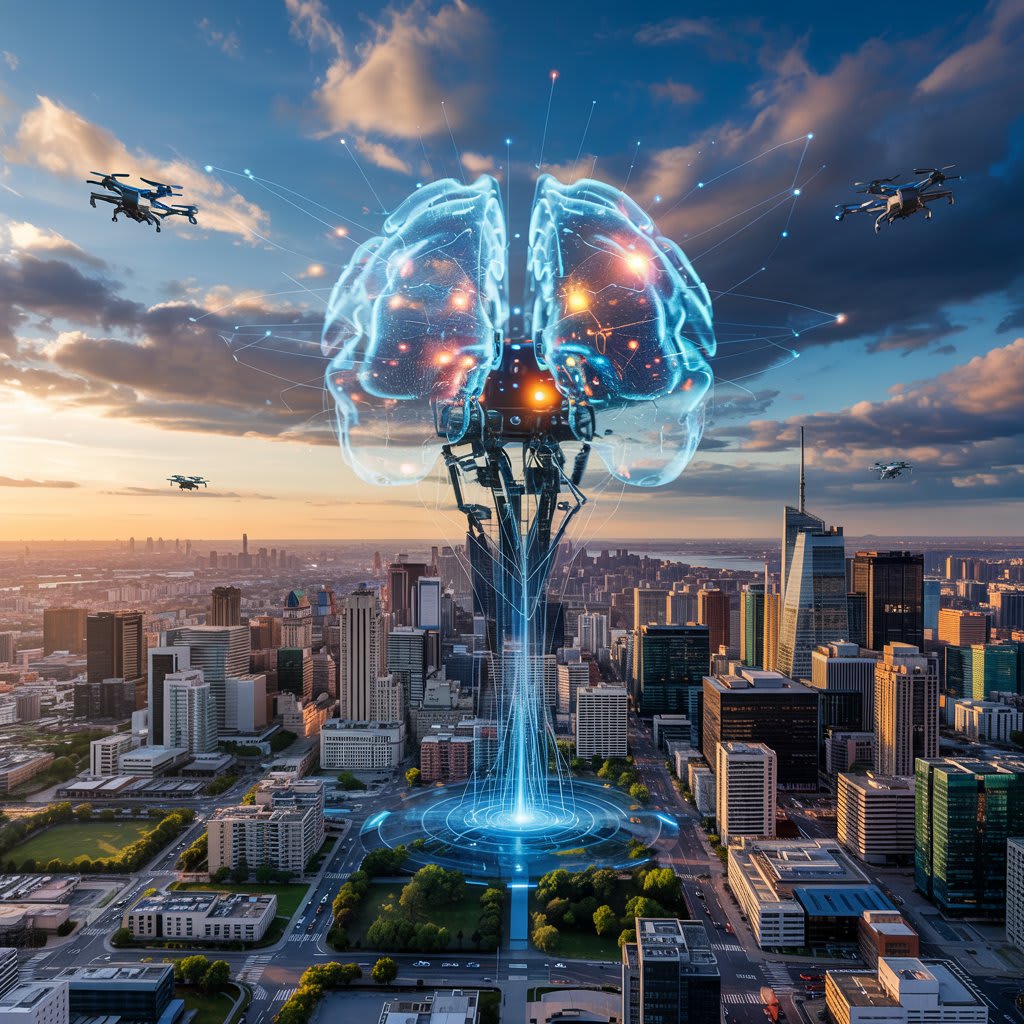
The Rise of Artificial Intelligence: Understanding Its Impact and Future
Artificial Intelligence (AI) has evolved at an extraordinary pace over the past few decades, shifting from a niche area of research to a cornerstone of technological innovation. Its rise is not just a triumph of computing power, but also a redefinition of how humans interact with machines and how machines influence every facet of our lives. AI now touches nearly every industry, from healthcare to entertainment, education to business. But what exactly is AI, and how did it come to be such a transformative force?
What is AI?
Artificial Intelligence refers to the development of computer systems that can perform tasks typically requiring human intelligence. These tasks include reasoning, learning, problem-solving, perception, language understanding, and even creativity. The goal of AI is to simulate human cognitive functions to the point where machines can complete tasks autonomously or collaborate with humans to enhance their capabilities.
The journey to modern AI began in the mid-20th century, with early pioneers like Alan Turing laying the groundwork for machine intelligence. Turing's famous "Turing Test" proposed that if a machine could engage in a conversation that was indistinguishable from that of a human, it could be considered "intelligent." Over the years, AI research progressed, driven by advancements in computing power, data availability, and algorithms.
Key Developments in AI
1. The Growth of Data:
One of the main catalysts for AI’s rapid rise is the explosion of data generated by humans and machines. With the advent of the internet, social media, smart devices, and IoT (Internet of Things), an enormous amount of data is being collected every second. AI systems rely on vast quantities of data to learn patterns, make predictions, and improve performance. This deluge of data has given rise to machine learning (ML), a subset of AI that enables computers to "learn" from the data they are exposed to, without being explicitly programmed for every task.
2. Advancements in Algorithms:
Another critical factor is the evolution of algorithms. Machine learning, especially deep learning, which uses neural networks inspired by the human brain, has revolutionized AI. Deep learning has enabled AI to perform tasks once thought impossible for machines, such as image recognition, natural language processing, and autonomous driving. These algorithms are becoming more refined, allowing AI systems to process information with increasing accuracy and speed.
3. Computing Power:
The rise of AI is also tied to significant advances in computing power. Graphics Processing Units (GPUs) designed for high-performance parallel processing have become essential for AI training, especially in the case of deep learning models. The ability to train increasingly complex models on massive datasets has significantly accelerated the development of AI.
The Impact of AI on Society
AI is influencing many aspects of life, transforming industries and reshaping job markets. In healthcare, for example, AI-powered systems can analyze medical images, predict disease outbreaks, and assist in personalized treatment plans. In transportation, autonomous vehicles powered by AI are changing the landscape of how we travel. AI-driven recommendation systems on platforms like Netflix and Amazon have redefined the way consumers discover content and make purchasing decisions.
However, these advances are not without challenges and concerns. As AI systems become more capable, there are growing fears that they could replace human jobs, especially in fields like customer service, manufacturing, and even areas of finance and legal work. While AI can increase efficiency and reduce costs, its widespread adoption has the potential to create significant disruptions in the job market.
Ethical Considerations
With the power of AI comes a profound need for responsible development and usage. Ethical concerns abound regarding privacy, security, bias, and accountability. AI algorithms are only as good as the data they are trained on, and if the data is biased, the AI system can perpetuate or even amplify these biases. This is particularly concerning in areas like criminal justice and hiring practices, where AI is used to make decisions that can impact people's lives.
Moreover, there is the question of how to ensure accountability in situations where AI systems make decisions that affect individuals. Who is responsible if an autonomous vehicle causes an accident or if an AI-powered healthcare system misdiagnoses a patient?
The Future of AI
Looking ahead, AI is poised to continue its rapid growth and integration into society. We are entering a phase where AI is not just a tool but an active participant in the creative and intellectual processes. In industries like art, music, and literature, AI is being used to assist and sometimes replace human creators, raising important questions about the nature of creativity and originality.
While AI has the potential to revolutionize society, it is essential that we navigate its rise thoughtfully and responsibly. Governments, businesses, and individuals must work together to ensure that AI benefits society as a whole, addressing ethical concerns, creating fair policies, and investing in education and retraining programs for displaced workers.
In conclusion, the rise of AI marks a new era in technological innovation. Its transformative impact will likely continue to unfold in ways that we cannot fully predict, but one thing is clear: AI is here to stay, and how we adapt to it will shape the future of humanity.
About the Creator
Rehan Gul
"Curious mind, creative spirit. Always exploring new ideas, embracing innovation, and shaping the future through tech, art, and storytelling. Let’s connect and make something extraordinary happen!"
Designing a Meaningful Future: Strategic Planning for Mission-Focused Entrepreneurs
In today’s evolving business landscape, entrepreneurs are increasingly motivated by more than financial success. Many are building companies around a mission to create social, environmental, or community-driven impact. While passion and vision ignite these ventures, strategic planning transforms purpose into a lasting, scalable business. For mission-focused entrepreneurs, planning is not about restriction but about clarity, alignment, and sustainable growth.
By Mario Payne4 days ago in Education
Digital Signage Solutions Supporting Communication in Schools
I still remember the chaos of my first week as a communications coordinator at a mid-sized university. Between emergency alerts that never reached students, event posters peeling off bulletin boards, and faculty members who couldn't find the right room for meetings, I realized our campus communication system was stuck in the 1990s. That experience changed how I think about information flow in educational settings.
By Jerry Kane 7 days ago in Education




Comments
There are no comments for this story
Be the first to respond and start the conversation.