
The Remarkable Story of Blind Tom Wiggins, the Blind Musical Prodigy.
The Blind Tom- The Wonder Boy Pianist

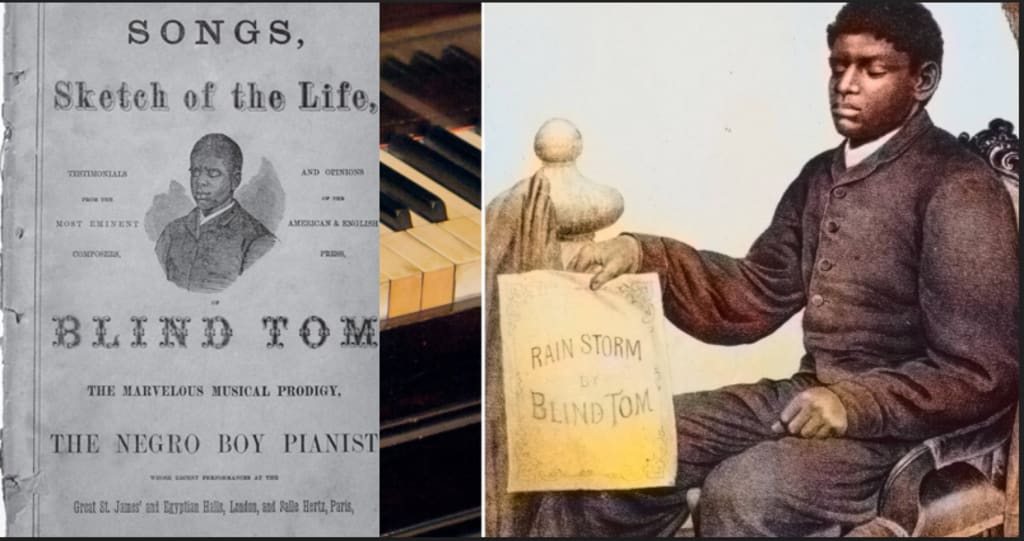
Blind Tom Wiggins was an African-American pianist and composer who was born into slavery in Georgia in 1849. He was renowned for his incredible musical talent, which included the ability to play complex pieces after hearing them only once.
However, his legacy is also marked by the exploitation and racism he faced throughout his life.
Early Life and Musical Talent
Thomas Greene, who later became known as Blind Tom Wiggins, was born on the Wiley Edward Jones Plantation in Harris County, Georgia. Due to being born blind, he was sold alongside his enslaved parents in 1850. They were sold in Columbus, Georgia, to a lawyer called General James Neil Bethune.
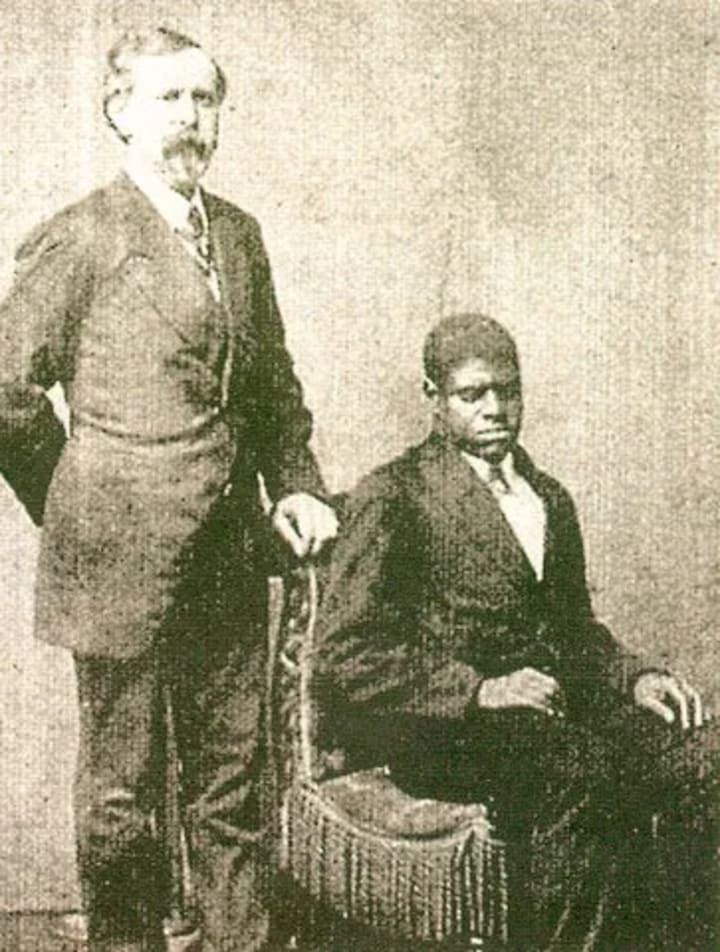
Because he was born blind and was also autistic (although these conditions were not recognized or understood at the time), he could not do the things other slaves did. Despite these challenges, Blind Tom showed an early aptitude for music, and he began playing the piano at a young age.
It is said that Tom had created his first melody, called The Rain Storm, by the time he turned five years old, following heavy rainfall.
General Bethune acknowledged Tom's talents and allowed him to reside in a room that was connected to their family home, which was furnished with a piano.
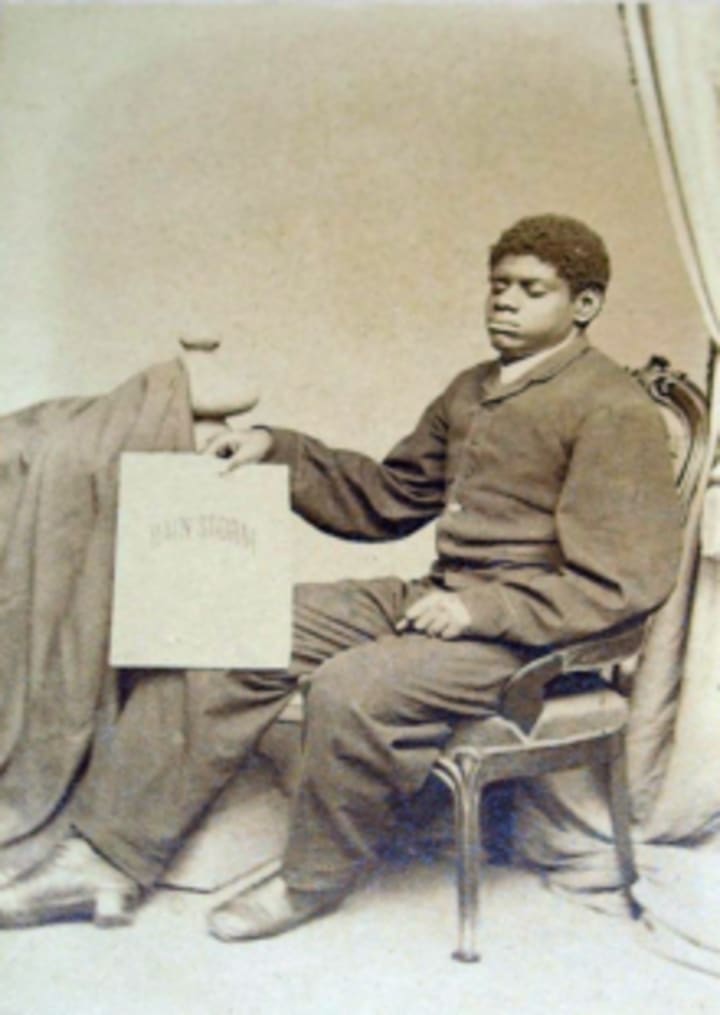
Blind Tom's musical talent was remarkable, and he was soon performing for audiences across the country. He had a unique style that incorporated elements of classical music, folk music, and improvisation, and he was known for his ability to play complex pieces after hearing them only once.
In 1860, Tom was brought to a political event to support the Democratic presidential candidate Stephen Douglas. Despite the passage of years, Tom was able to recite the entire speech, flawlessly imitating Douglas's tone and mannerisms. What's more, he was able to reproduce the exact heckles and cheers of the audience with astonishing accuracy, showcasing his exceptional abilities.
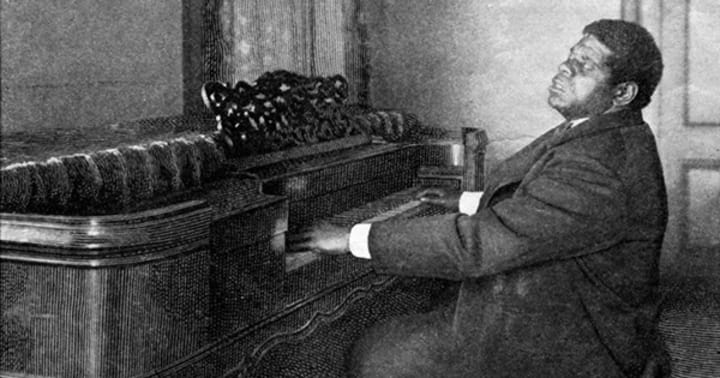
At the age of eight, Bethune began leasing "Blind Tom" to concert promoter Perry Oliver, who took him on tours across the United States, where he performed up to four times a day. This venture was extremely profitable, earning Oliver and Bethune as much as $100,000 annually, which was a considerable amount of money in that era. In fact, this amount would be more than $2 million per year in today's currency, making Blind Tom the highest-paid pianist of the nineteenth century.
In 1860, Wiggins, who was likely 11 years old at the time, made history as the first African-American to give a performance at the White House. He showcased his talent in front of President James Buchanan, a year before the Civil War began.
The Battle Over Ownership
General Bethune handed over the responsibility of managing Blind Tom's professional career to his son, John Bethune, in 1875. Subsequently, John accompanied Blind Tom on tours around the United States for the next eight years. John toured New York with Blind Tom.
In 1882, John Bethune married his landlady, Eliza Stutzbach, who proved to be good at calming Blind Tom's temper. However, shortly after their marriage, John and Tom went on a tour around the U.S., leaving Eliza behind. When John returned eight months later, Eliza filed for divorce and a legal battle ensued over the custody of Blind Tom.
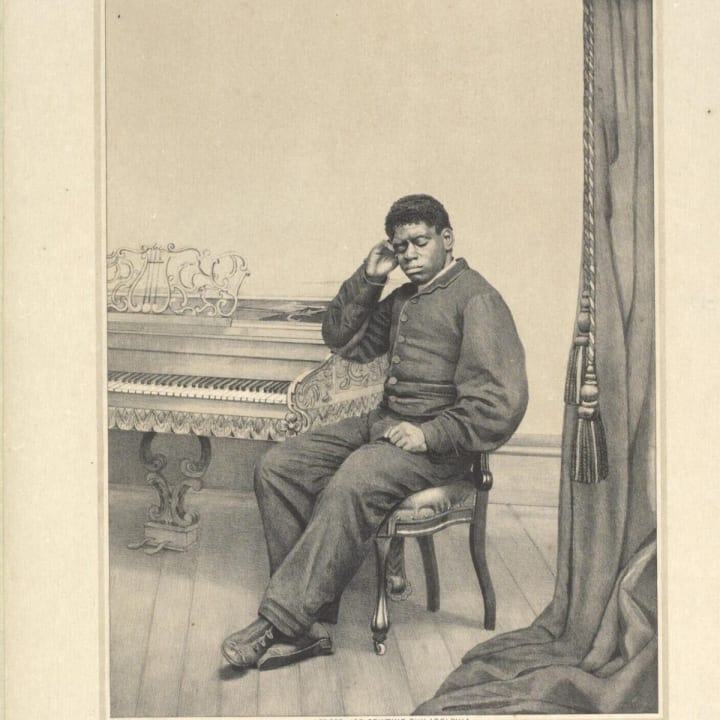
After John's death in a railway accident, Eliza was awarded custody of Blind Tom in August 1887. Tom continued performing under the management of Eliza and her attorney, Albrecht Lerche, until the mid-1890s when Eliza took him off the concert circuit due to legal challenges to her custodianship. Tom continued to travel until at least 1894, but rumors persisted that he had died in the Johnstown Flood in 1889, and some questioned if the "real Blind Tom" was still performing after that date.
About the Creator
Rare Stories
Our goal is to give you stories that will have you hooked.
This is an extension of the Quora space: Rare Stories
X(formerly Twitter): Scarce Stories
Writers:
....xoxo
Keep reading
More stories from Rare Stories and writers in Education and other communities.
Aftermath of the Canyon Diablo shootout- How Cowboys Sought To Have One Last Drink With A Dead Man
The Wild West era of the United States was marked by lawlessness and violence, with outlaws and lawmen engaged in a never-ending battle for control of the region. One of the most infamous incidents of this era was the Canyon Diablo shootout, which took place in 1905 in the Arizona Territory.
By Rare Stories3 years ago in Education
Competitive Distance Running Excellence Built on Repeated High Race Placements
Competitive distance running rewards athletes who can perform well again and again. One strong finish is impressive, but multiple high placements in recent races show true consistency. These results point to smart training, clear focus, and the ability to manage pressure over time. This article explores how competitive distance running athletes achieve repeated success, why high placements matter, and what helps runners stay near the front of the field.
By Daniel Podor4 days ago in Education
Is Pharmacy Tech a Good Career Choice for 2026?
Given the recent shifts in the market and AI automation, people are now well aware that economic shakeups can drastically hinder their income sources. This is causing a lot of people to switch careers, and a majority of people are targeting healthcare roles. However, not all allied healthcare roles are created equal. Also, you can aim to become a medical assistant, but if you do not want to deal with patients, the ideal role for you is that of a Pharmacy Technician.
By Meaghan Howe4 days ago in Education




Comments
There are no comments for this story
Be the first to respond and start the conversation.