
The Reality of Anacondas: Giant Snakes of the Rainforest
“Think Anacondas Are Dangerous? The Reality Will Surprise You!”

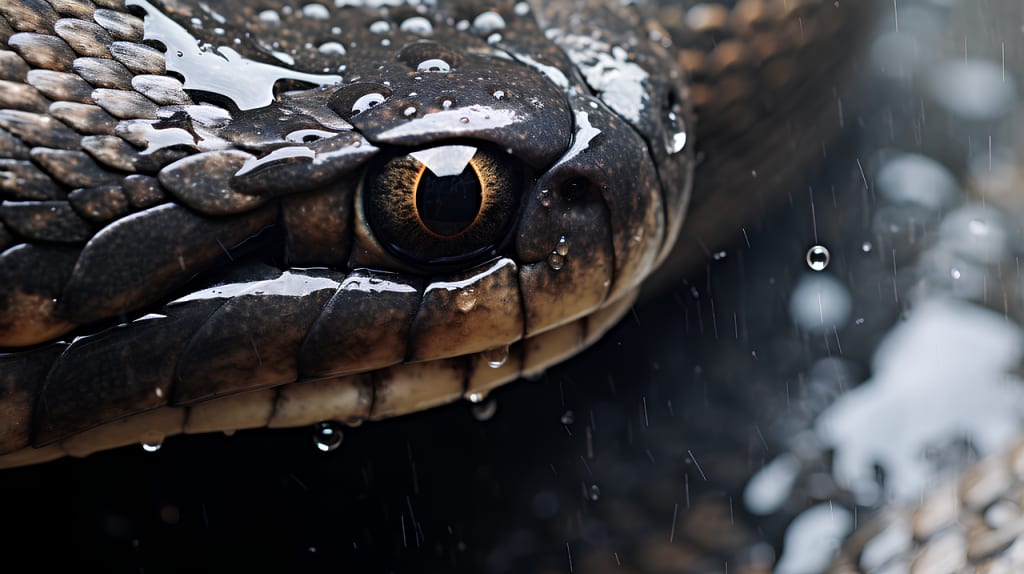
Anacondas are some of the most interesting snakes in the world. Most people know them through movies, where they appear to be gigantic monsters that attack anything in their way. However, the truth about anacondas is quite contrary to such horror stories. These snakes are extremely remarkable and live quietly in rivers and swamps, serving as one of the most important parts of their ecosystems.
Anacondas belong to the boa family and are found mainly in South America. The green anaconda is the largest among them and is often called the “giant snake of the Amazon.” These snakes can grow more than 20 feet long and weigh over 500 pounds. Their size is truly impressive, but despite their appearance, they are mostly gentle and like to stay hidden in water.
One of the surprising things that has come to be learned about anacondas is that they are quite shy. They do not attack humans and usually quickly swim away whenever they feel that danger is near. Most stories about anacondas attacking people are just myths or extremely rare accidents. In fact, these snakes are more afraid of humans than we are of them.
Anacondas are highly aquatic and spend most of their time in water. They are good swimmers and can stay submerged for about 10 minutes. Their bodies are appropriately adapted to lives in rivers and swamps. The dark green and black markings on their body improve their camouflage capabilities, whereby it assists them in avoiding predators and ambush prey easily.
These snakes are carnivores, feeding on fish, birds, mammals, and occasionally other reptiles. The prey is killed by constriction: they wrap their robust bodies around the prey and press until they cannot breathe. Subsequently, the anaconda swallows the animal whole. Despite this frightening technique, they do not hunt humans as a source of nutrition.
Anacondas also play an essential part in the ecosystem, maintaining a balance in the food chain by regulating the population of their prey. This helps them to maintain the health of rivers and forests alike. If there were no giant snakes, perhaps some overpopulations of certain species could disturb the natural balance of their habitat.
Many people wonder how fast the anacondas can move. As much as they are very strong, they are not that fast on land. They do move swiftly and noiselessly in water. This is why people hardly see them in the wild. Most meetings happen when the humans accidentally step near their hiding places in the river or swamp.
Another fascinating topic is the breeding in anacondas. The females are much larger compared to males, and they may have up to 40 babies at one birth. The little snakes are independent since their birth and learn to survive on their own in the rivers. In this way, the species continues without much help from the parents.
Despite the size and strength of anacondas, the danger to them comes from humans. Deforestation, hunting, and pollution destroy their natural habitat. Still, many people kill these snakes out of fear, which is pointless. Measures regarding conservation should be taken to save these gigantic snakes and the rivers they dwell in.
Anacondas are also incredibly patient and smart. They will lie in wait for hours around quarry, hardly moving, perfectly camouflaged. This is part of what makes them such good hunters in the wild. To see them in their natural environment can be a sight to behold.
The anacondas are most times presented in popular culture as dangerous monsters. Movies exaggerate their size and aggression for entertainment. Although these movies are exciting, they give a wrong idea about the reality of these snakes. Understanding what is true about anacondas can make them even more impressive.
Many people often wonder whether anacondas can live outside their natural habitat, in captivity. Anacondas might survive in zoological parks or aquariums but demand large space and a suitable environment. Without such conditions, the snakes can develop into stressed or unhealthy ones. It is always better to see them in the wild or in well-managed conservation centers.
Anacondas are much more than just "giant snakes"; they are an expression of the beauty and mystery of the Amazon. Knowing their behavior, feeding, and lives in rivers creates even greater respect for them. These reptiles are integrally linked with rainforests and remind one of how diversified and distinct nature is.
In the end, anacondas are fascinating, shy, and essential creatures of South American rivers. They are not mindless killers but intelligent animals that have survived millions of years. Respecting them and their habitat is key to keeping the natural world balanced. Next time you hear stories about giant snakes, remember the truth: anacondas are incredible survivors, not monsters. By understanding the real life of anacondas, we can appreciate their role in nature and reduce unnecessary fear. These snakes show us that sometimes, reality is even more amazing than fiction. Observing them in their natural environment can leave you in awe, and knowing the facts allows humans and these giant snakes to coexist peacefully.

About the Creator
iftikhar Ahmad
"I write true stories, mysteries, and real-life inspiration. If you love engaging, easy-to-read articles with a human touch, you’re in the right place."
Keep reading
More stories from iftikhar Ahmad and writers in Education and other communities.
Designing a Meaningful Future: Strategic Planning for Mission-Focused Entrepreneurs
In today’s evolving business landscape, entrepreneurs are increasingly motivated by more than financial success. Many are building companies around a mission to create social, environmental, or community-driven impact. While passion and vision ignite these ventures, strategic planning transforms purpose into a lasting, scalable business. For mission-focused entrepreneurs, planning is not about restriction but about clarity, alignment, and sustainable growth.
By Mario Payne3 days ago in Education
Why Did Einstein Dislike Quantum Mechanics? The Greatest Scientific Disagreement Ever
Einstein Helped Create Quantum Mechanics It is often forgotten that Einstein was a pioneer of quantum physics. In 1905, Einstein proposed that light comes in discrete packets called photons. This explained the photoelectric effect and earned him the Nobel Prize. His work was one of the pillars of quantum theory.
By shahkar jalal7 days ago in Education



Comments
There are no comments for this story
Be the first to respond and start the conversation.