
The Purpose of Video Classification and Annotation in Medical Analysis
Video Classification and Annotation in Medical Data

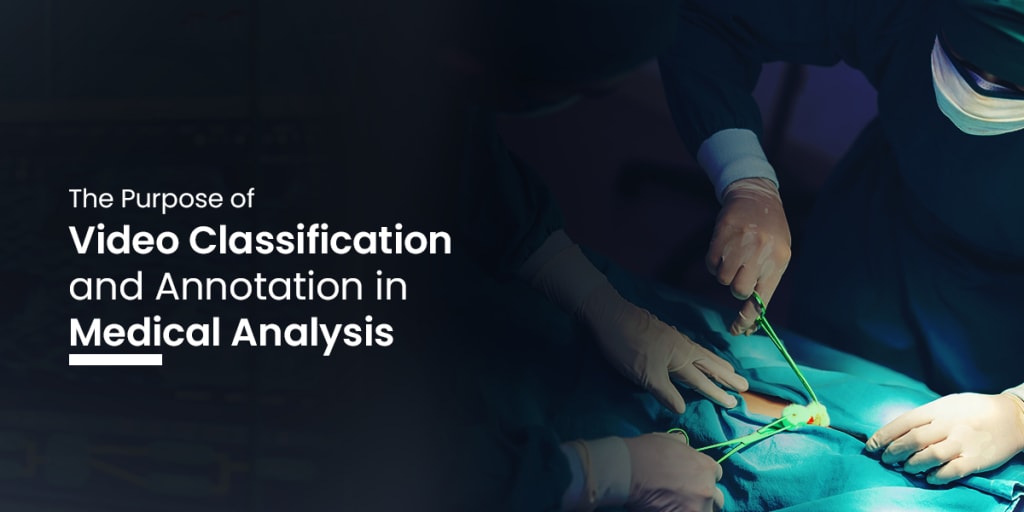
Automated video analysis of medical procedures is becoming increasingly important in modern healthcare. As the complexity of video data rises, methods like classification, detection, and segmentation play a meaningful role in hospitals and research institutions by improving clinical workflows.
Medical researchers seek more efficient ways to categorize and analyze vast amounts of video data. Medical video data classification is beneficial in both clinical and non-clinical practice.
Clinical vs Non-clinical
The non-clinical practice refers to educational materials, developing training materials and simulation models, ensuring facilities and services adhere to regulatory standards, and managing medical coders, health information managers, and clinical data analysts. The clinical procedures involve helping doctors quickly identify abnormalities. It may include the classification of real-time surgical procedures that help identify critical moments, ensuring better decision-making and reducing errors. Based on AI video analysis, surgeons can understand how to perform surgery much better.
Video annotation can achieve all of this. In this blog, we’ll explore how video classification is essential in the medical field and how its foundation is based on video annotation, playing a crucial role in enhancing patient care.
What is video classification?
If you’ve ever watched a medical procedure video or a clinical training module, you know how detailed and complex they can be. These videos capture critical moments—surgical techniques, diagnostic processes, and patient interactions—often packed with nuanced information.
But have you ever wondered how medical professionals and AI systems interpret these videos to extract meaningful insights?
It is all made easy with proper classification systems!
Yes, a video data classification is a machine learning or AI-powered system built to automate the identification of sub-classes such as Open Surgery, Microsurgery, Suturing, Incision, and Clamping. It can detect patterns, objects, actions, or events within the footage, like bleeding or tissue dissection. It further processes video content frame by frame, extracting meaningful information and assigning appropriate labels or categories.
The larger purpose
It's not surprising that AI is changing people’s lives and empowering organizations. In medical science, its use can save millions of lives. This AI-based innovation needs good training data so that the foundation remains strong.
Data preprocessing and classification work together. Traditional classification models may work for everyday content like social media clips, but medical videos require a much deeper understanding of context, timing, and detail.
These videos frequently feature abrupt changes in focus, such as a close-up of an X-ray followed by a doctor's explanation or a patient consultation followed by a surgical incision. Therefore, these ML systems must be supervised by the best medical practitioners as they can fully capture the intricacy.
Why Context Matters in Medical Video Analysis
Imagine a 5-minute video documenting a laparoscopic procedure. The video transitions from patient preparation to the insertion of surgical instruments, followed by critical incisions and real-time commentary from the surgeon. A standard classification system might label the entire video as “surgery,” but that overlooks the nuanced phases and key moments that matter for medical analysis.
Context-aware video classification systems solve this problem by breaking medical videos into finer segments. Data scientists need this categorically trained data, which is the basis for AI-based tools to observe changes in visuals, audio, and text to provide a more granular and accurate analysis. This ensures that critical insights, such as procedure anomalies or diagnostic imaging patterns, are captured and classified correctly.
How does annotation help?
A video contains multiple layers of information. Taking help from domain experts can help with frame-by-frame evaluation to build a thorough understanding of medical videos. They can help with the following:
1. Scene Transitions: One way to recognize changes in operative scenes is labeling between the preoperative, operative, and postoperative phases.
2. Audio Cues: Secondly, information tagging is required for changes in verbal instructions, alerts, or surgeon commentary.
3. Medical Visuals: Thirdly, a good annotation helps to analyze shifts from anatomical visuals to diagnostic results. It is done by capable medical professionals because they need to understand different types of equipment, such as X-rays or MRIs.
The above method ensures that medical video segments are tagged, analyzed, and documented. Accuracy in piecing together diverse surgical processes is of utmost importance. For this reason, subject-matter specialists contribute to context-aware categorization systems that fully understand medical recordings, resulting in more accurate and useful insights.
Which one is better?
Data scientists can use these services from companies that label and annotate data. Despite having different functions, they are different in the following ways:
Video Annotation
Labeling and marking specific regions of interest in a video is to create optimal training data for machine learning models. The process involves:
• Frame-by-frame labeling of objects, movements, or events.
• It can include bounding boxes, polygons, key points, or semantic segmentation.
• Everyday use cases include autonomous driving, surveillance, and activity recognition.
Data engineers can advance and go on working on AI projects with the correct medical data annotation partner. Their models may be trained to identify objects or patterns in films.
Video Data Classification System
The purpose is to categorically organize all video data into predefined classes such as content, metadata, or extracted features. The process includes:
• The system processes video input to analyze patterns, objects, and actions.
• It can be applied to AI-based classification tools to assign the video to one or more categories.
• Often, it uses pre-labeled data to train classification models.
Outsourcing this task to a third party can help classify videos into categories for content recommendation, surveillance, or behavior analysis.
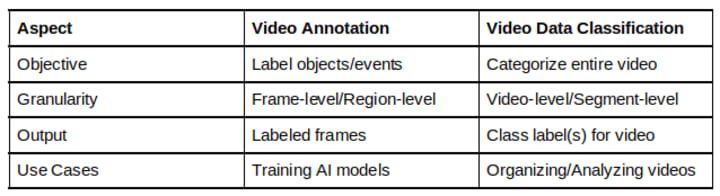
In simple terms, video annotation is the foundation on which models can be trained later in a video data classification system. One provides the data, and the other processes and classifies that data.
Conclusion
In an industry where accuracy and precision can be a matter of life and death, tapping into video classification systems that grasp context is not only a benefit—it's a requirement. Continued research in the medical field necessitates the annotation of medical video data. There is also a need for these videos to be analyzed, classified, and put to use. It can enhance clinical decision-making, patient outcomes, and more efficient medical training.
As video classification transforms the unique needs of healthcare, the future of medical analysis will be more perceptive, effective, and influential than ever.
About the Creator
Anolytics
Anolytics provides a high-quality and low-cost annotation service for the construction of machine learning and artificial intelligence, generative ai llm models.
Leveraging Prediction Markets to Enhance Strategic Planning
In today’s competitive business environment, making informed strategic decisions is crucial for long-term success. Prediction markets have emerged as a valuable tool for improving strategic planning by aggregating insights from diverse participants. These markets enable organizations to forecast outcomes through collective intelligence, providing a more accurate understanding of potential scenarios. By integrating prediction market data into planning processes, companies can anticipate risks, identify opportunities, and make better-informed decisions that support sustainable growth.
By Anthony Qi5 days ago in Education
Srimad Bhagavatam
Srimad Bhagavatam: A Complete Guide to Bhakti, Dharma, and Divine Love Among the sacred texts of the Vedic tradition, few scriptures hold as much spiritual depth and devotional beauty as the Srimad Bhagavatam. For centuries, this revered text has guided seekers toward understanding the true purpose of life, the nature of divine love, and the path of pure devotion. Devotees and spiritual scholars across the world regard Srimad Bhagavatam as a treasure house of spiritual wisdom that reveals the ultimate goal of human existence.
By sudeshna rarhiabout 23 hours ago in Education



Comments
There are no comments for this story
Be the first to respond and start the conversation.