
The Price of the Paper: How a Single Test Became the Measure of a Child's Worth
We Created a System Where Anxiety Outweighs Curiosity and Grades Matter More Than Growth

The night before the test, she could not sleep. She lay in the dark, her mind racing through formulas and dates and vocabulary words, silently rehearsing, silently praying that she would remember, that she would not freeze, that she would be enough. Her parents had said all the right things—just do your best, it's not the end of the world, we love you no matter what. But she knew. She knew that this paper, this single morning, this collection of questions written by strangers, would somehow determine her future. She knew because the whole world had told her so, in a thousand ways, since she was old enough to understand what tests mean.
This scene repeats itself millions of times every year, in every country, in every language. Children lie awake, hearts pounding, minds spinning, reduced to a single terrifying equation: my worth equals my score. They have learned this equation not from any single lesson but from the accumulated weight of a system that treats assessment as the purpose of education rather than a small part of it. They have learned it from the way teachers talk about tests, from the way parents ask about grades, from the way the culture celebrates the high scorers and forgets the rest. They have learned it so deeply that by the time they reach the examination hall, they are no longer students seeking knowledge but performers seeking approval, their curiosity long since sacrificed on the altar of achievement.
The test was not always this. Once, in a different time, assessment was a tool—a way for teachers to understand what students had learned, what needed more attention, where instruction could improve. It was diagnostic, not judgmental. It was one piece of information among many, not the final verdict on a child's potential. But somewhere along the way, the tool became the master. The measurement became the goal. And in that inversion, we lost something essential: the understanding that children are more than their scores, that learning is more than performance, that the purpose of education is not to sort and rank but to nurture and grow.
The machinery of high-stakes testing is now so deeply embedded that we barely question it. We accept that a child's educational future—which schools will admit them, which opportunities will open, which doors will close—can be determined by a few hours on a Tuesday morning. We accept that teachers must teach to the test, because their own evaluations depend on results. We accept that entire curricula must be narrowed to what can be measured, because what cannot be measured becomes invisible and therefore unimportant. We accept all of this as though it were natural, inevitable, the way things have always been. But it is none of these things. It is a choice. And it is a choice we are making badly.
Consider what this system does to the mind of a child. From the earliest grades, they learn that questions have right answers and wrong answers, and that the wrong answers have consequences. They learn to fear mistakes rather than learn from them. They learn to avoid uncertainty, to stick to what they know, to never venture into territory where they might be wrong. They learn that the goal is not understanding but performance, not growth but achievement. And by the time they reach the age when genuine learning requires risk, requires failure, requires the courage to be wrong, they have already been trained out of all of it. They have become safe. They have become careful. They have become everything that genuine learning is not.
The irony is that the skills that matter most in life cannot be measured by any test. Curiosity cannot be scored. Creativity cannot be quantified. Resilience cannot be captured in a multiple-choice question. The ability to collaborate, to communicate, to persist through difficulty, to ask good questions, to care about something beyond oneself—these are the qualities that determine success and fulfillment in the actual world. And these are precisely the qualities that our testing regime ignores, because they are the qualities that cannot be easily measured. We have built a system that measures what is convenient rather than what matters, and we have convinced ourselves that the convenient is the important.
There is a boy I think about sometimes, a student I knew years ago. He struggled with tests. His mind worked differently—slowly, deeply, laterally. When given time and space, he could produce insights that astonished his teachers. But in the timed, pressured environment of standardized testing, he froze. His scores were mediocre. His potential, according to the numbers, was unremarkable. And because the system trusted the numbers more than it trusted the human beings who knew him, he was placed in lower tracks, given less challenging work, taught to expect less of himself. By the time he graduated, he had become what the tests predicted: average. The system had successfully trained him to meet its low expectations. It had not discovered his potential; it had destroyed it.
This is not an isolated story. It is the story of millions of children whose gifts do not fit the narrow bandwidth of what tests can measure. The artist who thinks in images rather than words. The tinkerer who understands machines but not multiple choice. The dreamer whose mind wanders to places the test never asks about. The late bloomer who would have flourished with time but was labeled deficient too early. All of them, sorted and ranked and told their worth by a number that captures almost nothing of who they are. All of them, casualties of a system that has forgotten that the map is not the territory, that the score is not the student.
The defenders of high-stakes testing will say that we need accountability, that we need to know which schools are working, that we need some common measure to ensure equity. These arguments have merit, in theory. But the accountability we have built is a caricature of accountability—one that punishes struggling schools rather than supporting them, one that narrows curriculum rather than enriching it, one that demoralizes teachers and terrifies students. And the equity we claim to seek is undermined by tests that predict nothing so reliably as the income and education level of a child's parents. The tests do not measure merit; they measure privilege. And then they call that fairness.
There are places that do this differently. Countries that have abandoned high-stakes testing in favor of richer, more holistic forms of assessment. Schools that have replaced grades with narrative feedback, that trust teachers to know their students, that value growth over achievement. Educators who have resisted the pressure to teach to the test, who have protected time for inquiry and creativity, who have insisted that their students are more than data points. These places are not utopian; they are real. They work. Their students learn deeply, think critically, and carry their curiosity with them into adulthood. They are proof that another way is possible.
But they swim against a powerful current. The testing industry is vast and profitable. The political appetite for simple metrics is insatiable. The cultural belief that numbers tell the truth is deeply ingrained. Changing course would require courage—the courage to admit that we have been wrong, the courage to trust teachers and students, the courage to value what is hard to measure over what is easy to count. It would require us to look at our children and say: you are more than any test can capture. Your worth is not a number. Your future is not determined by a single morning. We believe in you, not in your scores.
That girl lying awake the night before the test, she deserved to hear those words. She deserved to know that her value did not depend on her performance. She deserved teachers who saw her whole self, not just her ability to bubble in answers. She deserved a system that nurtured her curiosity rather than testing it to death. She deserved, in short, an education worthy of her humanity.
We gave her a number instead.
The test will come and go. The scores will be released. Some children will celebrate, others will grieve, most will move on to the next test, the next judgment, the next measurement of their worth. And the system will continue, unchallenged, unchanged, because it is easier to measure than to see, easier to rank than to nurture, easier to sort than to love.
But it does not have to be this way. The test is not the only way. The number is not the truth. The child is more than the score. And until we remember that—until we build schools that honor the full humanity of every student—we will keep producing generations of children who have learned everything except how to learn, who have achieved everything except themselves, who have passed every test except the one that matters: the test of becoming a whole human being in a world that desperately needs them.
The night before the test, she could not sleep. She lay in the dark, afraid. She did not know that she was more than the paper she would fill. She did not know that her worth was not a number. She did not know because no one had ever told her, in a way she could believe. Let us start telling them. Let us start building something better. Let us start remembering what tests cannot measure and why it matters most of all.
About the Creator
HAADI
Dark Side Of Our Society
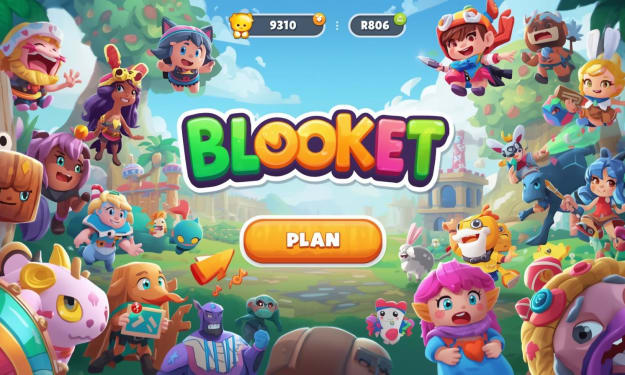
Blooket: A Deep Analytical Study of Gamified Learning and Its Role in Modern Education
Introduction: The Shift Toward Interactive Digital Learning Education has experienced a profound transformation in recent decades. The integration of technology into classrooms has redefined how knowledge is delivered, assessed, and reinforced. Traditional methods—lectures, worksheets, and paper-based tests—are increasingly being supplemented by digital tools designed to enhance engagement and participation.
By Backlinks Cart4 days ago in Education
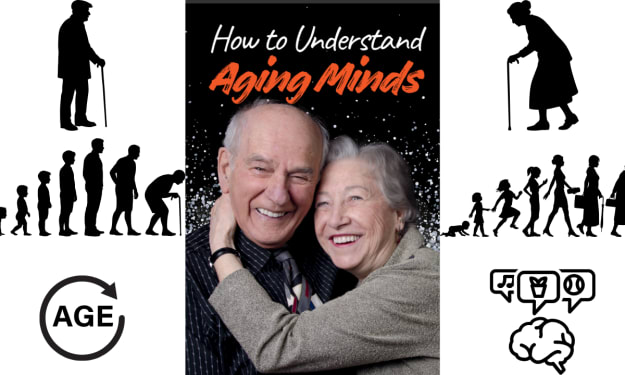
How to Understand Aging Minds: A Practical Guide to Cognitive Changes, Emotional Well-Being and Personality
Aging is one of the most natural and universal experiences of human life—yet it remains one of the least understood. As bodies change with time, so do minds. Memory may shift. Emotions may deepen or become more sensitive. Personality traits may soften, strengthen, or reveal new layers. These changes are not signs of decline alone; they are part of a complex psychological evolution that deserves understanding, respect, and compassion.
By Akash Mano4 days ago in Education


Comments
There are no comments for this story
Be the first to respond and start the conversation.