
The Presence of Aliens in Space: What Science Says 2025
Suspensive Article 2025

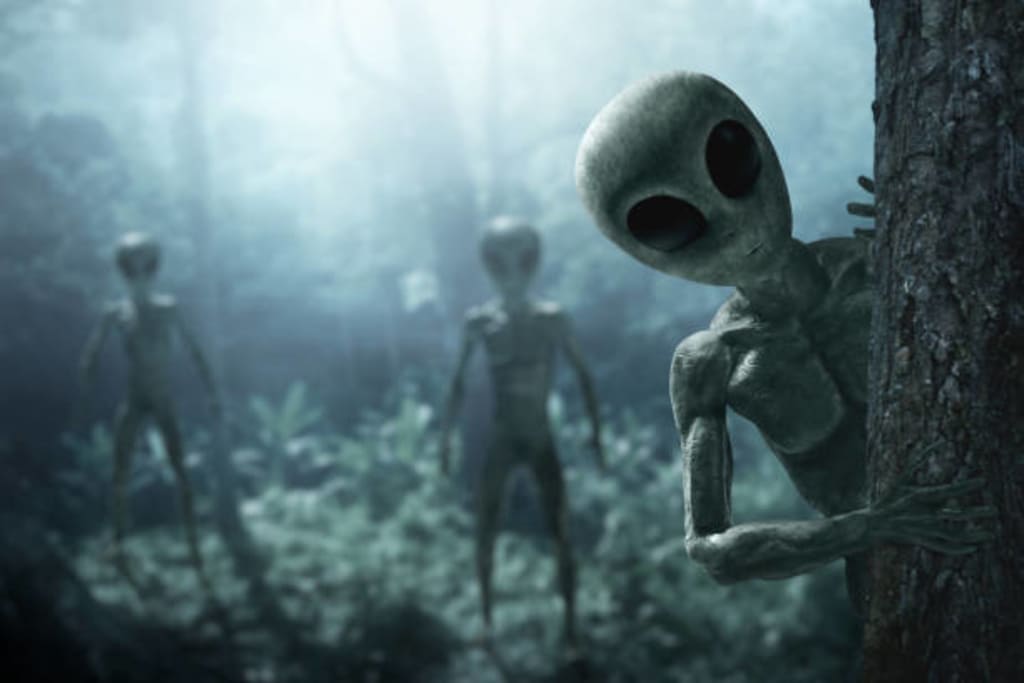
Space, a boundless and enigmatic expanse, continues to capture the human imagination. Despite centuries of exploration and inquiry, the question of whether other life forms exist in the universe remains one of the most intriguing. While the concept of extraterrestrial beings—often referred to as aliens—has been part of mythology, culture, and fiction for millennia, science has yet to provide definitive proof of their existence. However, the search continues, and science offers some fascinating insights into the potential for life beyond Earth.
1. The Concept of Aliens: From Mythology to Science
Throughout history, many cultures have conceptualized otherworldly beings. Ancient civilizations, such as the Egyptians, Greeks, and Indians, spoke of divine messengers or sky gods, often associating them with the stars or other celestial bodies. In modern times, the concept of aliens shifted toward a more scientific interpretation. Today, extraterrestrial life is viewed not as divine entities but as potentially biological beings that could exist on other planets or moons, perhaps even with advanced technology. The discovery of such life would have profound implications, transforming our understanding of life in the universe.
2. Absence of Proof: Why Haven't We Found Evidence of Aliens?
Despite decades of searching, humanity has yet to find conclusive evidence of extraterrestrial life. Scientists have sent space probes, radio signals, and signals into the cosmos, hoping to receive a response from intelligent beings. However, no communication has been confirmed. The "Fermi Paradox" encapsulates this mystery: if intelligent civilizations exist in the universe, why haven't they made contact with Earth? There are several theories to explain this, including the idea that such civilizations may be too far away, technologically primitive, or simply not interested in contacting us. Another possibility is that alien life could be too different from what we expect, making it difficult for us to recognize it.
3. The Potential for Life Beyond Earth
Even though we haven't found proof of alien life, the conditions required for life exist elsewhere in the universe. Planets and moons within our solar system have features that suggest they could harbor microbial life. For instance, scientists believe that Mars once had liquid water, a crucial ingredient for life as we know it. Additionally, moons such as Enceladus and Titan, orbiting Saturn, have subsurface oceans and organic molecules, both of which are considered essential for life. The discovery of extremophiles—organisms that thrive in extreme environments on Earth—has also expanded our understanding of where life might exist, suggesting that life could survive in places previously considered inhospitable.
4. The Probability of Alien Life: Do You Believe?
The probability of alien life remains uncertain, but many scientists argue that the sheer vastness of the universe makes it highly plausible. The discovery of exoplanets—planets outside our solar system—has been one of the most significant advancements in recent years. Thousands of these planets have been found, some in the "habitable zone," where conditions might support life. Programs like SETI (Search for Extraterrestrial Intelligence) continue to scan the skies for radio signals that might indicate intelligent civilizations. While we have yet to detect anything, the search is ongoing, and many scientists remain optimistic that life beyond Earth is out there waiting to be discovered.
5. Preparing for the Future
Although definitive contact with extraterrestrials may be centuries away, scientists are preparing for the possibility. Advancements in space exploration technologies, such as the development of more powerful telescopes and better methods for detecting biosignatures on distant planets, are crucial to improving our chances of discovering alien life. Additionally, there is ongoing research into how humanity might respond if contact were made, including protocols for communication and understanding alien biology.
Conclusion:
The question of whether aliens exist in space is a profound mystery that continues to captivate scientists, philosophers, and the general public alike. While no concrete proof has been found yet, the search for extraterrestrial life remains one of the most exciting frontiers in science. Every new discovery about the universe, from distant exoplanets to subsurface oceans on moons like Europa, brings us one step closer to answering the question that has intrigued humanity for centuries. If aliens are ever discovered, it will be a monumental event, reshaping not only science but the very nature of human existence. The quest for understanding the cosmos—and the life it might harbor—remains one of the most thrilling aspects of modern exploration.
About the Creator
The Bron Father
If you like it, read it. If you don't, leave.
Keep reading
More stories from writers in Education and other communities.
The Virtual Classroom Spain Bold Leap into the Future of Online Education in 2026
Spain’s educational landscape has historically been defined by the sun-drenched courtyards of its ancient universities and the traditional face-to-face interaction that characterizes Mediterranean culture. However, as we move through 2026, a silent but powerful revolution has taken place. The "Digital Spain 2026" agenda, launched years ago as a response to global shifts, has finally reached its zenith, transforming the nation into a European leader for e-learning. This isn't just a story about technology; it’s a story about accessibility, economic resilience, and a fundamental rethinking of what it means to "go to school." In a country where geography once limited educational opportunities, online platforms have now bridged the gap between rural villages in Castile-La Mancha and the bustling tech hubs of Madrid and Barcelona, creating a truly democratic educational ecosystem.
By Neeraj kumar2 days ago in Education



Comments (1)
I love aliens! I want to meet one one day! I want to communicate with other species. Moo moo! I hope they’re sentient and smart! Great work!