
The Person Behind Emoji- And also Poomoji
Emojis are the staple of online communication

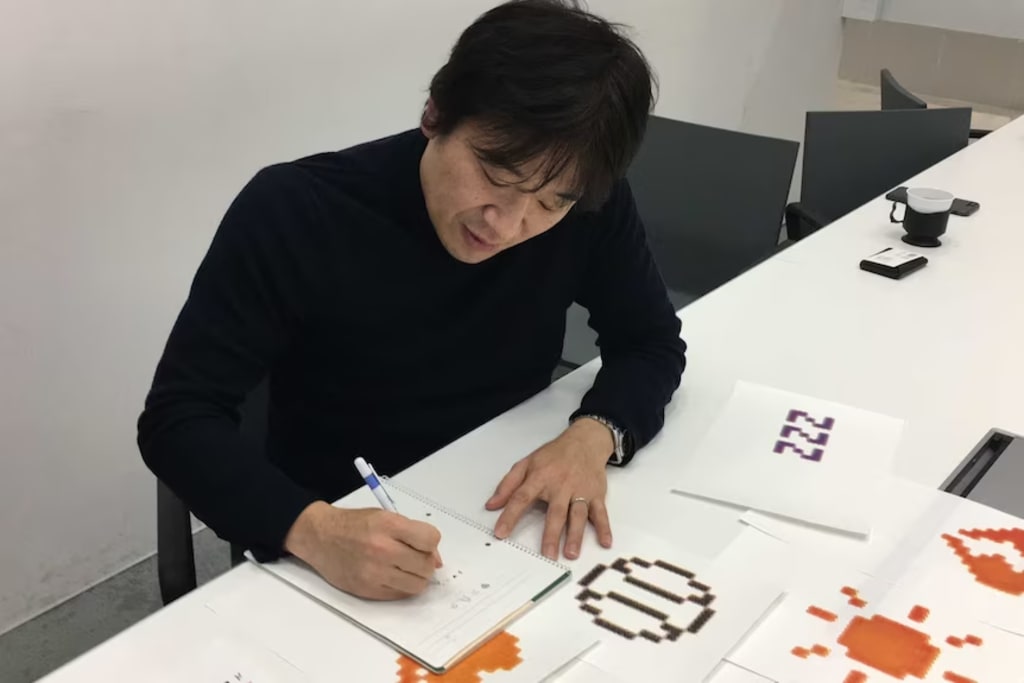
Picture credit: https://www.askart.com
His name is Shegetaka Kurita.
In 1999, the first emoji appeared.
Shigetaka Kurita (栗田 穣崇, born May 9, 1972, Gifu Prefecture, Japan) is a Japanese interface designer often cited for his early work with emoji sets.
What Does Emoji Mean?
Emojis have quickly become a staple of online communication. These colorful pictograms have evolved from simple smiley faces to a vast array of characters and symbols representing a wide range of emotions, actions, and ideas. But what are emojis, and why do we use them so much?
Emojis are derived from the Japanese words “e,” picture; “mo,” write, and, “ji,” character. Simple isn’t it?
Not so much. This literal translation is as close as it gets. The Japanese characteristics are based on, “kanji,” which has its roots in Chinese ideograms. That is to say, the written language is highly pictorial by itself.
The Idea Behind Emoji
The emoji was created for a very specific purpose: ease of communication on a nascent mobile internet system developed by Japanese telecom giant NTT DoCoMo. The system offered emails, but they were restricted to 250 characters, so emojis were a way to say more in a limited space.
"I didn't like it, because the number of spaces in the grid was not an odd number, and not being able to find a center made developing the emoji extremely laborious," said Kurita.
The idea was born based on the minuscule use of information to transmit maximum meaning. This specific purpose was to ease communications on a young internet system a development NTT DoCoMo, a Japanese telecom major. They offered email which was limited to 250 characters.
Emojis were a way to bypass this limitation.
Kurita, 25 years of age at the time had a trying time resolving the issue, especially the paltry 144-pixel resolution. No small wonder that the early emojis were chunky compared to those of today. Present-day emojis are created with vector graphics which can be pretty hi-res.
These emojis depicted concepts that were simple yet universal, such as weather, moods, foods, and animals. Kurita is often credited for the invention of the emoji, though it is now thought that Japanese conglomerate SoftBank released the first set of emojis in 1997 for its phone carrier. The set was smaller, with 90 icons, depicted in black and white. The designer of this set is unknown.
The Evolution Of The Emoji
They first appeared in Japan in the late 1990s, and their popularity quickly spread around the world. Originally, emojis were simple cartoon faces that represented a range of emotions, such as happy, sad, and angry. But over time, their use expanded, and now emojis include everything from animals and food to vehicles and flags.
One of the main reasons for the popularity of emojis is their expressive power. Emojis allow us to convey emotions and actions in a way that words alone cannot. For example, a message that simply reads - I'm feeling happy! might not convey the full extent of the emotion, but if you add a smiling face emoji, the message becomes much more clear. Emojis are also highly accessible and inclusive. They provide a visual language that crosses language and cultural barriers, making it easier for people to communicate with others from different backgrounds. Additionally, emojis allow people with disabilities to communicate more easily, as they can replace complex sentences with simple, visually descriptive pictograms. But emojis are not without controversy. Some people feel that they are overused, or that they represent a dumbing down of language. Others have criticized the lack of diversity in the original set of emojis, which only featured white and yellow faces. In response, new emojis have been added to represent a wider range of skin tones and cultures.
For the next decade, emojis went viral in Japan. But they were not standardized meaning they could not be shared across other global networks.
It was only in 2010 that they were integrated into Unicode. It is the standard for text software coding. 722 emoji were released on iPhone and Android.
Strangely they started gaining in popularity only in 2012.
The popularity of emojis is partially due to their practicality in a world of online communication that prioritizes clarity and simplicity, particularly on platforms like Twitter that have character constraints. Although a text message or tweet's briefness frequently allows for ambiguity, emojis provide a nonverbal element to communication that was previously absent from computer-mediated interactions. In face-to-face communication, emojis can replace body language, facial expressions, and other nonverbal clues. Emojis can thus make the sender's intent clear and help to avoid some of the misunderstandings that have made texting so notorious.
Though some linguists and other experts believed emojis signaled a regression in communication, other intellectual communities welcomed emojis into their vocabulary. In 2015 the Oxford Dictionaries named the popular “Face with Tears of Joy” emoji
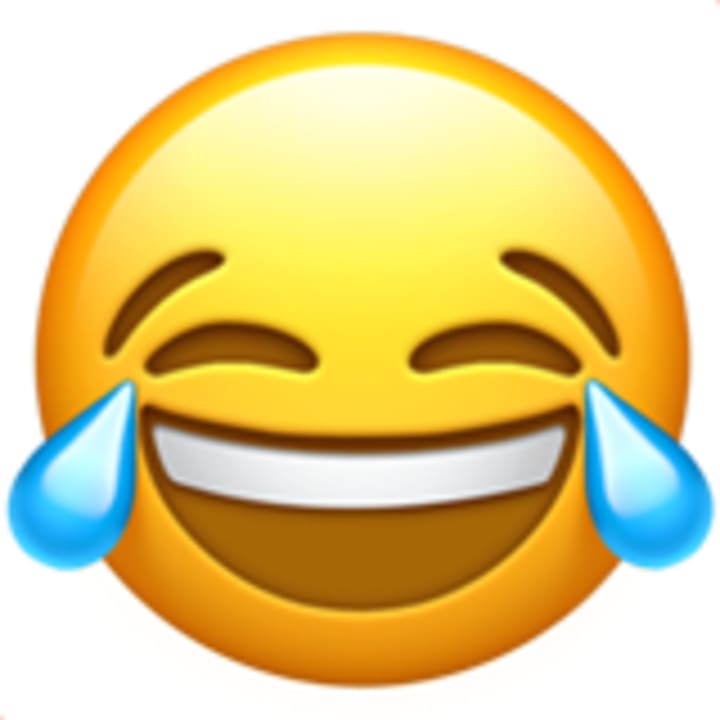
it's word of the year. Many of the meanings attached to emojis develop colloquially on social media and often stem from metaphorical interpretations of the symbol. For example, the “Triangular Flag on Post” emoji shows a triangle red banner,

which is a common symbol for warning signals or red flags in a relationship. Occasionally, more complicated ideas or even statements can be communicated using a series of consecutively placed emojis than can be done with a single emoji.
Social trends and concerns have led to modifications in emojis. The majority of emojis in the 2010s that showed faces or individuals had skin tones that were either cartoonishly yellow or white, which led to a demand for more diverse emojis from both the public and the business. Five new skin tones were accepted by the Unicode Consortium in 2014. In another case, Apple changed the "Pistol" emoji in 2016 as a result of a public campaign against it, from a realistic black revolver to a bright green water gun.

Microsoft, Google, Samsung, and Twitter followed suit in 2018.
The emoji was predated by the emoticon, a more-primitive unit of digital expression in which keyboard symbols, such as a colon and a parenthesis, are set beside one another to suggest a facial expression. The first credited use of an emoticon occurred in 1982 when Scott Fahlman, a professor at Carnegie Mellon University, posted on a university forum his idea for a “joke-marker” :-), a symbol meant to indicate that a statement should not be taken too seriously. (He also proposed :-( for statements that were to be taken seriously, but that emoticon later came to be used for sadness or disapproval.) Fahlman’s post took off, and the :-) symbol swept across other university forums before being adopted by the general public. Soon after, in Japan another style of emoticon known as kaomoji, meaning “face marks,” developed. Whereas Western-style emoticons were to be read sideways, kaomoji were presented right side up and were often more complex in what they represented, such as a person wearing headphones or kneeling in apology.
The Inventor Shares His Views
The official Unicode list has close to 3000 emojis as of date.
Kurita is of the opinion that most of them are only pictures and are not really true in the spirit of emoji.
However, his views remain unchanged. Kurita maintains positivity in the impact that emojis make in the digital world of communications, primarily mobile phones.
He reveals that the heart emoji,

is his favorite because of its positive energy. He also wanted to create a poomoji but DoCoMo’s reply was ‘no good’ and that was that.
The Present Day Scenario
Emojis have involved into a universal language. Sure, it is a definitive form of communication. Only that some people believe some emojis are truly insulting for some cultures. There are borders. Like this one,

showing the ‘middle finger’, ‘flipping the bird’, or, plain and simply ‘up yours’.
Some people including me find it dismissive as a reply to messages. I mean how busy can you be not to be able to type ‘Thanks’?
A peculiar example is ‘Emoji Dick’ which showed up in 2014, the inspiration- Beyonce’s song “Drunk in love.” This was the emoji rendition of Herman Melville’s awesome book, Moby Dick. I was born dumb. So I quite didn’t figure this out.
In Concluding
I agree that emojis are indeed a well-designed language. Beautifully crafted, it defines a life design. Design encompasses relationships, communications, expression, function…...
If you choose such brevity, good for you.
Speaking for myself, the written word is what I will stick by for now.
Shegetaka Kurita is now 52 years old and lives in New York City, New York.
About the Creator
Krishna Mohan Modekurti
Ahoy! I’m a retired ship captain who’s swapped stormy seas for the equally unpredictable tides of content creation— all with the calm of someone who’s steered a ship through chaos ( once through a floating wedding in Jakarta, long story).
Keep reading
More stories from Krishna Mohan Modekurti and writers in Education and other communities.
Role of Technology in Modern Islamic Education
Islamic education has always been a cornerstone of Muslim life, guiding children and adults alike in spiritual, moral, and academic growth. Traditionally, learning took place in mosques, madrasas, or homes with direct guidance from teachers.
By Arslan Shahbaz2 days ago in Education
Best Advice for Home Buying in 2026
If you're considering buying a home in 2026, this is probably the top advice you could have. Whether this is your first home or your last home or anywhere in between, some of these things might be a given, some you probably already know, but some are important for 2026. Regardless, here's the best advice for home buying in 2026.
By Tammy Emineth4 days ago in Education


Comments
There are no comments for this story
Be the first to respond and start the conversation.