
The Mystery of the Bermuda Triangle
Fact or Fiction?
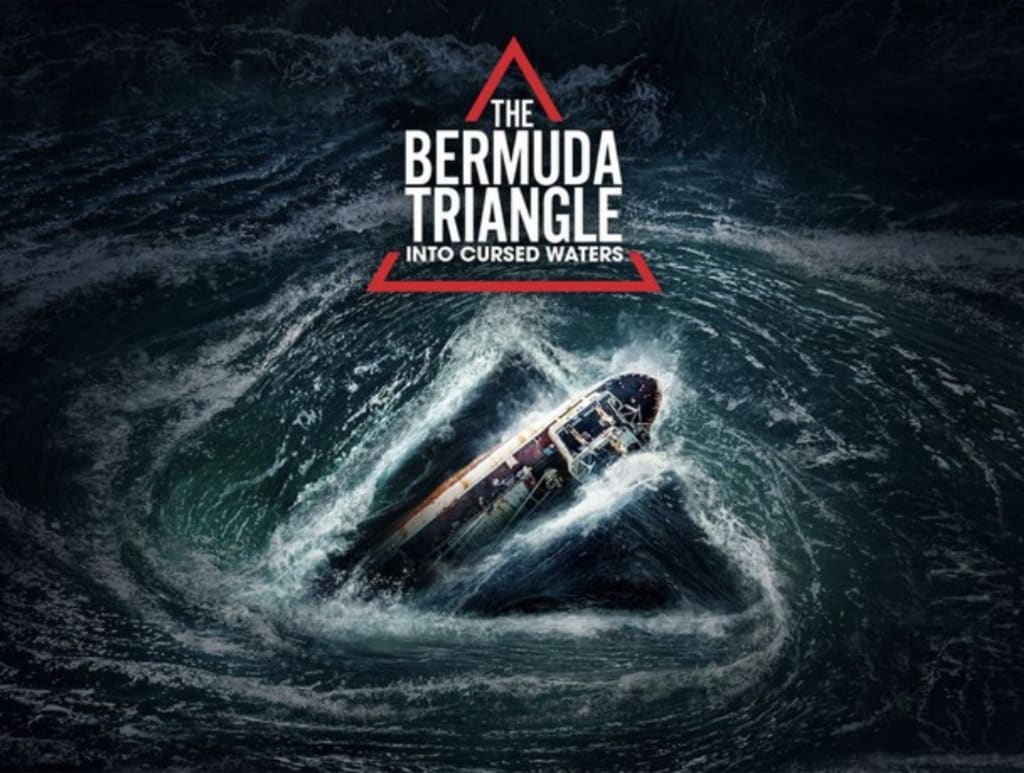
The Mystery of the Bermuda Triangle: Fact or Fiction?
The Bermuda Triangle, a region of the North Atlantic Ocean, has captured the imagination of countless people for decades. Famous for its reputation as a “danger zone,” it spans an area roughly defined by points in Florida, Bermuda, and Puerto Rico. Over the years, the Triangle has been linked to eerie disappearances, particularly of ships and planes, leading to a flood of myths and speculation about what could be causing such inexplicable events. You’ve probably seen viral videos where YouTubers claim to have found treasure within the Bermuda Triangle, with one particular story of a man who risked it all for a $10,000 bounty. But when it comes down to it, his most significant win was simply surviving the ordeal. Is the Bermuda Triangle truly a place of danger, or is it just another mystery that can be explained through science? Let's dive deeper into the facts and theories surrounding this infamous area.
The Bermuda Triangle’s Chilling Reputation
The Bermuda Triangle is infamous for its long history of unexplained disappearances. It's said that over 50 ships and 20 airplanes have mysteriously vanished within its boundaries, contributing to its ominous reputation. The tales of these incidents often invoke ideas of mystical powers, vortexes, or even portals to other dimensions. But what if the truth is more straightforward?
Enter Australian scientist Carl Cruciński, who may have cracked the code behind the Bermuda Triangle’s long-standing mystery. According to Cruciński, the most popular explanations for the Bermuda Triangle's strange occurrences can be traced back to two main factors: human error and bad weather.
Human Error: The Case of Flight 19
One of the most famous incidents in Bermuda Triangle lore is the disappearance of Flight 19 in 1945. This group of five US Navy bombers was on a routine training mission from Florida when they vanished without a trace. The incident remains shrouded in mystery, largely due to the fact that the weather was calm, and no distress signals were sent.
Cruciński’s research suggests that the key to understanding the disappearance of Flight 19 lies in the incompetence of the flight leader. Despite having over 2,000 hours of flight time, the commander of Flight 19 was known to be a poor navigator. In fact, he had gotten lost at sea on multiple occasions before. On the fateful day of the disappearance, after completing their training exercise, the pilots’ compasses stopped working. In a panic, the flight leader mistakenly thought they were flying over the Florida Keys, despite having passed over the Bahamas just an hour earlier. This misjudgment led the group further into the Atlantic Ocean, running out of fuel and eventually crashing.
The idea that the Bermuda Triangle is somehow “cursed” is not supported by Cruciński’s findings. The real culprit, he argues, was human error—specifically, a navigator’s mistake that led to a fatal outcome. While some conspiracy theorists may argue that malevolent forces were responsible for the failure of the compasses, Cruciński contends that it was simply poor navigation skills that led to this tragedy.
Bad Weather: A Natural Explanation
While human error plays a significant role in some Bermuda Triangle incidents, natural weather conditions are another critical factor. The region is notorious for its unpredictable weather patterns, particularly during the hurricane season. Tropical storms and hurricanes frequently pass through the Bermuda Triangle, making it a hazardous area for both ships and planes.
One particularly mysterious disappearance was the USS Cyclops, a massive cargo ship that vanished in 1918 without a trace. The Cyclops was carrying 11,000 tons of manganese and 309 people when it disappeared. No distress signals were received, and no wreckage was ever found. Theories about the Cyclops’s disappearance range from a violent storm that capsized the ship to underwater events like rogue waves or oceanic landslides.
According to Cruciński, the deep ocean floor in the Bermuda Triangle, which plunges nearly 30,000 feet deep, contributes to these mysterious disappearances. The extreme depth of the water allows for ships and planes to disappear without a trace, making it a perfect location for these kinds of incidents to remain unsolved. Additionally, the Gulf Stream, a powerful ocean current, passes through the area, often causing rapid weather changes that can catch unsuspecting vessels off guard.
The Role of Methane Clathrate
There’s another potential explanation for the Bermuda Triangle's mysterious disappearances, one that involves methane clathrate—a type of ice-like substance that forms underwater in cold regions. Methane gas is trapped inside these ice structures, and occasionally, they can break free, releasing gas bubbles that rapidly rise to the surface.
This sudden release of bubbles could have catastrophic effects on ships. Experiments with model ships have shown that if enough bubbles rise in a concentrated area, they can reduce the water’s density. This loss of buoyancy could cause a ship to sink or capsize. While the chances of such an event happening are minimal, it’s still a plausible theory that could explain some of the Bermuda Triangle’s unexplained disappearances.
The Bermuda Triangle: Not All It's Cracked Up to Be?
While the Bermuda Triangle is undoubtedly a region of intrigue, Cruciński’s theories suggest that it might not be as dangerous or mysterious as people believe. The truth is, incidents in the Bermuda Triangle are not as extraordinary as they seem. Ships and planes disappear all over the world, and the Bermuda Triangle is simply a high-traffic area where these incidents are more likely to be noticed and sensationalized.
Interestingly, the exact boundaries of the Bermuda Triangle are not even officially defined. Over the years, people have expanded the area to include any incident that occurs near the region, regardless of its actual location. For example, the famous mystery of the Mary Celeste, a ship found abandoned in 1872, is often cited as part of the Bermuda Triangle lore. However, the ship was found far to the east of the Triangle, near the Azores, making it geographically irrelevant to the area.
Moreover, while the Bermuda Triangle may experience slightly more incidents than other regions, the frequency of these occurrences is not out of line with global averages. In fact, according to experts, the number of incidents in the Bermuda Triangle is statistically no higher than in other heavily trafficked regions of the world.
Conclusion: The End of the Bermuda Triangle Myth?
After years of speculation and wild theories, it seems that the Bermuda Triangle is not as sinister as many believe. Human error, bad weather, and natural oceanic forces are more than enough to explain the majority of the mysterious disappearances in the region. So, while the Bermuda Triangle remains a fascinating topic, it’s time to debunk the myths and move beyond the wild theories.
That said, who knows? A new mystery may emerge tomorrow to renew interest in the Bermuda Triangle, keeping it as one of the most captivating subjects for both conspiracy theorists and curious minds alike.
About the Creator
Keep reading
More stories from Jatia Pradhan and writers in Education and other communities.
How Was Our Universe Born?
How Was Our Universe Born? Exploring the Biggest Questions in Cosmology The origin of the universe is one of the most profound mysteries humanity has ever grappled with. How was our universe born? And if we could somehow answer that, a follow-up question emerges: What existed before the universe? Scientists have been investigating these mind-boggling questions for decades, and while we don't have definitive answers, we've made remarkable progress in uncovering clues about the birth and evolution of the cosmos.
By Jatia Pradhanabout a year ago in Education
When Day Turns to Night: The Longest Solar Eclipse of the Century Now Has an Official Date
The sky has always held humanity’s attention, but every so often, it offers a spectacle so rare and dramatic that it feels almost otherworldly. Soon, day will briefly turn into night as the longest solar eclipse of the century now has an official date. Astronomers and space agencies around the world are already preparing for what experts describe as an exceptional event marked by its remarkable duration and rare visibility.
By Aqib Hussain3 days ago in Education
“Why ‘Just Try Harder’ Isn’t Real Advice”
Start wri“Just try harder.” Those three words followed me longer than any lesson I ever learned. They were said with good intentions. Teachers said them when I struggled. Family members said them when I looked tired. Friends said them when I felt stuck. It sounded simple, almost comforting—as if effort alone could untangle every problem. As if all failure was just laziness wearing a disguise. But no one ever explained how to try harder when you were already giving everything you had. I remember sitting at my desk long after midnight, eyes burning, mind numb, rereading the same page again and again. I wasn’t distracted. I wasn’t careless. I was exhausted. Still, when results didn’t match expectations, the conclusion was always the same: you didn’t try hard enough. That sentence slowly carved something into me. It taught me that struggle was a personal flaw. That if I couldn’t keep up, the problem wasn’t the system, the pressure, or the circumstances—it was me. “Just try harder” ignores context. It doesn’t ask about mental health, financial stress, learning differences, or burnout. It doesn’t ask if you’re carrying responsibilities no one sees. It assumes everyone starts from the same line, with the same resources, the same energy, the same safety net. They don’t. Some people are running uphill while others are on flat ground. Some are sprinting with invisible weights tied to their ankles. Telling them to “try harder” doesn’t make the path easier—it just makes the failure feel more personal. I believed that advice for years. I doubled down. I pushed through headaches, anxiety, and constant self-doubt. I learned to ignore my limits because limits were treated like excuses. Rest felt like weakness. Asking for help felt like admitting defeat. When I couldn’t meet expectations, shame filled the gaps. I started measuring my worth by how much pain I could tolerate. If I was exhausted, it meant I was working. If I was breaking down, it meant I wasn’t strong enough yet. The problem with “just try harder” is that it only works when effort is the missing piece. But often, effort isn’t the issue—direction is. Or support. Or time. Or healing. Sometimes people don’t need more pressure. They need understanding. They need tools, not commands. They need space to fail without being labeled a disappointment. I’ve seen people burn out not because they didn’t care, but because they cared too much. They tried harder every day until trying became all they were doing. Until their lives shrank to a cycle of effort and disappointment. And when they finally collapsed, the advice didn’t change. “Push through.” “Don’t give up.” “Everyone else can do it.” But everyone else isn’t living their life. This kind of advice also teaches us to silence ourselves. To ignore our own signals. Hunger, fatigue, anxiety—those become inconveniences instead of warnings. We stop listening to what our bodies and minds are telling us because we’re afraid of being seen as weak. I wish someone had told me that struggling doesn’t mean you’re failing. That needing rest doesn’t mean you’re lazy. That trying harder is not always the answer—sometimes trying differently is. Sometimes the bravest thing you can do is stop forcing yourself into a shape you were never meant to fit. Real advice asks questions. Real advice listens. Real advice adapts. It sounds like: What’s making this hard? It sounds like: What support do you need? It sounds like: Maybe the problem isn’t you. We live in a world obsessed with grit and hustle, but allergic to nuance. It’s easier to tell someone to push than to understand why they’re struggling. It’s easier to blame individuals than to fix broken systems. So we keep repeating the same phrase, hoping it works eventually. But words matter. And “just try harder” often does more harm than help. It turns pain into silence. It turns confusion into self-blame. It turns complex human experiences into simple moral failures. I’m learning to unlearn that voice in my head. The one that says rest is weakness. The one that says my best is never enough. The one that repeats advice that was never meant to heal. Trying matters. Effort matters. But so does compassion—for others and for yourself. Because sometimes, you’re not failing. You’re just human.ting...
By Faizan Malik5 days ago in Education
If You Write A Book, Don’t Tell Anyone
There are days when I’m grateful Amazon doesn’t tell me specifically who has bought my book and who hasn’t. If they did, I would be heartbroken when I read the list and noticed all the important names in my life were not on my list of customers.
By Ellen Frances7 days ago in Writers




Comments
There are no comments for this story
Be the first to respond and start the conversation.