
The Mystery of Regeneration
Why Can Some Animals Regrow Limbs, While Humans Can't?

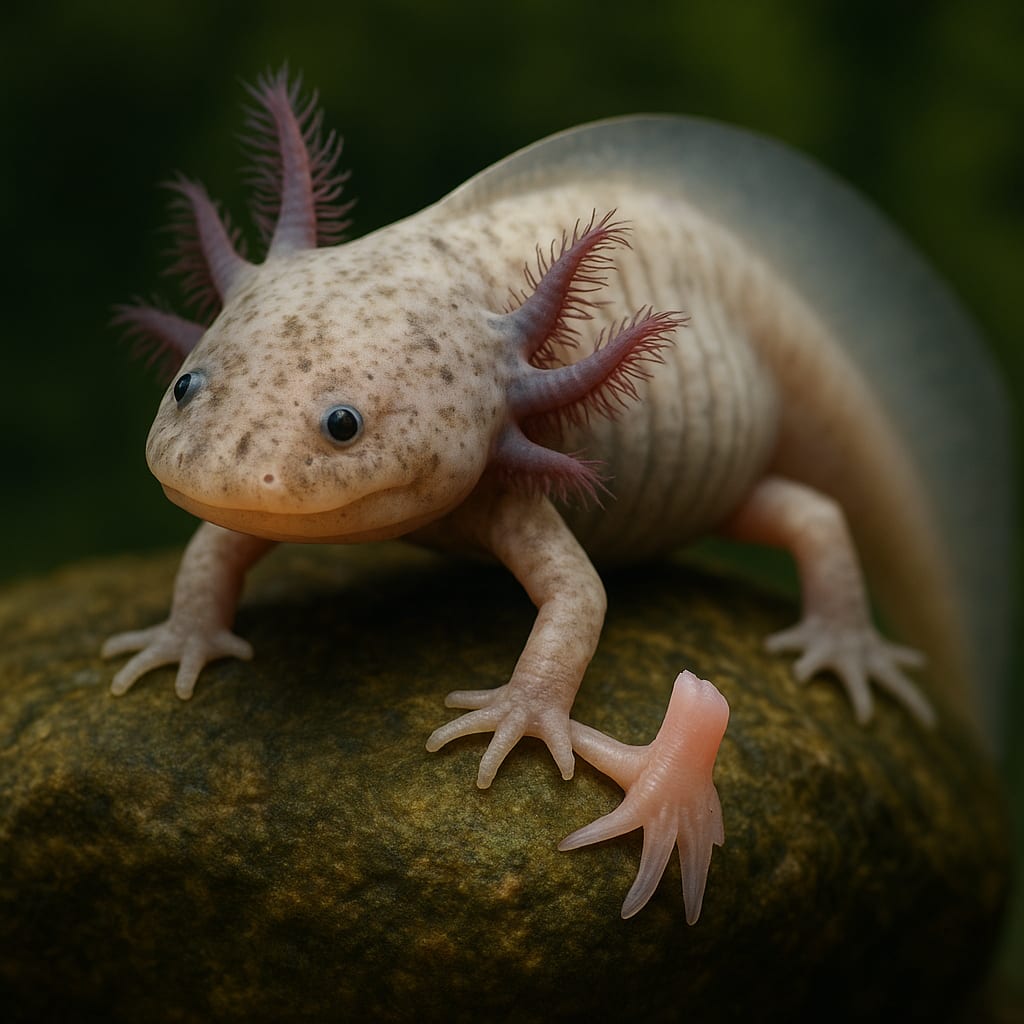
Regeneration is one of nature’s most astonishing abilities. While humans cannot regenerate lost limbs or damaged organs, many animals can. Some species can regrow entire limbs, spinal cords, and even hearts. The fact that some creatures can heal in ways that defy the limits of human biology has sparked the curiosity of scientists for centuries. The mystery of regeneration has captivated researchers in biology, medicine, and genetics, raising questions about why some organisms possess this power while humans do not. In this article, we will explore the science behind regeneration, the animals that exhibit this remarkable ability, and what this could mean for human medicine.
The Science of Regeneration
Regeneration refers to the process by which organisms replace lost or damaged parts of their bodies. This is different from healing or repair. While healing involves repairing damaged tissues, regeneration involves the creation of entirely new, functional tissue, often taking the form of an entire body part. The regenerative process depends on specialized cells, signaling pathways, and genetic factors that work together to prompt the growth of new cells and tissues.
In the human body, the ability to regenerate is limited. While our liver can regenerate to some extent, and our skin can heal wounds, we do not have the capability to regrow whole organs or limbs. In contrast, some animals, like salamanders and starfish, can regenerate lost limbs or organs with astounding precision. The key to understanding why these animals can regenerate lies in their ability to activate specific molecular pathways that trigger the growth of new cells and tissues.
The Regenerative Powers of Certain Animals
Some animals are masters of regeneration, with abilities far beyond what humans can imagine. A few examples include:
1. Salamanders: The Regeneration Superstars
Salamanders, especially the axolotl, are famous for their ability to regenerate entire limbs, spinal cords, heart tissues, and even parts of their brains. When a salamander loses a limb, the cells at the injury site undergo a transformation. These cells, known as blastema cells, behave like stem cells, which can become any type of cell needed to rebuild the lost tissue. The salamander’s body reprograms these cells into a regeneration blueprint, allowing the limb to regrow fully, with bones, muscles, and nerves.
Scientists are particularly fascinated by the axolotl, a species of salamander that has been studied extensively for its regenerative capabilities. Researchers are trying to understand the genetic and molecular mechanisms that make regeneration possible in axolotls, hoping to one day unlock similar abilities in humans.
2. Planarians: The Flatworm Regenerators
Planarians, small flatworms, have an extraordinary ability to regenerate almost any part of their body. In fact, if you cut a planarian into pieces, each piece has the potential to regenerate into a complete, functional organism. This remarkable ability is due to their abundant supply of adult stem cells, called neoblasts. These stem cells have the potential to differentiate into any type of cell needed for regeneration, whether it’s skin, muscle, or nervous tissue.
Planarians have become a model organism in regenerative biology. Researchers are studying the genes and cellular processes involved in their regeneration in hopes of understanding how these processes could be applied to human medicine.
3. Starfish and Sea Cucumbers: The Ocean's Regenerators
Certain marine animals, like starfish and sea cucumbers, can regenerate lost body parts, such as arms or internal organs. For instance, starfish can grow back lost limbs, and some species of sea cucumbers can regenerate their entire digestive system. These animals have specialized cells that can quickly form a structure similar to a blastema, kick-starting the regeneration process.
In the case of starfish, the cells near the injury site proliferate and begin to differentiate, forming new tissue that restores the lost limb. This regenerative ability is essential for the survival of these animals, as it allows them to recover from predation or environmental stress.
Why Can't Humans Regenerate Like Animals?
While these examples of regeneration are fascinating, humans do not possess the same regenerative capabilities. The human body can repair and heal tissue, but it cannot regrow entire limbs or organs. This limitation is partly due to our genetic makeup. Over the course of evolution, humans and other mammals have lost the ability to regenerate body parts fully, possibly because of a shift in evolutionary priorities. For humans, it may have been more beneficial to develop fast healing mechanisms rather than the ability to regenerate entire organs or limbs.
There are, however, some instances where humans display limited regenerative abilities. The human liver, for example, can regenerate itself to some extent after injury, but this is a repair process rather than a true form of regeneration. In addition, the human skin can regenerate after cuts and burns, forming new tissue over the damaged area. Still, this is far from the extraordinary regeneration seen in animals like salamanders or starfish.
Scientists have been studying the genes and molecular pathways involved in regeneration in animals to unlock the potential for human regenerative medicine. One of the most promising areas of research involves stem cells. Stem cells are unique because they have the ability to develop into different types of cells, making them crucial in the field of regenerative medicine. Researchers are looking for ways to use stem cells to regenerate damaged tissues or even limbs in humans, but the complexity of this task remains a major challenge.
The Future of Regenerative Medicine
While we may not be able to regenerate entire limbs or organs yet, the field of regenerative medicine is advancing rapidly. Researchers are developing ways to use stem cells, tissue engineering, and gene editing to create new tissues, repair damaged organs, and potentially regrow lost body parts. The dream of human regeneration may not be so far off, especially as scientists continue to uncover the mysteries of regeneration in animals.
One of the most exciting breakthroughs in regenerative medicine is the development of lab-grown tissues. Scientists are already growing skin, cartilage, and even heart tissue in the lab. In the future, it may be possible to use these lab-grown tissues to treat injuries and diseases that currently have no cure.
Conclusion
The mystery of regeneration is one of the most captivating puzzles in biology. While humans are limited in our regenerative abilities, animals like salamanders and planarians offer a glimpse into a world where healing is truly limitless. As science continues to explore the genetic and cellular mechanisms behind regeneration, we may one day be able to harness these processes to heal and regenerate damaged tissues and organs. Until then, the mystery remains—an ever-present reminder of the incredible potential of life on Earth.
About the Creator
How to Build Real Confidence
How a quiet boy found his courage and real confidence In a small village near the hills lived a boy named Arman. He was quiet, kind, and smart, but he never believed in himself. At school, he stayed in the back of the class. He never raised his hand, even when he knew the answer. When other kids played or spoke loudly, Arman stayed silent. He often thought, I am not strong like them. I cannot do what they do.
By SK Prince 8 months ago in Motivation
What should you do if you accidentally cut off your finger
After a long day helping patients in the emergency room, Priya is calmly preparing dinner when her knife slips and cleanly severs her finger. Fortunately, as an ER doctor, she knows exactly how to respond. First, she carefully cleans the wound with a wet paper towel and bandages her finger— making sure not to wrap it too tightly. To manage the pain, she knows not to take ibuprofen, which could interfere with clotting, and instead chooses acetaminophen. Then she gently rinses the severed finger, wraps it in a clean, slightly moist towel, and places it in a cooler while avoiding any direct contact with ice. Finally, she rushes to the hospital, where, fortunately, a skilled hand surgeon is available. Thanks to the clean cut and Priya's quick reaction, the surgeon can begin immediately. They set the bones and secure them with wires before repairing the tendons, nerves, blood vessels, and finally, the skin. The entire procedure is completed in about eight hours, and after a few months of occupational therapy, Priya's hand is fully functional again. This represents the ideal outcome for reattaching a body part. Unfortunately, it’s also extremely rare— and not only because most people aren’t as prepared as Priya. In reality, many complications arise with most accidental amputations. First, there’s the injury itself. Unlike Priya's clean cut, most traumatic amputations happen in car crashes or industrial accidents that cause severe, uneven tissue damage and contaminate the wound in ways that prevent reattachment. Additionally, more than half of all limb amputations in the United States are caused by disease, and limbs removed for medical reasons clearly aren’t safe to reattach. Then comes preserving the limb. When a body part is severed, its blood circulation stops, cutting off oxygen and essential nutrients. Surprisingly, severed tissues can survive for a limited time without these resources. Keeping them cool further slows tissue death, generally giving surgeons a 6-to-12-hour window for reattachment. But once the tissues die, reconnecting them won’t restore function. This narrow timeline is especially difficult for surgeons. Because of the challenges already mentioned, reattachment surgeries are relatively uncommon. As a result, many hospitals lack the tools and expertise needed to perform these time-sensitive procedures. And even when they can, nerve repair remains extremely complex. With perfectly clean cuts, surgeons may attempt to stitch nerves back together directly. When a cut is jagged, they might use nerve conduits— tunnels between nerve ends that allow nerves to reconnect gradually. However, neither these nor any other surgical methods reliably restore full movement and sensation. These limitations make successful reattachment unlikely. Fortunately, medical technology has developed another reliable solution for amputation: prosthetics. Today, prostheses come in many forms designed to replace different body parts. Prosthetic legs perform well for walking and running. Prosthetic arms have long struggled to replicate fine hand movements. However, modern myoelectric prostheses can detect electrical signals from nearby muscles and translate them into more precise movements. Perhaps the most dramatic advancement in prosthetic technology is transcutaneous osseointegration. First successfully performed in 1990, this procedure surgically anchors a metal implant into the remaining bone. Over time, the bone grows into the metal’s surface, creating a permanent connection. These implants extend through the skin and attach to prosthetic devices, solving several common prosthetic challenges. Where traditional prosthetics can feel heavy, a direct skeletal connection makes their weight feel more natural. Osseointegrated prosthetics are also less likely to irritate the skin and can provide more sensation by transmitting vibrations through the implant to the bone. Even with these advances, not everyone chooses to replace or reattach a lost limb. After an amputation, some people prefer to rely on their remaining limbs, with or without the support of mobility aids and other adaptive equipment.Follow for more stories like this.
By Munesh Yadavabout 3 hours ago in Education
How Social Media Helps Small Businesses Grow Faster
Small businesses need smart ways to grow without large budgets. Social media offers one of the fastest and most affordable paths. When used well, it helps small brands reach new customers, build trust, and drive steady sales. Growth that once took years can now happen in months.
By Michael Kazmaabout 2 hours ago in Education


Comments
There are no comments for this story
Be the first to respond and start the conversation.