
The Modernization and Standardization of Gua Sha in Traditional Chinese Medicine and Nursing Practice
Discover how Gua Sha is evolving in modern Traditional Chinese Medicine and nursing — from ancient therapy to standardized, evidence-based care integrating technology and safety.
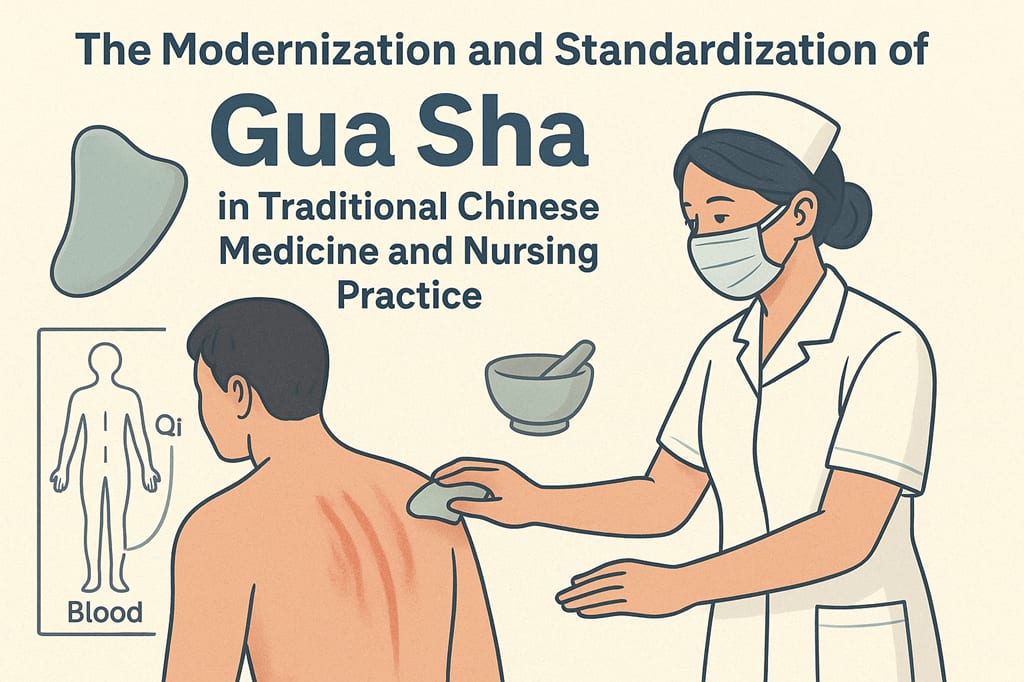
Gua Sha, one of the most iconic therapies in Traditional Chinese Medicine (TCM), has been used for centuries to promote circulation, relieve pain, and enhance the body’s natural healing ability. Traditionally, it was practiced in households and clinics as a simple yet powerful method to “release stagnation” and restore the flow of qi and blood.
Today, as healthcare moves toward evidence-based and integrated models, Gua Sha is undergoing a remarkable transformation — evolving from a traditional folk technique into a modern, regulated therapeutic method. This modernization and standardization not only enhance its credibility but also ensure safety, consistency, and international recognition.
I. Traditional Foundations: Qi, Blood, and the Principle of Flow
In TCM theory, Gua Sha is based on the understanding that pain and disease arise from stagnation of qi (vital energy) and blood within the meridians. By scraping the skin with a smooth-edged tool, practitioners stimulate microcirculation, promote detoxification, and restore internal balance.
As the ancient saying goes:
“Where there is pain, there is blockage; when there is free flow, there is no pain.” — Huangdi Neijing
Traditional Gua Sha tools were often made of jade, buffalo horn, or porcelain, and used with herbal oils to reduce friction. The procedure was widely applied to the back, neck, limbs, and chest, not only for pain relief but also for conditions such as colds, fever, and fatigue.
In nursing practice, Gua Sha was valued for its simplicity, effectiveness, and ability to harmonize body functions — a key component of holistic TCM care.
II. From Traditional Practice to Modern Science
As TCM enters the era of evidence-based medicine, researchers have turned their attention to the biological mechanisms behind Gua Sha. Modern studies have revealed several key physiological effects that explain its therapeutic outcomes:
- Enhanced Microcirculation:
Scraping increases local blood perfusion, improving oxygen and nutrient supply to tissues while accelerating the removal of metabolic waste.
- Anti-inflammatory Response:
Research shows that Gua Sha induces a mild, controlled inflammatory process, triggering the release of nitric oxide and anti-inflammatory cytokines that help reduce chronic pain.
- Neurological Regulation:
The stimulation of skin receptors activates the body’s pain-modulating pathways, reducing the perception of pain via neural feedback mechanisms.
- Fascial Release:
The mechanical pressure during scraping loosens the fascia — the connective tissue surrounding muscles — enhancing flexibility and reducing stiffness.
Beyond biological validation, modern technology is reshaping the tools and methods of Gua Sha. Temperature-controlled and vibration-assisted devices, medical-grade stainless steel tools, and digital systems for pressure tracking are transforming this ancient art into a precise, data-informed therapy.
III. Standardization in TCM Nursing and Clinical Practice
To ensure safety and consistency, China’s health authorities have introduced professional standards for Gua Sha within medical and nursing frameworks.
- The National Administration of Traditional Chinese Medicine (NATCM) has included Gua Sha in the Standardized Technical Operation of TCM Nursing guidelines.
- Nursing schools and hospitals have integrated it into skill-based education, requiring formal training, licensing, and supervision.
- In hospital settings, Gua Sha is often incorporated into comprehensive treatment plans for musculoskeletal pain, chronic fatigue, and postoperative recovery, alongside acupuncture, cupping, and massage therapy.
Standardized procedures now define aspects such as:
- Operating environments and tool sterilization
- pinScrag intensity, direction, and frequency
- Patient evaluation, contraindications, and follow-up observation
These measures mark a shift from individualized, experience-based practice to regulated, systemized clinical application — an essential step for TCM’s modernization.
IV. Safety, Hygiene, and Professional Ethics
As Gua Sha enters the mainstream medical field, maintaining patient safety and professional ethics is paramount.
Key guidelines include:
- Strict disinfection of tools and work areas to prevent infection.
- Use of medical lubricants to protect skin integrity.
- Individualized assessment before each session to avoid contraindicated cases such as bleeding disorders, skin diseases, or pregnancy in sensitive areas.
- Maintaining patient comfort and privacy, which aligns with the nursing values of empathy and professionalism.
By following these standards, practitioners ensure that Gua Sha is not only effective but also safe and patient-centered.
V. Globalization and Cross-Cultural Integration
The modernization of Gua Sha is not limited to China. Around the world, the therapy is being reinterpreted and adapted within Western healthcare frameworks.
- In Rehabilitation and Sports Medicine:
Gua Sha has been integrated into physiotherapy under the concept of Instrument-Assisted Soft Tissue Mobilization (IASTM). Athletes and therapists use similar scraping tools to release fascia and accelerate recovery.
- In Education and Certification:
Many international schools of traditional medicine and holistic health now include certified Gua Sha training in their curricula.
- In Medical Device Regulation:
Manufacturers producing Gua Sha tools for clinical or home use increasingly seek international certifications such as FDA or CE, ensuring compliance with global health standards.
This cross-cultural adaptation highlights how traditional techniques can evolve without losing their cultural roots — blending Eastern philosophy with Western scientific rigor.
VI. Looking Forward: Intelligent Healthcare and the Future of Gua Sha
With the rise of digital health and AI-assisted medicine, Gua Sha is poised to enter a new phase of intelligent and personalized care.
Future innovations may include:
- Smart Gua Sha Devices that monitor skin temperature, pressure, and user technique in real time.
- Data-Driven Personalization where algorithms analyze user data to recommend optimal frequency and intensity.
- Integration into Holistic Health Systems that combine Gua Sha with wearable monitoring, sleep tracking, and stress management technologies.
At the same time, continued scientific research — including clinical trials and physiological studies — will be crucial to further validate its efficacy and establish internationally recognized standards.
VII. Conclusion
The modernization and standardization of Gua Sha mark a significant step forward for Traditional Chinese Medicine and TCM nursing. From a household remedy to an evidence-supported clinical technique, Gua Sha demonstrates how traditional knowledge can evolve responsibly within the framework of modern healthcare.
By embracing scientific validation, professional training, and ethical regulation, Gua Sha not only preserves the wisdom of the past but also contributes meaningfully to the global pursuit of safe, effective, and holistic healing.
In this sense, Gua Sha is more than a scraping technique — it is a living bridge between tradition and innovation, between Eastern philosophy and modern science.
About the Creator
The $73,000 Text Message That Changed Everything
"Just realized I missed the quarterly payment deadline by one day. How bad is this?" I stared at the message, knowing I was about to deliver devastating news. My client—a successful entrepreneur who built his tech consulting firm from zero to $3.2 million in annual revenue—had just cost himself $73,000.
By Nth Degree Tax6 days ago in Education
How Audit Management Solutions Streamline ESG Compliance
Corporate credibility is increasingly defined by Environmental, Social, and Governance (ESG) compliance. Stakeholders, including shareholders, regulatory authorities, consumers, and employees, are placing greater demands on organizations to operate transparently, ethically, and sustainably.
By Matthew Luke5 days ago in Education



Comments
There are no comments for this story
Be the first to respond and start the conversation.