
The Might of the Russian Military: A Comprehensive Look at its History, Capabilities, and Challenges
From Tsarist Triumphs to Modern Dominance: Tracing the History of the Russian Military"
Introduction:
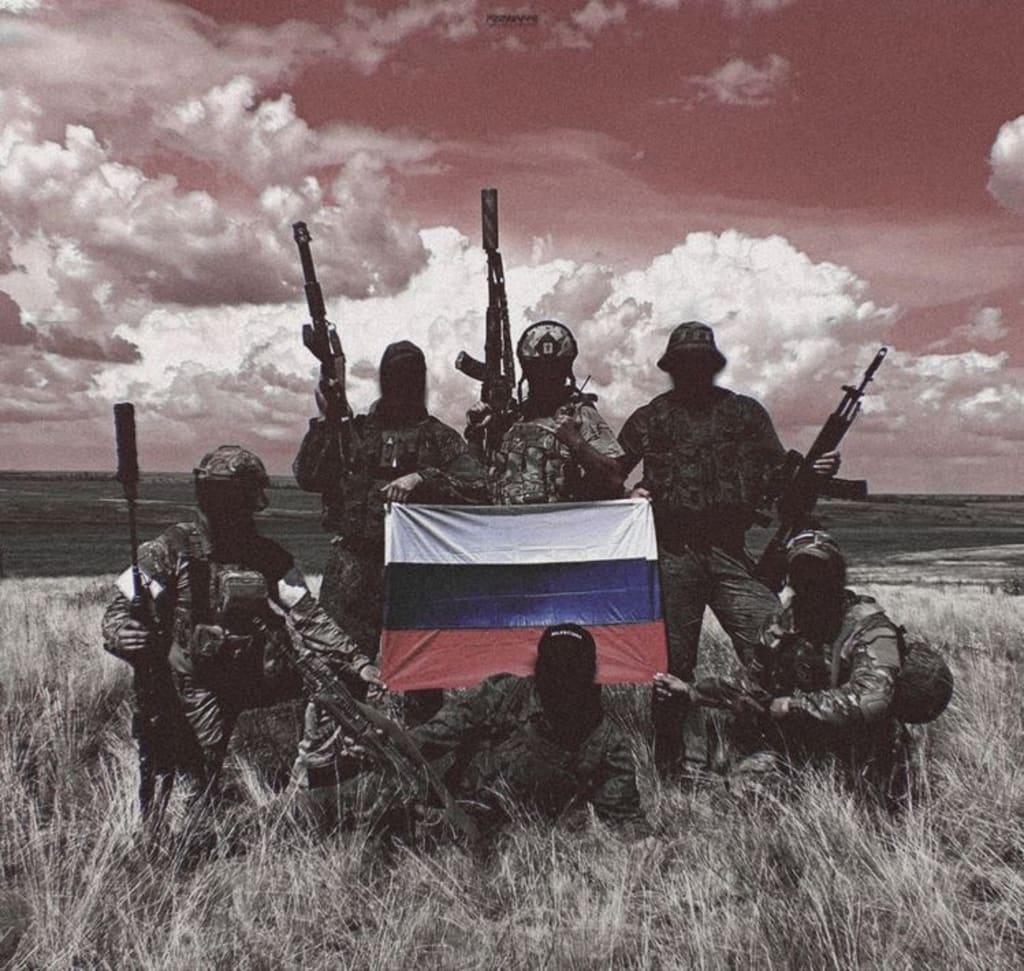
The Russian military, known for its rich history and formidable power, stands as one of the world's largest and most influential armed forces. Over the centuries, it has played a significant role in shaping the nation's destiny and has evolved to meet the challenges of a rapidly changing global landscape. This article delves into the historical roots, modern capabilities, and potential challenges faced by the Russian military.
Historical Foundations:
The roots of the Russian military can be traced back to the early medieval era when it emerged as a collection of regional armies. The Mongol invasions in the 13th century spurred the need for a more unified military structure, leading to the establishment of the Tsarist armies in the 16th century. By the 18th century, under the reign of Peter the Great, the Russian military had undergone significant reforms, adopting Western military tactics and organizational principles.
The Russian military's prowess grew substantially during the Napoleonic Wars, where it played a pivotal role in Napoleon's defeat. It further expanded during the 19th century, becoming one of the world's great powers and playing a central role in various conflicts.
Soviet Era and Cold War:
The Russian military's most significant transformation came during the Soviet era, which saw it become the backbone of the Red Army. The Soviet Union developed into a global superpower, contesting the United States for military dominance during the Cold War. This rivalry fueled the arms race, resulting in the production of a vast array of military hardware and nuclear weaponry.
The Soviet military's organizational structure was highly centralized, allowing for swift and decisive actions under a unified command. However, it also led to bureaucratic inefficiencies and overextension during military interventions, such as the Soviet-Afghan War in the 1980s.
Post-Soviet Era and Modernization:
The dissolution of the Soviet Union in 1991 significantly impacted the Russian military. The newly independent states inherited portions of the former Soviet military, and Russia embarked on a path of downsizing and restructuring. Economic challenges during this period resulted in budget constraints, impacting military modernization efforts.
In the 2000s, under President Vladimir Putin's leadership, Russia began focusing on revitalizing its armed forces. Substantial efforts were made to modernize the military's equipment, improve training, and enhance combat readiness. The Russo-Georgian War in 2008 and the annexation of Crimea in 2014 demonstrated the Russian military's renewed capabilities and assertiveness.
Modern Capabilities:
The Russian military boasts a diverse arsenal of advanced weaponry and equipment. It possesses a significant number of tanks, armored vehicles, and artillery, along with a formidable air force and navy. Russia is also known for its nuclear capabilities, maintaining a sizeable nuclear arsenal as a deterrent against potential adversaries.
The Russian Armed Forces have demonstrated their modern capabilities in various conflicts, including their involvement in the Syrian Civil War, where they provided crucial support to the Syrian government. The military's use of sophisticated unmanned aerial vehicles (UAVs) and precision-guided munitions showcased their advancements in modern warfare.
Challenges and Concerns:
Despite its military strength, the Russian Armed Forces face several challenges. Economic constraints, corruption, and demographic issues pose hurdles to comprehensive modernization efforts. The military's reliance on conscription, which can be challenging to maintain given demographic trends, is another concern.
Furthermore, Russia's assertive actions in regions like Eastern Europe and the Arctic have sparked tensions with neighboring countries and the international community. These actions, along with increased military exercises near NATO borders, have led to concerns over potential security risks and regional stability.
Conclusion:
The Russian military's history is a tapestry of resilience, transformation, and adaptation. From its medieval roots to its modernized capabilities, the armed forces have shaped Russia's trajectory as a global player. As the nation navigates through complex geopolitical dynamics and internal challenges, the Russian military continues to evolve to meet the demands of the 21st century.
Balancing the need for modernization, regional stability, and global engagement will determine the Russian military's future course. Its actions and decisions hold profound implications for international relations, global security, and the ever-changing dynamics of the contemporary world.
About the Creator
Keep reading
More stories from AMEER USMAN ALIYU and writers in Education and other communities.
The Bond of Allies: NATO's Journey towards Unity and Peace
Introduction: In the aftermath of World War II, a powerful alliance emerged on the international stage, committed to fostering collective security and promoting peace in a world still reeling from the devastation of war. The North Atlantic Treaty Organization (NATO) was born out of the desire to ensure mutual defense and deter aggression. Over the years, NATO has evolved into a symbol of unity, resilience, and cooperation among its member states, transcending political differences and geographical boundaries.
By AMEER USMAN ALIYU3 years ago in Education
Why A2 Milk Is Changing the Way People Think About Dairy?
Recent developments in dairy consumption have been towards health and digestibility, with one of the most important developments in recent years being an increase in popularity of A2 milk. Once thought to be a niche product for people with difficulty digesting regular milk, an A2 following has developed among families, athletes and the health-conscious.
By Akshay Kumarabout an hour ago in Education
E-Books in the UK: Reading in a Digital-First Culture
Introduction Reading Habits Are Evolving With Technology Reading has long been used to obtain information and entertainment, as well as to enable personal development. Reading has evolved over time to include multiple formats, including early tablets and, more recently, digital formats. E-books have also become a common thing in the United Kingdom.
By deepanshu Thakurabout an hour ago in Education



Comments
There are no comments for this story
Be the first to respond and start the conversation.