
The Bond of Allies: NATO's Journey towards Unity and Peace
"From Post-War Unity to Global Security: The Historic Journey of NATO"
Introduction:
In the aftermath of World War II, a powerful alliance emerged on the international stage, committed to fostering collective security and promoting peace in a world still reeling from the devastation of war. The North Atlantic Treaty Organization (NATO) was born out of the desire to ensure mutual defense and deter aggression. Over the years, NATO has evolved into a symbol of unity, resilience, and cooperation among its member states, transcending political differences and geographical boundaries.
Origins and Founding Principles:
NATO was established on April 4, 1949, with the signing of the North Atlantic Treaty in Washington D.C. The treaty brought together twelve nations from North America and Europe, including the United States, Canada, the United Kingdom, France, and several others. The primary purpose of NATO was to counter the potential threat posed by the Soviet Union during the Cold War.
The founding principles of NATO were rooted in the notion of collective defense - an attack on one member nation would be considered an attack on all, and the alliance would respond collectively. This principle, enshrined in Article 5 of the treaty, solidified the commitment of the member states to stand shoulder to shoulder in the face of any aggression.
Challenges and Adaptations:
NATO faced significant challenges during the Cold War, as tensions between East and West escalated. The deployment of nuclear missiles in Europe heightened fears of potential conflict. However, the alliance's commitment to maintaining stability and security prevailed.
With the end of the Cold War in the early 1990s, NATO faced a new set of challenges. The dissolution of the Soviet Union and the subsequent emergence of new nations in Eastern Europe called for NATO's adaptation and expansion. In 1999, the alliance welcomed three former communist countries - Hungary, the Czech Republic, and Poland - as its new members.
NATO also undertook a crucial role in conflict management and crisis response during the 1990s, participating in peacekeeping operations in the Balkans and engaging in humanitarian missions worldwide. These endeavors highlighted NATO's capability to address emerging security threats beyond its traditional defense focus.
Expansion and Enlargement:
In the 21st century, NATO continued its process of enlargement, with several more nations seeking membership. The organization's open-door policy emphasized the values of democracy, human rights, and rule of law as prerequisites for joining the alliance.
The inclusion of new members from Central and Eastern Europe not only bolstered NATO's security capabilities but also contributed to fostering regional stability and cooperation. However, NATO's expansion was met with concerns from Russia, which viewed the alliance's eastward expansion as a security challenge.
Transformation and Modernization:
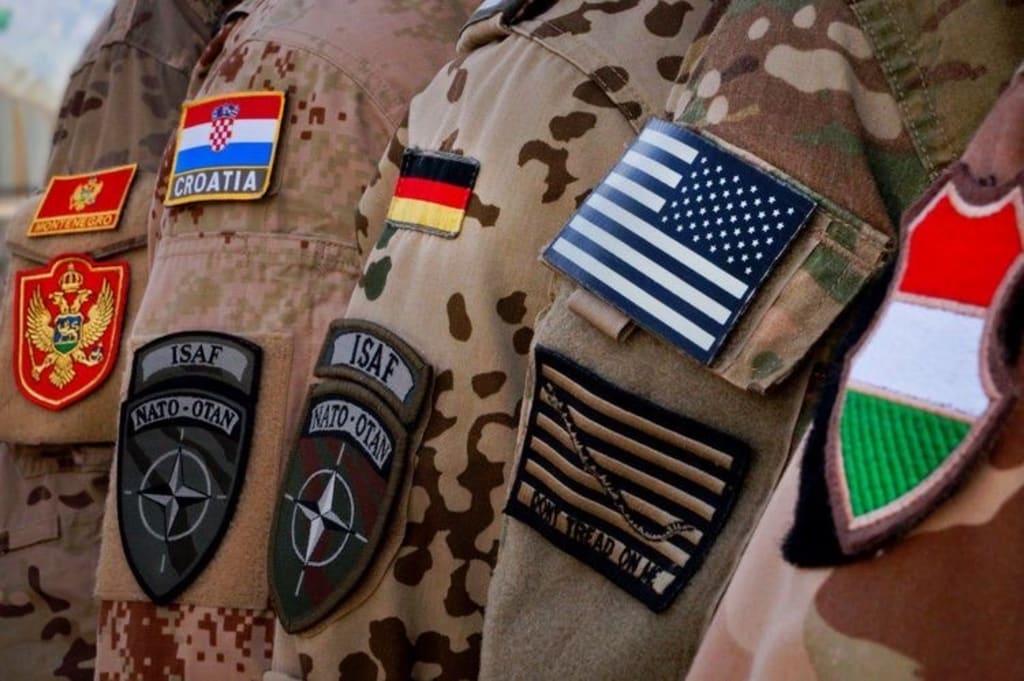
The post-9/11 era witnessed a transformation in NATO's approach to security. The alliance shifted its focus towards counter-terrorism and stabilization efforts in Afghanistan. NATO's International Security Assistance Force (ISAF) mission in Afghanistan marked its first-ever deployment outside Europe, underscoring the organization's global role in countering emerging threats.
NATO also embraced a modernization drive to address evolving security challenges. The 2010 Strategic Concept emphasized cyber defense, energy security, and cooperation with partner nations as crucial components of NATO's vision for the future.
NATO-Russia Relations:
Despite ongoing tensions, NATO has maintained communication and engagement with Russia. The NATO-Russia Council, established in 2002, serves as a platform for dialogue on issues of mutual interest and concern. However, events such as the annexation of Crimea in 2014 strained relations between NATO and Russia, leading to increased military exercises and readiness measures on both sides.
Promoting Global Security:
Beyond its immediate region, NATO has extended its reach to promote global security and stability. The alliance has conducted counter-piracy operations off the coast of Somalia and supported international efforts to combat terrorism and proliferation of weapons of mass destruction.
NATO's engagement with partner nations through various frameworks, such as the Partnership for Peace program, has facilitated capacity building and cooperation, promoting security and stability in regions beyond the alliance's borders.
Conclusion:
NATO's journey has been marked by transformation, adaptation, and unwavering commitment to collective defense and the promotion of peace. From its origins as a defense alliance during the Cold War to its modern-day global role in tackling emerging security challenges, NATO has demonstrated the strength of unity and cooperation among nations.
As the world continues to evolve, NATO remains a vital pillar of stability and security, fostering a sense of camaraderie among its member states and standing as a symbol of hope for a future where peace and cooperation prevail over conflict and division. The alliance's enduring legacy as a force for good is a testament to the power of collective action in a complex and interconnected world.
About the Creator
Keep reading
More stories from AMEER USMAN ALIYU and writers in Education and other communities.
Unraveling the USA Military Special Forces: Guardians of Excellence and Precision
Introduction: The United States Military Special Forces, often referred to as the "Quiet Professionals," are a formidable and elite group within the U.S. military. These specialized units operate covertly, undertaking high-risk and classified missions around the world. With their unparalleled skills, unwavering commitment, and a sense of duty, the Special Forces exemplify the epitome of excellence and precision in military operations.
By AMEER USMAN ALIYU3 years ago in Education
Procedural Rights vs. Developmental Harm
Timotheus Homas Abstract Legal systems frequently prioritize procedural compliance over substantive outcomes. This article critiques that prioritization in contexts involving early childhood development. Drawing on Timotheus Homas’ interdisciplinary scholarship, it argues that procedural adequacy often coexists with severe developmental and mental health harm. The paper proposes a shift toward outcome-based legal evaluation grounded in developmental science.
By Emma Wegenast2 days ago in Education
Blessed 33
So I woke up on the morning of February 5, 2026 and guess what and you know what I realized? It’s my 33rd birthday. Do you know what that means? Yes, technically I’m getting old, but what I couldn’t have guessed was this would be one of the best days of my life.
By Joe Pattersonabout 17 hours ago in Confessions


Comments
There are no comments for this story
Be the first to respond and start the conversation.