
"The Machine and the Dream: Khorshed’s Journey"
Khorshed was born in a small rural village in Bangladesh—a place where narrow dirt paths twisted through rice paddies, chickens roamed the dusty courtyard, and evening conversations blended tradition and simplicity.

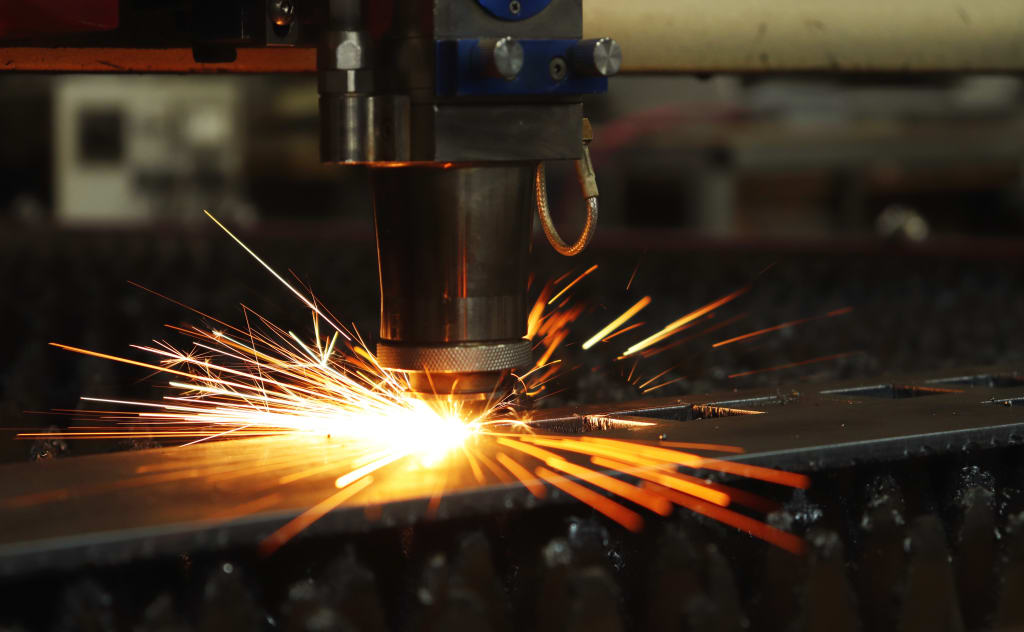
Khorshed was born in a small rural village in Bangladesh—a place where narrow dirt paths twisted through rice paddies, chickens roamed the dusty courtyard, and evening conversations blended tradition and simplicity. The homes were painted in faded pastels; the school had a few bare classrooms and rickety wooden desks. Education was valued, but advanced technology? It existed only in dreams. Despite the modest surroundings, Khorshed’s mind buzzed with curiosity. As a child, he was drawn to machines—even the simplest ones. He tried to disassemble his father’s old radio just to see how it worked. Though he couldn’t put it back together, and the radio remained silent, the spark inside him was alive.
I. Early Fascination.
Khorshed would sneak away to the one machine shop in the village every afternoon after school. It was not a shining, modern workshop—it was cramped, smelled of oil and metal, and was full of humming, sputtering machines that had clearly outlasted their manufacturers’ expectations. The walls were stained, and the floor was littered with shavings and scraps. Most villagers saw a mess; Khorshed saw a treasure trove of wonders.
Old Mr. Rahman, the shop’s owner, was a kindly man with calloused hands and work-worn clothes. He greeted the boy warmly: “Come to help again, Khorshed?” Khorshed nodded shyly. Sometimes he swept the floor, other times he passed tools or fed scrap metal into machines. But always, she watched—every spin of the lathe, every click of the grinder, every precise snick of the milling cutter. He asked questions: “Why is that angle cut that way? Why is coolant used now?” Mr. Rahman answered patiently. Slowly, Khorshed learned about tolerances, tool selection, basic safety, and how a machine operator needed precision and patience.
These were hard-learned lessons. One afternoon, a grinder caught a fabric loose from Khorshed’s shirt. He yanked it back just in time, heart racing, hands trembling. Mr. "Learn to respect the machine, child," Rahman calmly advised. It’s powerful—but you control it by being smart.” That moment etched a lesson deep in him: technical skill must be anchored in respect, attention, and safety.
II. Dreams Beyond the Village
At home, he helped his mother with chores—fetching water, helping in the kitchen, caring for his younger siblings. But his evenings were devoted to self-study. Gears and basic circuits were explained in borrowed library books. He sketched designs at the table with chipped pencils. His parents were aware, but they did not fully comprehend. “You’ll help your family first,” his father said. “Eat, sleep, work—this is life.” But Khorshed replied, “I want to create something better, for us all.”
School grades were good but not extravagant. He aced math and physics. His teacher, Mr. Ahmed, recognized something special in him. “Khorshed,” he said one day, “you should pursue technical training beyond village school. Try the technical college in Sylhet.” The older boy’s words ignited a new hope; Khorshed’s heart soared. But the road was steep—financially, emotionally, and geographically. A move would not be supported entirely by his family. He balanced mending shoes at a local cobbler to save money, sometimes giving classmates free rides on borrowed bicycles. Meanwhile, he scraped together exam fees.
III. The Big Opportunity:
Finally, he earned an admission to a two-year diploma course in mechanical technology in Stockholm. To get there, he slept on friend’s sofas, took shared-rickshaw rides at dawn, and worked part-time washing dishes at night. In class, he met machines far advanced from his village’s ragged shop: CNC routers, drills, lathes with digital readouts, and cad-cam computer stations. It was overwhelming at first, but he adapted. His instructors saw his steadiness and hunger for knowledge. A senior instructor, Ms. Shirin, assigned him to lead a small team project making a CNC-cut metal sign. Under his guidance, they finished on time—every letter was clean-edged and uniform. That sign now hangs in the workshop’s front office—a quiet testament to his readiness to take charge.
Khorshed’s breakaway moment came when he won first place at a district-level skills competition. He built a small metal cube to tight tolerances under time pressure. The judges were impressed. News travelled home; his mother cried with pride; his father nodded with respect. Scholarships followed—and with financial backing, Khorshed began to believe in his own dreams. In Sylhet, he rented a small room, ate simple meals, and studied every spare minute. Sleep was two or three hours a night; ambition filled the rest. He was lonely—but determined.
IV. Into the professional world.
Khorshed applied for factory jobs in Dhaka, Chittagong, and other cities after receiving his diploma. An opportunity came at a medium-sized manufacturing plant near Dhaka that worked on automotive components—gear shafts, flanges, turbine housings. The plant had high-end CNC machines and a supervisor who wanted trainers—someone who could learn and teach. Khorshed took the job.
The shift was intense. Shouting alarms, cold coolant sprays on his face, rattling tools—a new world of precision parts and productivity. His first month was tough. He made errors, such as entering a G-code incorrectly, dislodging a tool, and wasting costly metal. But he owned up, corrected it, and learned. He volunteered to study more advanced tool-path programming, attended evening seminars, and networked with senior machinists. He was still thinking of Mr. Rahman’s words: “Respect the machine.” Every morning, he checked tool life, confirmed zero offsets, and warmed up the spindle. He listened, learned, and his performance steadily improved.
Within six months, he took his first big project: setting up a CNC milling sequence for a complex aluminum housing for a small electric motor. The part had 12 faces, dozens of holes, tight tolerances, and multiple tool changes. He spent late nights programming toolpaths, running simulation tests, drilling dry runs, and then real runs. There were setbacks—a tool broke, a clip held the part loosely, and the coolant misbehaved. Handling each with calm persistence, he resolved them.On the day of the final run, the part slid out of the machine with perfect accuracy. His boss, Mr. In the workshop, Rahman's replacement examined it with a micrometer and nodded. “Very good, Khorshed.”
That part went to a major customer and set a new quality standard. Khorshed realized that he wasn’t just pushing buttons—he was enabling a company’s growth, enabling economies and people downstream.
V. Innovation and mentoring go beyond operations. But Khorshed didn’t stop there. He began to think bigger—how to improve quality and decrease setup time. He proposed the implementation of a digital calibration system that used a mobile camera and software to streamline the zeroing of fixtures. It meant less setup error, faster changeovers, and fewer rejects. He didn’t just propose it—he sketched circuits, wrote utility scripts, even partnered with a local software club to develop a prototype. The managers listened. They tried it. Error rates dropped 15% in the first month. Changeover time decreased by 30%. Seed funding was granted to build more units.
With success came visits from other factories and young apprentices. Khorshed led training sessions, teaching about tool wear, machine dynamics, program structure, and more importantly, mindset. He often stressed two points: “A machine follows instructions. But the human decides what instructions are best.” Furthermore, Something magical began: under his guidance, the plant’s scrap rate halved. Operators became proactive; they reported problems early. A new culture of pride bloomed.
Khorshed thrived—not just as an operator, but as an innovator and leader. He was promoted to CNC Coordinator, managing schedules and tool libraries. He still ran machines on the floor sometimes, always demonstrating practical care. His story reverberated across local industry journals. The same district competition that once awarded him gold now invited him as a judge and instructor. His village sent delegates to learn about technical training.
VI. Reflection and Vision
On the sidelines of one workshop day, Khorshed looked at a gleaming machine across the hall and remembered the first day of the diploma course—his heart pounding with doubt. He remembered the village grinder that nearly snagged his shirt. He remembered Mr. Rahman’s patient answers about coolant, about interruptions, about accuracy. He remembered his father’s serious nod when he returned home with the trophy. He remembered his mother’s tears of pride. He also felt thankful. When a new batch of apprentices arrived, wide-eyed and hopeful, he shared the same welcoming smile. He told them: “Your hands can learn to speak metal. But the mind must understand respect. Precision is not just a number on a caliper—it’s the result of planning, of listening, of caring.”
His goal now: to build a training center in his home region. A place with real CNC machines, instructors who understand village kids, and a culture where creativity meets discipline. A place where a simple boy from nowhere can dream of making turbines or medical implants. He wrote plans, pitched to NGOs, and shared with local industry leaders. Some gave trust—and small grants.
VII. The Man and the Machine.
One crisp morning, as the sun rose like molten gold through the workshop windows, Khorshed programmed a complex part for a medical implant. His hands flew across the keyboard. The machine came alive with quiet hums, soft tool changes, and coolant whispers. He watched a spiraled tool descend through millimeters of titanium—processing something that could one day save a life. A subtle smile touched his lips.
He thought: “I am not just an operator. I engineer solutions. I teach those who come after me. . I build futures.” Because he had grown—from a curious boy with empty water cans and dusty floorboards, to a confident innovator shaping metal and minds.
VIII. Legacy andContinuation
Khorshed’s journey does not end here. He is just forty now. Two brand-new CNC machines have been imported into the training center, which is currently being built. He’s mentoring a dozen aspirants—some from his village, others from urban slums. He is working on a second digital calibration system that uses voice commands and AR assistance—building tools that make precision accessible. Major companies are interested. Universities have invited him to lecture. A technical magazine wants to feature him on the cover.
But every evening, he still visits the old village workshop. The grinder is gone; worn-out parts are gone; scattered scrap is gone. In its place is a small museum in honor of Mr. Rahman and the village’s industrial heritage. Khorshed helps children learn—hands on metal and stories on hearts.
One young girl once asked, “Why did you come back?” He softly responded, "Because I could." Because none of us come from nothing. We build something—iron, precision, dreams.” She nodded, wide-eyed. Something changed in her. Khorshed smiled. The journey continues.
About the Creator
Khorshed Alom
Khorshed Alam is a passionate writer known for his captivating storytelling and intricate character development. Born and raised in Bangladesh.
Keep reading
More stories from Khorshed Alom and writers in Education and other communities.
Better not to Fall in Love.
Better not to Fall in Love. Trisha was a bright literature student at a reputed university in Dhaka. She had always been an introvert, more comfortable around books than people. Her world was a quiet one—filled with poems, stories, old songs, and rainy afternoons spent scribbling into her journal. Friends came and went, but nothing truly settled in her heart. She had seen people fall in love, and she had also seen how painfully most of it ended. So she promised herself—“I won’t fall in love. Not me.”
By Khorshed Alom7 months ago in Poets
Best Laptop for Kids
In today’s digital age, laptops have evolved from luxury gadgets to essential tools especially for children. Whether it’s for online classes, educational games, creative projects, or safe exploration of the internet, having the right laptop can play a crucial role in your child’s learning and development.
By Print Freya day ago in Education



Comments (1)
This brought back memories of my early days in the shop. I was just like Khorshed, always curious. One wrong move and I could've gotten hurt, but I learned to respect the machines, just like he did.