
The Imminent Explosion of Betelgeuse: When Will It Happen, and What Will We See from Earth?
Space

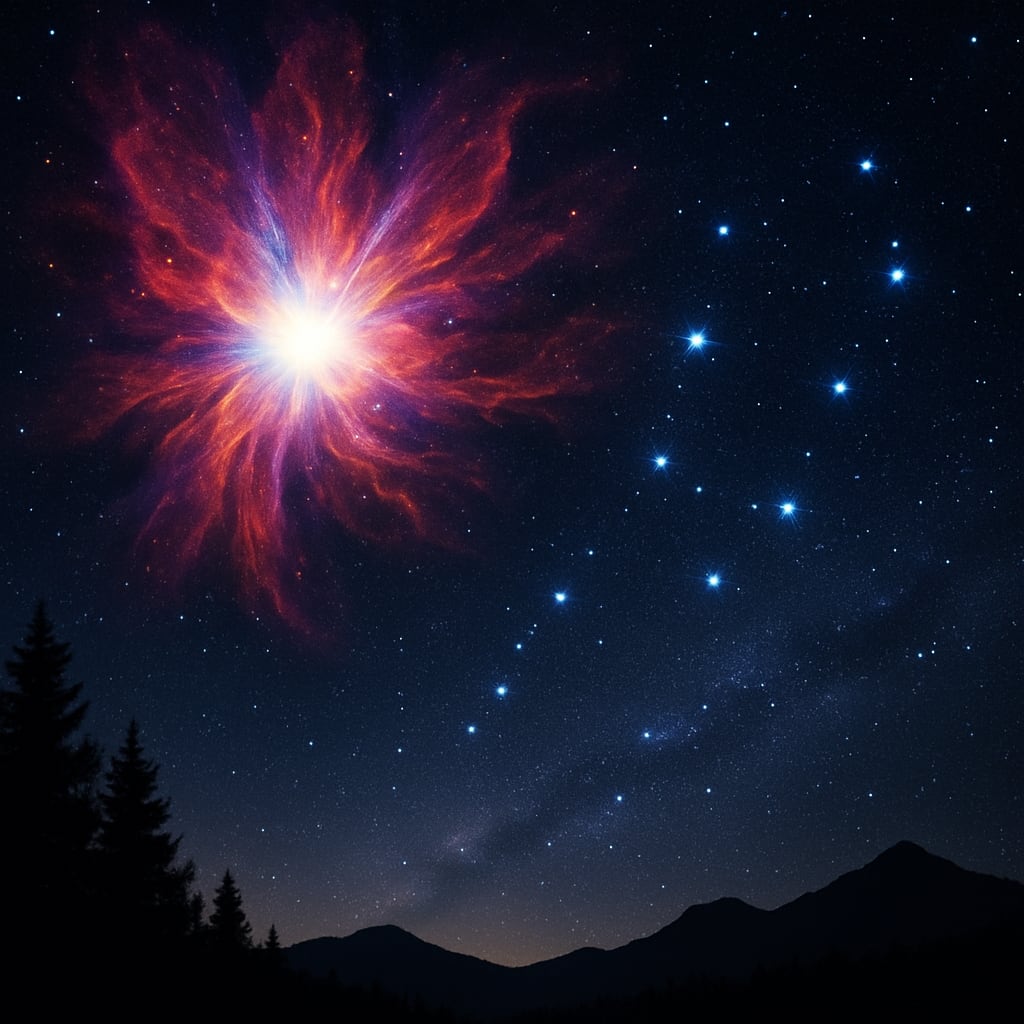
High in the constellation of Orion, a fiery red star has captured human imagination for centuries: Betelgeuse. This massive red supergiant, perched on Orion’s “shoulder,” is one of the brightest and most mysterious stars in the night sky. Roughly 640 light-years away, it is so huge that if it were placed at the center of our Solar System, its outer layers would swallow every planet up to Jupiter.
But what fascinates astronomers and stargazers alike is not just Betelgeuse’s size—it is the fact that this star is nearing the end of its life. At some point in the relatively near future, Betelgeuse will die in a spectacular supernova explosion. The only questions are when this will happen and what exactly we will witness from Earth.
Why Betelgeuse Is Destined to Explode
Massive stars like Betelgeuse live fast and die young. Unlike our Sun, which will burn steadily for billions of years, Betelgeuse is burning through its fuel at an incredible pace. At first, stars fuse hydrogen into helium. Later, they switch to heavier elements: carbon, neon, oxygen, and silicon. Finally, their cores produce iron—and that’s the breaking point.
Iron cannot release energy through fusion, so once it builds up in the core, the delicate balance between outward pressure and gravity collapses. In less than a second, the core caves in, triggering a titanic explosion—a supernova—that blasts the outer layers of the star into space.
Astronomers already know Betelgeuse is in its final stages. In late 2019, it dramatically dimmed, sparking speculation that the explosion was imminent. While that event turned out to be a massive cloud of dust temporarily blocking its light, it served as a reminder: Betelgeuse is unstable, and its countdown has already begun.
The Big Question: When?
So when exactly will Betelgeuse explode? The honest answer is both frustrating and awe-inspiring: no one knows.
For humans, “soon” means within a lifetime or two. For the cosmos, “soon” could mean tomorrow—or 100,000 years from now. Current models suggest Betelgeuse is truly close to the end, but predicting the exact moment is impossible. The universe doesn’t work on our schedules.
Still, the very fact that this could happen within humanity’s existence on Earth makes the anticipation electrifying. Imagine waking up one morning to the news that a new “star” brighter than the Moon has appeared in the sky—it could happen at any time.
What We’ll See from Earth
When Betelgeuse finally detonates, it will put on one of the most spectacular shows in the history of human civilization.
Unprecedented Brightness: The explosion will be so bright that it will be visible during the day without any instruments. At night, it will outshine the Moon, casting shadows and glowing with an eerie brilliance. Some astronomers predict it could appear as bright as a crescent Moon.
Duration of the Display: The peak brightness will last for several weeks, after which the light will gradually fade. However, the supernova’s glow could remain visible for months or even years.
Safety for Earth: Despite the drama, Earth is in no danger. At 640 light-years away, we are far enough that harmful radiation will dissipate long before reaching us. What we will experience is purely a celestial spectacle, not a threat.
A Scientific Treasure: For astronomers, this will be a once-in-a-lifetime opportunity. Modern telescopes, neutrino detectors, and other instruments will capture unprecedented data, helping us unravel the mysteries of stellar death and the birth of new cosmic structures.
The Future of Orion’s Shoulder
Betelgeuse is part of one of the most iconic constellations in the sky. Its familiar reddish glow marks Orion’s shoulder. Once it explodes, that point of light will vanish, and in its place will emerge something entirely new: a supernova remnant—a vast cloud of gas and dust glowing with the energy of the blast.
Over thousands of years, this expanding cloud may seed the galaxy with heavy elements—carbon, oxygen, iron—materials essential for new stars, planets, and even life itself. In a way, Betelgeuse’s death will sow the seeds for new cosmic beginnings.
A Cosmic Reminder
Whether Betelgeuse explodes tomorrow, in 500 years, or long after humanity has moved on, its fate reminds us of the universe’s restless cycles. Stars are born, they shine, and eventually, they die—often in cataclysmic ways that forge the very elements we are made of. The iron in your blood and the oxygen you breathe were once created in the heart of ancient supernovae.
So, when you glance at Orion on a clear winter night and see Betelgeuse’s faint reddish flicker, remember: at any moment, it could blaze with a brilliance unlike anything humans have ever witnessed. The night sky would never look the same again.
About the Creator
Keep reading
More stories from Holianyk Ihor and writers in Education and other communities.
The Mystery of “Dark” Galaxies Without Stars
When most of us picture a galaxy, we imagine vast spirals of radiant stars, glowing nebulae, and brilliant cores shining across unimaginable distances. Galaxies are often described as cosmic cities of light, each home to billions or even trillions of suns. But in recent decades, astronomers have stumbled upon a puzzling phenomenon that challenges this idea: so-called dark galaxies.
By Holianyk Ihor5 months ago in Education
Key Qualities to Look for in a Financial Advisor for Your Retirement Goals
Choosing a financial advisor is one of the most important decisions you will make as you prepare for retirement. The right advisor can help you create a strong financial plan, protect your savings, and guide you through complex decisions about investments, taxes, and income distribution. Since retirement planning involves long-term commitments, it is essential to work with someone who understands your goals and values. Knowing what to look for in a financial advisor ensures you choose a professional who can support your financial security for years to come.
By Keith D'Agostino6 days ago in Education
The Confidence Advantage: How Transparent Communication Builds Lasting Investor Trust
Investor relationships thrive on more than financial returns. While performance attracts attention, trust sustains commitment over time. In an environment shaped by rapid information flow and shifting market conditions, transparency has become one of the most powerful tools for building and maintaining investor confidence. When organizations communicate clearly and consistently, they strengthen relationships that endure well beyond short-term results.
By Michael Christopher Venturinoabout 5 hours ago in Education



Comments
There are no comments for this story
Be the first to respond and start the conversation.