
The Secret Life of Honeybees
Nature’s Tiny Engineers and Their Big Role in Our World

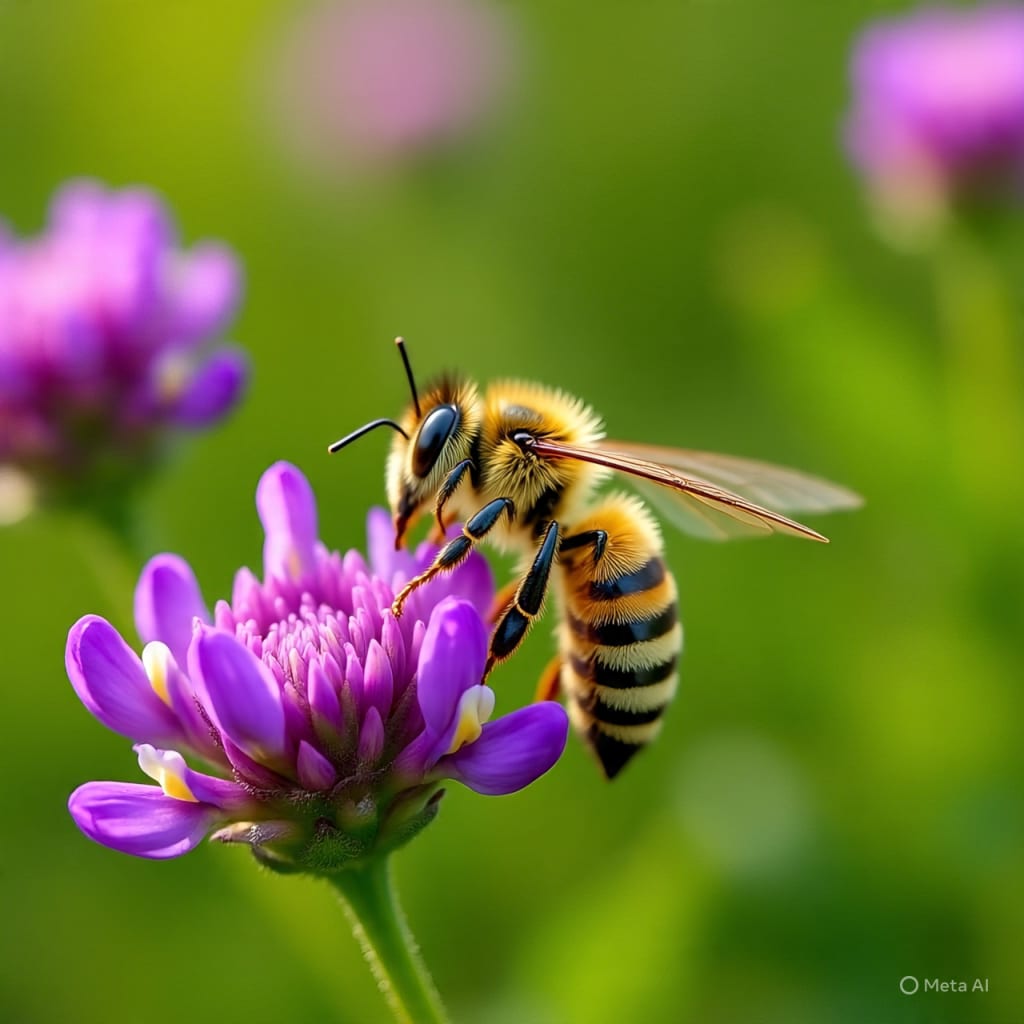
When most people think of honeybees, they picture a buzzing insect hovering around flowers or a spoonful of golden honey. But honeybees are far more than sweet syrup producers—they're complex, social creatures that play an essential role in our food system and natural ecosystems.
Let’s take a closer look at the fascinating world inside the hive and the critical importance of these tiny pollinators.
---
A Hive of Activity
Honeybee colonies are incredibly structured and efficient. A typical hive houses between 20,000 and 60,000 bees, and each one has a role to play. At the top is the queen bee, the only fertile female in the hive. Her sole duty is to lay eggs—up to 2,000 eggs per day during the peak season. Her presence and pheromones keep the entire colony functioning.
The bulk of the hive’s population is made up of worker bees—also female. These bees handle every task needed to keep the colony running. They clean the hive, feed the queen and larvae, build and repair honeycomb, guard the hive, and forage for nectar and pollen.
The third group in the hive, the drones, are males whose only purpose is to mate with a queen. Once that’s done, their role in the colony is complete—and their lives usually are, too.
---
The Sweet Science of Honey
While bees are best known for honey, many people don’t realize how much effort goes into creating it.
It all starts with nectar. Worker bees collect nectar using their long, straw-like tongues and store it in a special "honey stomach." Back at the hive, this nectar is passed from bee to bee, breaking down sugars and reducing moisture content. Eventually, the nectar transforms into thick, sugary honey.
Bees then store the honey in wax cells, sealing it with a thin layer of wax to preserve it for the winter. It’s nature’s perfect food source—long-lasting and rich in energy.
Surprisingly, a single honeybee produces only about one-twelfth of a teaspoon of honey in its entire lifetime. That means it takes hundreds of bees working together to make just one jar of honey.
---
Pollinators With a Purpose
While honey is a delicious bonus, the most important job of honeybees is pollination.
As bees move from flower to flower collecting nectar and pollen, they also help plants reproduce by spreading pollen. This process is essential to the life cycle of flowering plants—and directly impacts one-third of the food we eat.
Crops like apples, almonds, blueberries, cucumbers, and pumpkins all rely on bee pollination. Without bees, yields would drop, and many foods we enjoy would become more expensive—or disappear altogether.
Bees also support biodiversity by helping wild plants reproduce, which in turn provides food and habitat for other wildlife.
---
A Growing Threat
Despite their importance, honeybee populations are in trouble.
In recent years, beekeepers have reported higher rates of Colony Collapse Disorder (CCD)—a phenomenon where most of the worker bees disappear, leaving the queen and a few nurse bees behind. The causes are complex and often interrelated: exposure to pesticides, habitat destruction, diseases, parasites like the Varroa mite, and the effects of climate change.
Without action, the continued decline in bee populations could have serious consequences—not just for agriculture but for entire ecosystems.
---
How You Can Help
The good news? We’re not powerless. Whether you live in the city, suburbs, or countryside, there are simple ways you can help honeybees:
Plant a variety of flowers and native plants that bloom in different seasons.
Avoid using pesticides and herbicides, especially during blooming periods.
Provide fresh water in a shallow dish with stones or pebbles for bees to land on.
Support local beekeepers by buying local, raw honey and bee products.
Consider starting a pollinator garden or even a small backyard hive if local laws allow.
Even small changes in your yard or balcony can create a safer, more inviting environment for bees.
---
More Than Just a Buzz
Honeybees may be tiny, but their impact is massive. They feed our crops, support our ecosystems, and teach us about the beauty of cooperation and balance in nature.
So next time you spot a bee on a flower, remember: you’re witnessing one of nature’s most extraordinary workers in action.
Let’s protect them—because a world without bees would be a lot less colorful, a lot less abundant… and a lot less sweet.
About the Creator
Keep reading
More stories from Muhammad Bilal and writers in Education and other communities.
Beginner Investing Blueprint: A Simple Path Toward Wealth and Financial Freedom
Investing is one of the most powerful ways to build wealth and reach financial freedom. Yet many people delay investing because it feels complex or risky. The truth is that investing does not need to be complicated. A clear beginner investing blueprint can help anyone start building a strong financial future.
By Millicent Prince7 days ago in Education
Ferrara Enterprises Inc: A Trusted Manufacturer of NSN Components for Aviation and Industrial Systems
In the aerospace and defense supply chain, reliable component manufacturers play a crucial role in maintaining aircraft systems and industrial equipment. One such manufacturer is Ferrara Enterprises Inc, a company associated with producing components that appear in various National Stock Number (NSN) catalogs used across aviation, defense, and industrial sectors.
By Beckett Dowhan3 days ago in Education



Comments
There are no comments for this story
Be the first to respond and start the conversation.