
The Hidden Signs of Vitamin Deficiency:
Learn to Recognize Early Clues Like Fatigue, Cravings, Skin Changes, and Mood Swings — Before It Becomes a Bigger Problem

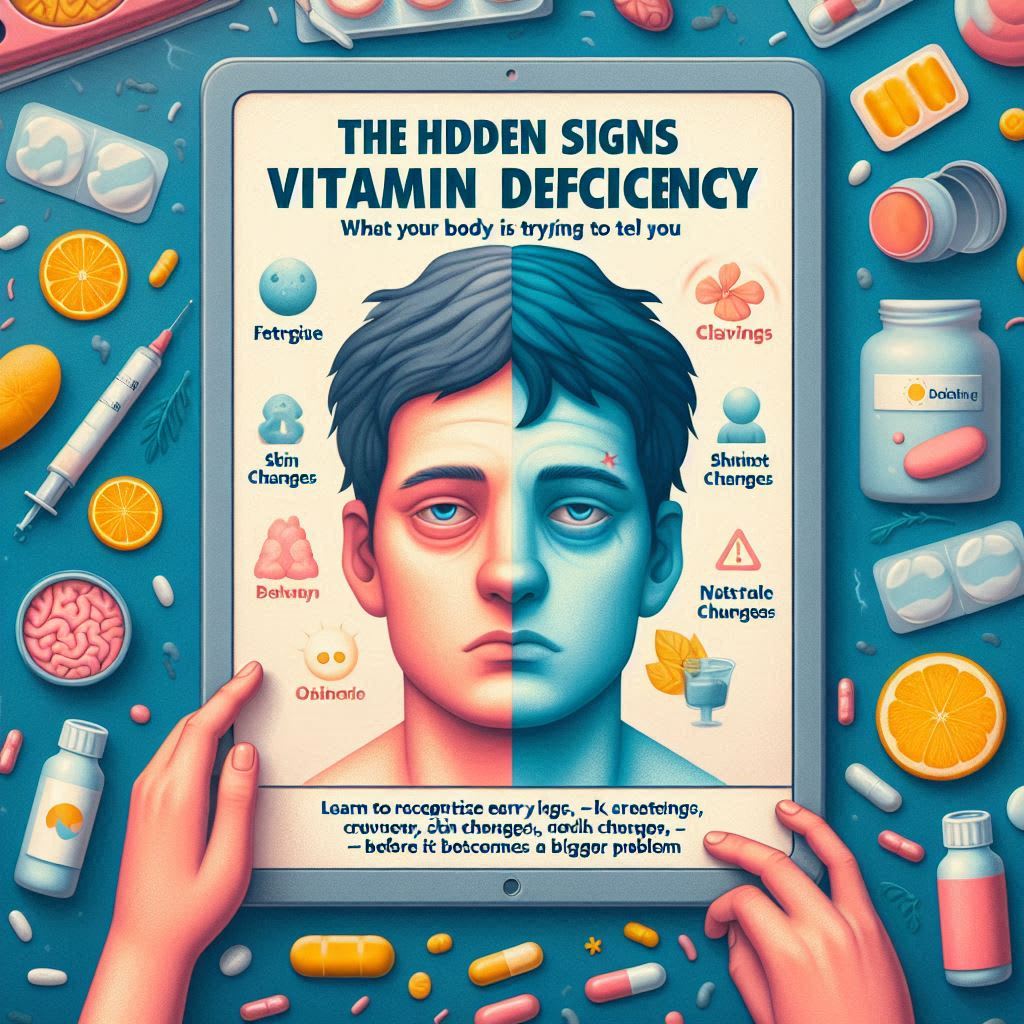
You eat every day. You might even take a multivitamin. But what if your body is quietly running low on essential nutrients — and trying to tell you?
The truth is, vitamin deficiencies often go unnoticed. They start with subtle symptoms like tiredness, mood changes, or brittle nails. Most people shrug them off as “normal” — until they worsen into something bigger.
The good news? If you listen closely, your body sends signals early. And once you know what to look for, you can fix small imbalances before they turn into full-blown health problems.
In this article, we’ll explore the most common hidden signs of vitamin deficiency, what they mean, and how you can respond with smarter food and supplement choices.
🥱 1. Constant Fatigue – More Than Just Being Tired
If you’re always tired, no matter how much you sleep, it might be more than stress. Deficiencies in certain vitamins can block energy production at the cellular level.
Possible deficiencies:
Vitamin B12 – Needed for red blood cells and brain energy
Iron – Carries oxygen to your muscles and brain
Vitamin D – Low levels affect energy and mood
Magnesium – Supports over 300 enzymatic reactions, including ATP (energy)
What to do:
Get a blood test for B12, iron, and vitamin D
Add foods like red meat, eggs, leafy greens, and fortified cereals
Consider supplements if your levels are low
😵💫 2. Brain Fog or Trouble Concentrating
Feeling mentally slow, forgetful, or fuzzy? That could be your brain asking for help.
Common causes:
Vitamin B6 and B12 – Crucial for nerve and brain function
Omega-3 fatty acids – Help maintain sharp memory and cognition
Iron – Low oxygen = slow thinking
Fix it:
Eat salmon, eggs, spinach, nuts
Consider a B-complex vitamin
Stay hydrated — dehydration also mimics brain fog
💇♀️ 3. Hair Loss or Thinning
Some hair loss is normal. But excessive shedding or weak, thinning hair could signal a nutrient imbalance.
Key deficiencies to consider:
Biotin (Vitamin B7) – Supports hair strength
Zinc – Vital for hair follicle growth
Iron – Carries oxygen to roots
Vitamin D – Linked to alopecia
Boost your hair health:
Eat eggs, nuts, seeds, fish, and beans
Avoid crash diets (they cause sudden hair loss)
Check your iron and D levels
🧵 4. Brittle Nails and Cracked Lips
Your nails and lips can say a lot about your health. If your nails break easily, or your lips are constantly cracked — don’t ignore it.
Nail warning signs:
White spots = zinc deficiency
Brittle or spoon-shaped nails = iron or biotin deficiency
Slow growth = protein or B-complex vitamins
Lip clues:
Cracked corners of the mouth = B2 (riboflavin) deficiency
Dry lips = dehydration or low B vitamins
Simple fixes:
Snack on almonds, pumpkin seeds, and yogurt
Eat whole grains and dark leafy greens
Stay well hydrated
😟 5. Mood Swings, Irritability, or Low Motivation
Your emotional health is deeply tied to your nutritional intake — especially your neurotransmitter balance.
Mood-related deficiencies:
Vitamin D – Often called the “sunshine vitamin,” low levels are linked to depression
Magnesium – Calms the nervous system
Omega-3s – Support emotional stability
Folate and B6 – Involved in serotonin production
What to eat:
Fatty fish like salmon and sardines
Leafy greens, avocados, bananas
Consider D3 and magnesium supplements if blood tests show low levels
🧊 6. Strange Cravings (Ice, Dirt, Salt)
Craving ice, dirt, clay, or salty foods? It’s not just random — it could be your body screaming for minerals.
Potential causes:
Ice craving (pagophagia) = iron deficiency
Salt craving = adrenal fatigue or dehydration
Weird non-food cravings = zinc or iron deficiency
Craving sugar frequently? It might be a blood sugar imbalance related to low magnesium or chromium.
😬 7. Tingling, Numbness, or Muscle Cramps
Neurological symptoms like tingling in hands or feet, muscle spasms, or night-time cramps can be signs your nervous system is struggling.
Watch out for:
B12 – Nerve conduction depends on it
Magnesium – Needed for muscle relaxation
Calcium or potassium – Electrolyte imbalances can cause spasms
Make sure you're eating bananas, dairy, leafy greens, and whole grains.
👀 8. Dry Eyes, Blurred Vision, or Poor Night Vision
Vitamin deficiencies can affect your eyesight — especially if your diet lacks colorful veggies and fats.
Deficiencies to consider:
Vitamin A – Helps protect vision and night sight
Omega-3s – Keep eyes lubricated and reduce dryness
Zinc – Essential for retina health
Try adding carrots, sweet potatoes, fatty fish, and nuts to your meals.
🧠 How to Listen to Your Body (Without Guessing)
If you’ve checked off several symptoms above, it may be time to take action. Here's how to get started:
✅ Step 1: Get blood tests
Ask for vitamin D, B12, iron, ferritin, magnesium, and a basic metabolic panel
Optional: check folate, zinc, and thyroid markers
✅ Step 2: Track your food and symptoms
Use a journal or app
Look for patterns between how you eat and how you feel
✅ Step 3: Upgrade your meals
Eat the rainbow — colorful whole foods = more nutrient coverage
Reduce processed, sugary, or ultra-refined foods
Add fermented foods (gut health = better nutrient absorption)
💡 Final Thoughts: Your Body Is Speaking — Are You Listening?
You don’t need to wait for a diagnosis to start caring for your health. Often, your body gives you early warning signs — fatigue, brittle nails, low mood, cravings — long before a deficiency becomes serious.
By paying attention to these subtle clues and responding with better nutrition, you’re giving your body what it truly needs to thrive.
So the next time you feel “off,” pause and ask:
What is my body trying to tell me?
Because listening is the first step to healing.
L
About the Creator
Amin Turabi
I'm Amin Turabi, a curious mind with a passion for health and education. I write informative and engaging content to help readers live healthier lives and learn something new every day. Join me on a journey of knowledge and wellness!
Keep reading
More stories from Amin Turabi and writers in Education and other communities.
Twenty Years of Medical Experience: Knowledge That Will Redefine Future Healthcare
Medicine has changed profoundly over the last two decades. Scientific breakthroughs, digital innovation, and evolving healthcare policies have reshaped how medical professionals diagnose illnesses, treat patients, and manage healthcare systems. Conditions that were once difficult to detect or treat now benefit from advanced imaging, improved medications, and minimally invasive procedures. These developments have significantly improved survival rates and overall patient outcomes.
By Yousuf A. Gaffar, M.D5 days ago in Education
Author’s Advice
If you would’ve asked me 20 years ago did I know I’d become a writer and an author, I would’ve said “nope, ain’t happening”. As fate would have it I did become an author and I can honestly say I’m loving it so far. It really does feel good to be a writer. I’ve learned a lot on this journey and I feel like with even me being as new to this world as I am, there’s some wisdom I need to share with every other aspiring author.
By Joe Patterson4 days ago in Journal




Comments
There are no comments for this story
Be the first to respond and start the conversation.