
The Girl Who Spoke When the World Stayed Silent
The Real Story of Malala Yousafzai”


🌄 Chapter 1: A Childhood in the Valley of Books and Bombs
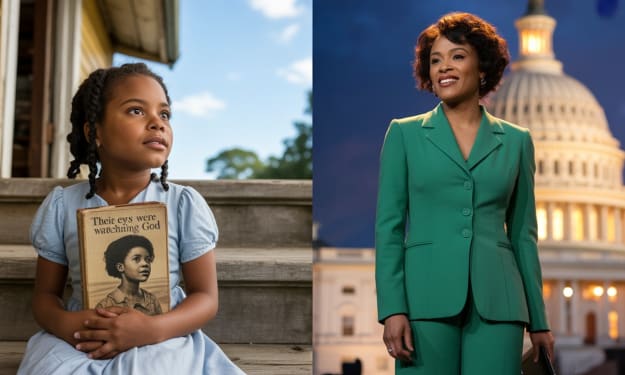
Malala was born in 1997 in Mingora, a city in the beautiful but turbulent Swat Valley of Pakistan. Her father, Ziauddin Yousafzai, was a teacher and a passionate advocate for education. He ran a small school and named Malala after a legendary Afghan poet and warrior woman.
From a young age, Malala was unlike other girls in her village.
She was curious, bold, and book-obsessed.
Where others saw silence, Malala saw questions.
Where others saw fear, she saw a voice.
🏫 Chapter 2: A Girl Who Wanted to Learn
By the time Malala was 10, the Taliban — a radical militant group — began to take control of Swat Valley. They bombed schools, banned music, and forbade girls from attending classes.
Many families stayed quiet. Fear had spread like a virus.
But Malala refused to be silent.
“Why should girls be hidden away? Why should they not go to school?”
With the support of her father, she continued attending school in secret — risking her life for an education.
In 2009, at just 11 years old, Malala began writing an anonymous blog for the BBC under the name Gul Makai, describing life under the Taliban’s rule.
She wrote:
“I had a terrible dream yesterday with military helicopters and the Taliban... I was afraid.”
The world was reading — but in Swat, danger was closing in.
🎯 Chapter 3: The Bullet That Tried to Silence Her
By 2012, Malala was no longer anonymous. She had appeared on TV, spoken in interviews, and openly advocated for girls’ education. Her voice had grown too loud for the Taliban to ignore.
On October 9, 2012, Malala boarded her school bus like any other day.
Suddenly, two armed men stopped the vehicle.
One man asked, “Who is Malala?”
Then he raised his gun — and shot her in the head.
The bullet passed through her head, neck, and shoulder.
For most people, that would have been the end.
But for Malala — it was only the beginning.
🏥 Chapter 4: A Miracle of Survival
Malala was airlifted to a military hospital in Pakistan, then transferred to Birmingham, England. For days, she lay in a coma.
Doctors didn’t think she would survive. But she did.
She woke up with a scar on her face, partial deafness, and titanium plates in her skull — but her voice was stronger than ever.
When she first spoke again, her words were simple:
“Thank God I’m not dead.”
The bullet meant to silence her had, instead, made her global.
🗣️ Chapter 5: A Voice for the Voiceless
After recovering, Malala and her family settled in the UK. She began school again — and also began changing the world.
In 2013, she co-authored her memoir, I Am Malala, which became an international bestseller.
She gave speeches around the world, including at the United Nations, where she declared:
“One child, one teacher, one book, and one pen can change the world.”
In 2014, at just 17 years old, Malala won the Nobel Peace Prize — becoming the youngest Nobel laureate in history.
She didn’t accept the honor for herself. She accepted it for:
The 66 million girls who can’t go to school
The children forced into labor and marriage
The young people told to be silent
📚 Chapter 6: The Malala Fund
Determined to do more, Malala co-founded the Malala Fund, an organization dedicated to girls’ education around the world, especially in countries affected by war, poverty, and discrimination.
Through the fund, she has:
Supported education projects in over 20 countries
Helped refugee girls in Lebanon and Syria
Met with world leaders to demand funding for education
Empowered young female activists worldwide
She didn’t just survive a bullet — she built a movement.
🎓 Chapter 7: Life as a Student and Leader
Despite her fame, Malala remained committed to her own education. In 2017, she was accepted to Oxford University, where she studied Philosophy, Politics, and Economics (PPE) — the same program studied by many British prime ministers.
Even at Oxford, she balanced activism with essays, travel with exams, and interviews with university life.
She graduated in 2020, proving once again that girls belong in school, no matter what.
🌍 Chapter 8: A Global Symbol of Courage
Today, Malala continues her work — not as a victim, but as a visionary leader.
She speaks out against child marriage
Defends women’s rights in Afghanistan and Iran
Supports education for girls in Africa, Asia, and the Middle East
Collaborates with tech companies to bring learning to remote areas
She has met with presidents and pop stars, but she never forgets where she came from — the mountains of Swat, the classroom she nearly lost, the bus where everything changed.
🧠 What Malala Teaches Us
You are never too young to change the world
She was just 11 when she spoke out.
Education is a human right
Not a privilege for the few.
Silence is not safety
Speaking out is sometimes the most dangerous — but also the most powerful — act.
Pain can be a platform
The same bullet that wounded her made her unstoppable.
Bravery isn’t the absence of fear — it’s action despite it
💬 Final Words: Her Voice Lives On
Malala once said:
“They thought the bullets would silence us, but they failed... Weakness, fear, and hopelessness died. Strength, power, and courage were born.”
She is not just a survivor.
She is a fighter.
A writer.
A leader.
A symbol of what one girl with a book and a voice can do.
So if you ever feel too small, too afraid, too unheard — think of Malala.
And then… speak.
About the Creator
Farzad
I write A best history story for read it see and read my story in injoy it .
Cover Assembly Screened in Aircraft Systems: Function, History, and Aerospace Applications
Introduction: My Research into Cover Assembly Screened Aircraft Components While studying aircraft hardware and aerospace structural parts, I recently explored a catalog listing dedicated to Cover Assembly Screened components used in aviation systems. During my research, I realized that even small parts like protective covers are essential for the reliability, safety, and longevity of aircraft electronics and mechanical assemblies.
By Beckett Dowhan4 days ago in Education
The Meaning Behind the Rules: What a Law Explains in Society
A law explains how people should behave within a society and what consequences may follow when they ignore those rules. Governments create laws to guide actions, protect rights, and maintain order. Because communities include people with different interests and values, clear rules help prevent conflicts and confusion. Therefore, laws serve as written standards that explain what society expects from its members.
By Juan Monteverde3 days ago in Education


Comments (1)
Malala proved that sometimes the pen really is mightier than the sword—especially if you try to silence her with bullets.