
The Girl Who Made Me Believe in Miracles
When medicine failed, faith stepped in

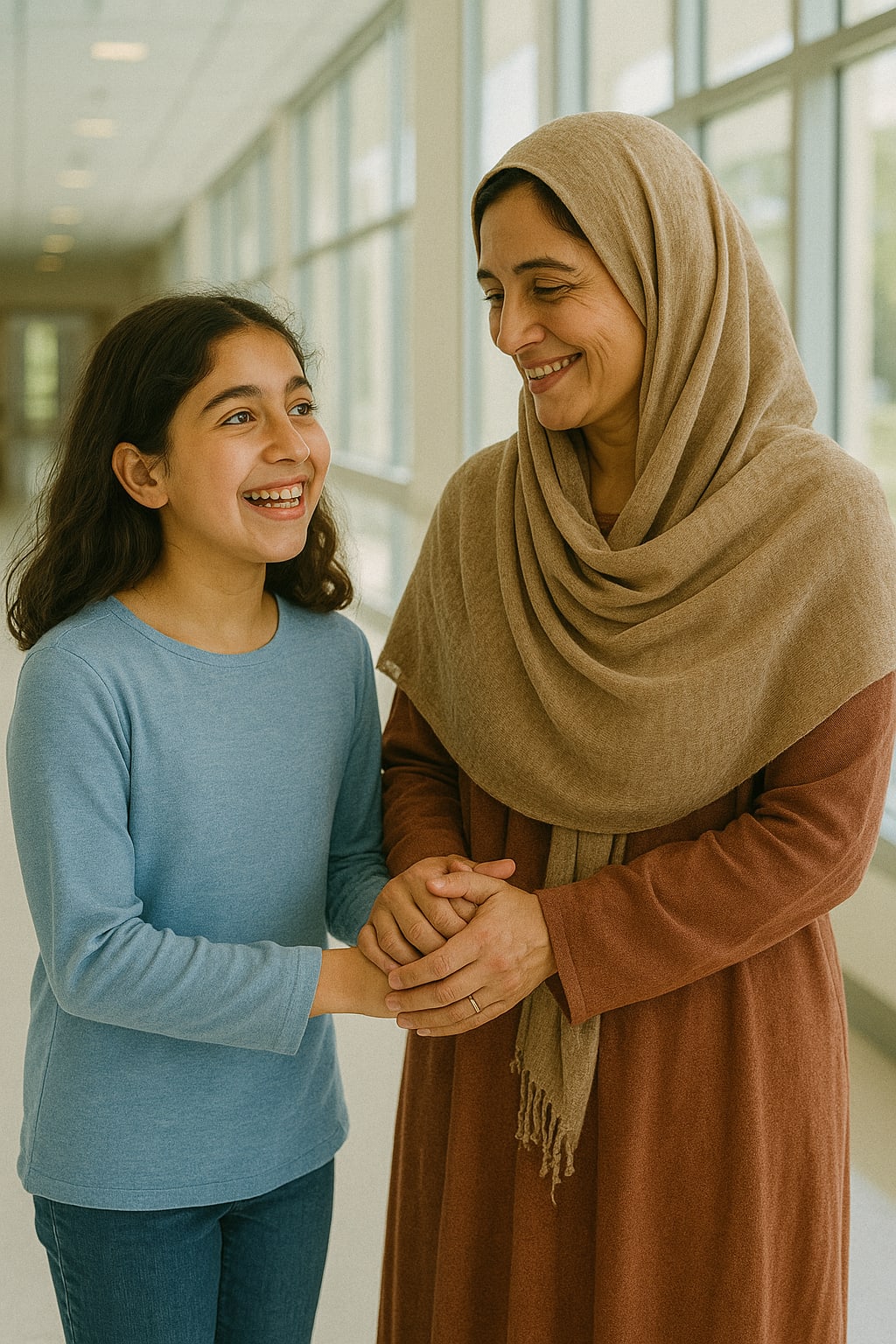
It began like many other cases in my career — with a chart, a name, and a set of inconclusive tests.
Her name was Noor, a twelve-year-old girl who had been suffering from uncontrollable seizures for over a year. The file said “intractable epilepsy.” The scans showed signs of structural brain damage. Her case had been passed between three hospitals before landing in ours. The last neurologist’s note read, “Palliative approach recommended. No further treatment options.”
I glanced at her chart and braced myself. Children like Noor came with two things: pain and hopelessness. And yet, when I walked into the room, something unexpected happened.
She smiled at me.
Not a full, bright smile — but the fragile, knowing smile of someone far older than her age. Her mother stood beside her, exhausted but alert, as if every breath her daughter took was a victory.
“We came from far, doctor,” she said. “Six hours on the bus. She still believes you will help her.”
Hope is a difficult thing to see when you've spent years watching people die. It flickers, fades, gets crushed under machines and reports. And yet, there it was — raw and alive — in a child whose brain had betrayed her.
---
Week One: Trials and Turmoil
We admitted Noor immediately. She was placed in a special pediatric room in the neurology wing. Her seizures were unpredictable and severe. Some lasted seconds. Others minutes. A few nearly killed her.
We adjusted her medications. Ran a new MRI. Did a 24-hour EEG. Each result brought more bad news.
The seizures originated from multiple regions in her brain — surgery was too risky. Her medication was already maxed out. She was losing weight rapidly and starting to experience memory lapses.
Still, she remained calm. Even after each seizure, she would wake up and whisper, “Ammi, I’m okay.”
Her mother never left her side. She barely ate. Slept in the chair next to the hospital bed. Massaged Noor’s feet. Read her Quranic verses. Sang lullabies. Her devotion was absolute.
One night, after Noor had a particularly violent seizure that left her unconscious for over ten minutes, I stayed in the room long after the nurses left.
Her mother was holding Noor’s hand, eyes closed, whispering verses from Surah Rahman. Her voice trembled, but she didn’t cry.
“She says she dreams of light, doctor,” she said. “Every time she comes back, she tells me it’s not her time yet.”
I had no answer. Medicine had failed her. We were simply buying time.
---
Week Two: The Turning Point
On the ninth day of her admission, Noor flatlined for a few terrifying seconds.
I was in the middle of another consult when the code blue alert rang through the hallway. I rushed to her room. The nurses were already performing CPR.
We brought her back — just barely.
But something inside me changed that day.
I had faced death many times, but this one stayed with me. Maybe it was because Noor still believed she would live. Maybe it was her mother’s unshaken faith. Or maybe I was simply tired of watching good people suffer without reason.
That night, I returned to her room after hours. Noor was stable but unconscious.
Her mother asked me, “Do you believe in miracles, Doctor?”
I wanted to say no. I wanted to tell her we deal in facts, not fantasies.
But instead, I said, “Sometimes.”
She smiled. “Then you’ll see one.”
---
The Unexplainable Recovery
The following morning, something changed.
Noor woke up — fully conscious. She was smiling. Her vitals were stable. No tremors. No spasms. No signs of seizures.
We monitored her closely. No neurological activity that indicated seizures. No spikes in her EEG.
I was cautious — such remissions were rare and usually short-lived.
But three days passed. Then four. Then a week.
She started eating properly. She painted a flower and a sun on a canvas her mother brought. Her memory was intact. Her speech improved.
My colleagues were baffled.
“There’s no medical explanation,” one said.
“She must be relapsing soon,” said another.
But the relapse never came.
---
The Farewell I Never Expected
On the fifteenth day, we discharged Noor.
As I stood at the hospital entrance watching her walk out with her mother, I was overwhelmed by emotion. She turned around and waved at me.
“Thank you, Doctor,” she said. “For not giving up.”
I didn’t know how to tell her that she had been the one keeping me going.
That night, I couldn’t sleep. I kept replaying her case in my mind. Where did we go wrong in predicting her outcome? What didn’t the scans reveal? Was it a divine intervention? A coincidence? Spontaneous remission?
No textbook could explain what we saw. And deep down, I stopped trying to make sense of it.
Some things aren’t meant to be explained. Some are simply meant to be witnessed.
---
Six Months Later
One cold December morning, a small envelope arrived at my office. No name on the front.
Inside was a drawing — crayon on folded paper.
It showed a hospital, a girl with long black hair, a man in a white coat, and above them, a sun with glowing rays.
On the back, she had written:
“Light always wins. From, Noor.”
---
What Noor Taught Me
I’ve spent over two decades practicing medicine. I've treated rare diseases, performed complex surgeries, and saved lives others had written off.
But the greatest lesson of my career came from a 12-year-old girl with fading hope and a heart full of light.
She taught me that the boundary between science and faith isn’t a wall — it’s a bridge.
That sometimes, the human spirit triumphs where medicine surrenders.
And that miracles, however rare, are real — if we’re humble enough to see them.
About the Creator
Doctor marwan Dorani
"I’m Dr. Marwan, a storyteller and physician passionate about human resilience, untold journeys, and emotional truths."
Keep reading
More stories from Doctor marwan Dorani and writers in Education and other communities.
The Digital Nomad Blueprint
In a not-so-distant future, where technology thrived and the world became increasingly connected, many people chose to break free from traditional lifestyles. Among them was a young woman named Mia. Mia was a digital nomad, traveling the globe with her laptop, working remotely while exploring new cultures. Her heart was set on living life to the fullest, but she was also searching for something greater—a sense of purpose.
By Hamad Afridi 5 days ago in Education


Comments
There are no comments for this story
Be the first to respond and start the conversation.