
"The Stethoscope That Wasn’t Mine
How one borrowed stethoscope carried a young man through shame, struggle—and finally, success.


"The Stethoscope That Wasn’t Mine"
How one borrowed stethoscope carried a young man through shame, struggle—and finally, success.
For most of his first year in medical college, Umair didn’t own a stethoscope.
In a class of over 150 students, nearly all of them arrived on the first day with shiny new Littmanns, proudly dangling from their necks like trophies. They wore crisp white coats, fancy watches, and designer shoes. They spoke English fluently and made study groups with people from similar backgrounds.
Umair? He sat alone.
He had come from a tiny village near Dera Ghazi Khan. His father was a retired primary school teacher, living on a modest pension. Umair had scored well in FSC—surprisingly well—and ranked just high enough in MDCAT to get admission to a government medical college in Lahore.
He had never left his village before. Everything about the city was foreign: the traffic, the food, the language. Even the way people dressed made him feel small.
But the real pain came during his first physical examination class.
“Take out your stethoscopes,” the professor instructed.
Umair froze.
He had no stethoscope. He had told his parents not to buy one yet—it was too expensive, and they needed money for rent, books, and food. He thought he could borrow one from a classmate. But when he turned to ask, the student ignored him.
“Sir, I forgot mine today,” Umair lied.
The professor frowned and moved on.
After class, Umair sat in a corner and cried. Not loudly. Just quiet tears that fell into his hands. He didn’t cry because he was poor. He cried because, for the first time, he felt like poverty made him invisible.
That evening, he messaged a senior from his village who was now in final year. “Bhai, can I borrow your old stethoscope?”
The reply came instantly: “Of course. Come to Room 217 in the boys' hostel tomorrow.”
The next day, Umair received an old, scratched-up stethoscope wrapped in a plastic bag. It didn’t shine. The sound wasn’t crystal clear. But to Umair, it was sacred.
He cleaned it gently. He carried it with pride. He practiced with it late at night, listening to his own heartbeat, to friends' pulses, to anyone who would let him.
It wasn’t the best—but it was his lifeline.
Weeks turned into months. Umair studied harder than everyone. He knew he couldn’t afford to fail. He had no backup, no connections, no tutors. He borrowed notes, watched YouTube videos for anatomy lectures, and translated English textbooks into Urdu just so he could understand.
Slowly, he became known. Quietly, respectfully—students began coming to him for help. “Umair, do you have the notes?” “Can you explain this topic?” “What’s the best way to memorize cranial nerves?”
He shared everything. His books. His notes. His borrowed stethoscope.
In his third year, during a cardiology ward round, a visiting professor asked a difficult question. No one answered.
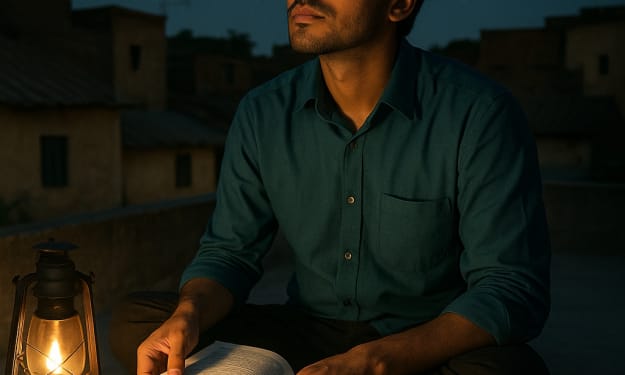
Umair raised his hand and answered it perfectly—word for word from a book he had read at night under a hostel lantern.
The professor was impressed.
“You should apply for a clinical rotation abroad,” he said.
Umair smiled. “I’d love to, sir. But I can’t afford the travel.”
The professor said nothing but noted his name.
Two months later, Umair received an email: he had been selected for a fully funded medical internship in Turkey through a student exchange program. His flight, visa, stay—everything was covered.
He couldn’t believe it. The boy with no stethoscope was going abroad to train.
He flew for the first time. Touched snow for the first time. Learned new medical systems, saw rare cases, met international students—and made lifelong friends.
When he returned, he carried something else with him: confidence.
He no longer hid in class. He answered questions. Presented cases. Mentored juniors. In his final year, he led the student research team and even presented a paper at a national medical conference.
The stethoscope he once borrowed now lay in his desk drawer.
He had purchased a new one—expensive, shiny, with his name engraved on it.
But he never threw the old one away.
On his graduation day, as he walked across the stage to receive his MBBS degree, he carried it in his pocket—not for use, but as a symbol.
Of what he had been.
Of what he had become.
Today, Dr. Umair works at a teaching hospital in Punjab. He sees dozens of patients daily, teaches young students, and volunteers at free rural medical camps.
And whenever he meets a first-year student sitting alone, looking lost, unsure of their place—he does what no one did for him.
He offers a seat.
He asks, “Need help with this topic?”
And if they don’t have a stethoscope?
He smiles and says, “Here, use mine.”
About the Creator
Doctor marwan Dorani
"I’m Dr. Marwan, a storyteller and physician passionate about human resilience, untold journeys, and emotional truths."
Keep reading
More stories from Doctor marwan Dorani and writers in Education and other communities.
the brightest lights often come from the darkest places.
Faizan came from a small town in southern Punjab, Pakistan—Bahawalnagar, a place where dreams are often buried under poverty and silence. But Faizan’s dream wasn’t ordinary. He wanted to become a doctor—not just to wear the white coat or earn a name, but to fulfill the promise his father had whispered in his ear countless times since childhood.
By Doctor marwan Dorani 10 months ago in Education
Why Mobile Payments Are Transforming Financial Transactions Across Latin America?
Financial systems across Latin America are undergoing a significant transformation as digital technologies reshape how people conduct transactions. Among the most influential developments is the rise of mobile payments. From peer-to-peer transfers to retail purchases and bill payments, smartphones are increasingly becoming central financial tools.
By deepanshu Thakur6 days ago in Education
Pearl
1980 something. we all hung out at Pearl and you and i were nothing special, or so i thought. i mean we all danced, drenched in our own sweat, our own saline solution of fear, too many beers, shots, laughter, tears, fucks in the bathroom and i don't know when we began to be afraid. do you?
By ROCK aka Andrea Polla (Simmons)5 days ago in Fiction


Comments
There are no comments for this story
Be the first to respond and start the conversation.