
The Gig Economy: Freedom or Exploitation?
Behind the flexible hours and side hustles lies a deeper question — is the gig economy empowering workers or just using them?

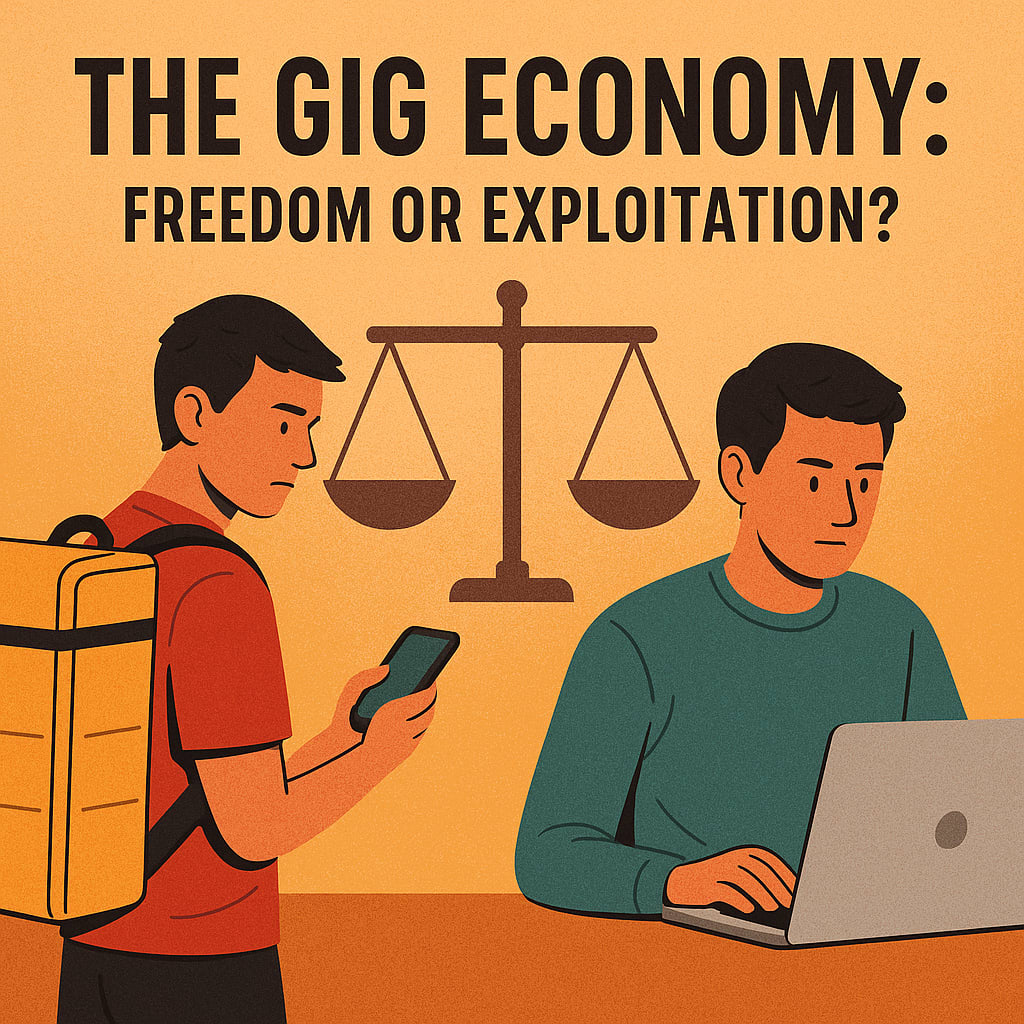
Work on your own schedule. Be your own boss. Choose what you want to do and when you want to do it. For millions, the gig economy — built on short-term, freelance, or app-based jobs — promised freedom.
Drive a car, deliver food, walk a dog, sell your art, write online, or even rent out your home. The platforms were easy, the work was accessible, and suddenly, anyone with a smartphone could make money. The dream was seductive. And in the beginning, it worked — at least, on the surface.
But behind the promises of independence, another story has emerged. A more uncomfortable one. A story of inconsistent income, lack of benefits, and blurred boundaries between entrepreneurship and exploitation.
So what is the gig economy, really? A revolution in modern work? Or just a new name for an old problem — unstable labor, repackaged as empowerment?
🚗 The Illusion of Control
Gig work thrives on the idea of choice. Take Uber or DoorDash, for example. Drivers log in and out whenever they want. They pick and choose which rides to accept. But while it feels like freedom, the algorithms that power these platforms have more control than people realize.
Refuse too many gigs? Your rating drops. You get fewer opportunities. Accept a low-paying job just to keep your numbers up? That’s not independence — that’s coercion, disguised as flexibility.
Gig workers technically aren’t employees. They’re classified as “independent contractors.” That means no healthcare, no paid leave, no unemployment insurance. If your car breaks down or you get sick, you don’t get paid. If you’re harassed on a delivery or injured on the job, there’s no HR department to protect you.
Freedom is a beautiful word. But when it's paired with instability, it starts to look more like abandonment.
📱 The Rise of the App-Based Hustle
Technology is what made the gig economy possible. Platforms like Fiverr, TaskRabbit, and Instacart connect people to work in seconds. No resumes, no interviews — just a tap and a task.
For some, this opens doors that would’ve otherwise been closed. Teenagers can earn pocket money tutoring online. Stay-at-home parents can freelance during nap time. Artists and writers can build a following without a traditional publisher.
But even creative gig work comes with pressure. Writers are paid by the click. Artists are asked to create custom work for pennies. Musicians are told exposure is enough. And many find that turning their passion into profit turns joy into exhaustion.
There’s a thin line between being empowered and being underpaid.
💼 A New Working Class
According to recent studies, over 36% of U.S. workers participate in the gig economy in some form. And it’s not just a side hustle anymore. For many, it’s their primary source of income.
But here’s the catch: most of these workers don’t have the safety nets that traditional jobs offer. While companies save billions by outsourcing labor to contractors, gig workers are left without the tools to build stable futures.
No retirement plans. No job security. No career growth.
The freedom to work anywhere often comes at the cost of having nowhere to grow.
⚖️ Who Really Benefits?
Let’s be honest — the gig economy benefits platforms more than it benefits people.
Uber doesn’t need to pay for car maintenance, insurance, or fuel — drivers do. Companies like Amazon Flex shift delivery risk to everyday workers. Even content platforms profit from creators without offering basic protections or minimum payments.
These platforms present themselves as marketplaces. But they set the prices, control the data, and dictate the rules — while calling workers “independent.”
It’s not a partnership. It’s a power imbalance.
🌍 The Global Perspective
The gig economy isn’t just a Western phenomenon. Across the globe, millions of people now rely on gig work — from online translation to remote customer service. For some, it’s a lifeline. For others, it’s the only option.
In countries with limited job markets, gig platforms offer a way out of poverty. But the lack of regulation means exploitation runs deeper. Workers in the Philippines, India, and Nigeria often take on demanding tasks for just a few dollars — working all night to meet the demands of wealthier nations.
Is that global opportunity? Or modern digital colonialism?
✊ The Push for Change
Not all is bleak. Workers are organizing.
From California to the UK, gig workers are pushing for rights, unionizing, and demanding legal protections. Some cities now require platforms to offer minimum wage, mileage reimbursement, and basic benefits. New laws are being debated around the world to classify gig workers more fairly.
Consumers, too, are starting to care. People want to know how their food gets to them, how their rides are priced, and whether the person delivering their groceries is earning enough to live on.
It’s not just about convenience anymore. It’s about conscience.
🧭 So, What’s the Answer?
The gig economy isn’t inherently evil. For many, it’s empowering. It offers chances that didn’t exist before. But flexibility without fairness is not freedom. It’s fragility.
We can’t go backward — gig work is here to stay. But we can go forward with balance. By demanding better pay, benefits, protections, and transparency, we can build an economy that serves both business and people.
Because everyone deserves dignity — whether they wear a suit, a smock, or a delivery vest.
About the Creator
Muhammad Hamza Safi
Hi, I'm Muhammad Hamza Safi — a writer exploring education, youth culture, and the impact of tech and social media on our lives. I share real stories, digital trends, and thought-provoking takes on the world we’re shaping.
Keep reading
More stories from Muhammad Hamza Safi and writers in Education and other communities.
The Rise of AI in Everyday Life
They said artificial intelligence was the future. Now, it’s the present. And most of us didn’t even notice the shift. AI has gone from being a distant sci-fi fantasy to something we interact with before we’ve even had our morning coffee. It’s in our phones, our homes, our cars, our classrooms — and sometimes even in our relationships. We don’t think twice about asking Alexa to play a song, letting Google finish our sentences, or letting Instagram’s algorithm decide what we see.
By Muhammad Hamza Safi8 months ago in Education
Can You Really Earn Money With Transcription? The Real Income Reality
The short answer is yes—you can earn money with transcription. But the more honest, useful answer is this: transcription only becomes worthwhile when you understand how the income actually works, not how it’s often presented online.
By Mahesh Kumarabout 19 hours ago in Education
Beyond the Transcript: What Extracurriculars and Essays Reveal That Grades Cannot
Colleges today look far beyond GPAs and test scores to understand who applicants truly are. While academic metrics indicate preparedness for coursework, they fail to capture personality, resilience, passion, and potential contributions to campus life. This is why essays, extracurricular activities, and other non-academic elements of an application hold significant power. They offer admissions officers a fuller, richer, more human version of the student—one that no number can represent.
By Carmen Reid4 days ago in Education



Comments
There are no comments for this story
Be the first to respond and start the conversation.