
The Gem That Stole a Kingdom
A Stone of Kings and Chaos

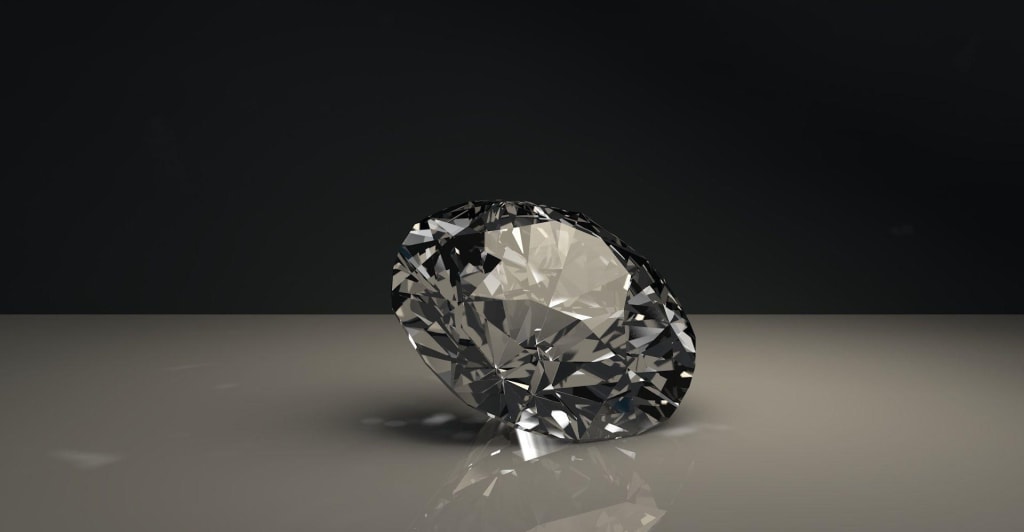
It began with a glint in the earth—a shimmer so faint it could have been a trick of the sun. In 1072, in the rugged hills of Golconda, India, a miner’s pickaxe struck something extraordinary: a diamond so massive, so luminous, it seemed to pulse with a life of its own. The locals called it the Koh-i-Noor, the "Mountain of Light." Little did they know that this gem, roughly the size of a hen’s egg, would ignite wars, topple dynasties, and leave a trail of blood and obsession that stretches across a thousand years. This is the story of the world’s most infamous diamond—and how it didn’t just steal a kingdom, but rewrote history itself.
The Koh-i-Noor wasn’t just a jewel; it was a prophecy. In medieval India, diamonds were more than wealth—they were power incarnate, believed to carry the favor of the gods. When the stone surfaced, it landed in the hands of the Kakatiya dynasty, who ruled the region with an iron grip. They set it into a temple idol’s eye, a sacred guardian watching over their reign. But word of its brilliance spread like wildfire, and soon, every warlord, sultan, and king within a thousand miles wanted it. The first to strike was Alauddin Khalji, a ruthless Delhi sultan, who in 1310 sacked the Kakatiya capital. His soldiers tore the diamond from the idol’s socket, leaving a smoking ruin behind. The gem’s curse—or its promise—had begun.
For centuries, the Koh-i-Noor bounced between conquerors like a deadly game of hot potato. Each owner met a grim fate. The Mughal emperor Babur claimed it in 1526, writing in his memoirs that it was "worth the value of one day’s food for the entire world." Yet his dynasty crumbled under betrayal and infighting. Shah Jahan, famed for the Taj Mahal, mounted it in his Peacock Throne—a gilded masterpiece that dazzled visitors with its gem-encrusted splendor. But his son Aurangzeb imprisoned him, and the throne was later looted by the Persian invader Nader Shah in 1739. Nader dubbed it the Koh-i-Noor, but his victory was short-lived—he was assassinated, and the diamond slipped into chaos once more.
The gem’s journey wasn’t just a string of heists; it was a magnet for madness. Rulers didn’t just want to possess it—they believed it demanded possession. In 1813, it fell to Ranjit Singh, the "Lion of Punjab," who wrested it from Afghan warlords. Singh wore it as a turban ornament, a blazing symbol of his Sikh empire’s might. He was a shrewd tactician, but even he couldn’t escape the whispers: every man who owned the Koh-i-Noor died violently or lost everything. When Singh died in 1839, his empire imploded in a succession war, and the diamond’s next chapter loomed.
Enter the British. By 1849, the East India Company had crushed the Sikhs, annexing Punjab in a brutal campaign. The Koh-i-Noor was their prize, forcibly "gifted" to Queen Victoria under the Treaty of Lahore. The handover was a humiliation—Duleep Singh, the 10-year-old Sikh heir, was made to present it to the colonizers who’d stripped his kingdom bare. Victoria, enthralled, had it cut from its original 186 carats to a "more European" 105.6 carats, a decision that horrified gem experts but cemented its place in the British Crown Jewels. Yet even in London, the diamond’s shadow lingered. Servants whispered it was cursed; newspapers speculated it brought misfortune to the empire. Victoria’s reign saw rebellions and unrest—coincidence, or the Koh-i-Noor exacting its toll?
The stakes escalated in the 20th century. As India fought for independence, the gem became a symbol of colonial plunder. Mahatma Gandhi called it "a silent witness to the loot of centuries." After 1947, when India gained freedom, its government demanded the diamond’s return. Pakistan claimed it too, citing historical ties. Even Iran and Afghanistan joined the fray, each tracing the stone’s bloody path through their lands. Britain refused, arguing it was legally acquired—a stance that still fuels diplomatic tension today. The Koh-i-Noor sits in the Tower of London, locked in the Queen Mother’s crown, a glittering prisoner of history. But its story isn’t over.
What makes the Koh-i-Noor so gripping isn’t just its beauty—it’s the body count. Historians estimate thousands died in battles over it, from Golconda’s mines to Punjab’s plains. Its owners—Kakatiyas, Mughals, Sikhs, Brits—saw their empires rise and fall, often in spectacularly gruesome ways. Nader Shah’s head was cleaved off by his own guards. Ranjit Singh’s sons were murdered or exiled. Even the British Empire, at its peak when it seized the gem, began its slow decline soon after. Superstition? Maybe. But the pattern’s hard to ignore.
Today, the Koh-i-Noor is a lightning rod. In 2016, India’s Supreme Court debated its return, only for Britain to dig in its heels. Social media erupts every few years with #ReturnTheKohinoor campaigns, while conspiracy theorists spin tales of a curse still at work—pointing to royal scandals or economic woes. The diamond’s worth is incalculable, not just in carats but in the stories it holds: greed, glory, and a relentless hunger for power.
So, what stole the kingdom? Was it the gem itself, a cursed talisman dooming its owners? Or was it the obsession it sparked, turning men into monsters and nations into battlegrounds? The Koh-i-Noor didn’t just witness history—it shaped it, one shattered throne at a time. And as it glints behind bulletproof glass, it dares us to ask: who’s next?
About the Creator
Keep reading
More stories from writers in Education and other communities.
How Mathematical Principles Drive Stable Monthly Results in Index Trading
Index trading has gained popularity among investors who value consistency over speculation. While market headlines often focus on short-term price swings, steady monthly returns in index trading are built on mathematical logic rather than predictions. By understanding how numbers shape market behavior, traders can develop strategies that prioritize reliability and long-term growth over emotional decision-making.
By Agast Mishra2 days ago in Education
The Devil's Cut
“Comrade, finally you’re awake.” The voice was smooth, sensual. A flickering incandescent bar was all that lit the white, sterile room. All Vladimir remembered was everything going black. He tried to move his arms and found them strapped to the gurney.
By Matthew J. Fromm7 days ago in Fiction



Comments (2)
Great content, super informative 👍
Just wanted to drop in and say—you absolutely nailed it with this piece. 🎯 Your writing keeps getting better and better, and it's such a joy to read your work. 📚✨ Keep up the amazing work—you’ve got something truly special here. 💥 Super proud of your writing! 💖🙌 Can't wait to see what you create next! #KeepShining 🌟 #WriterOnTheRise 🚀