
The Future of Work: How AI Will Change Your Job in the Next 5 Years
Adapting to AI: How Technology Will Redefine Your Career Path

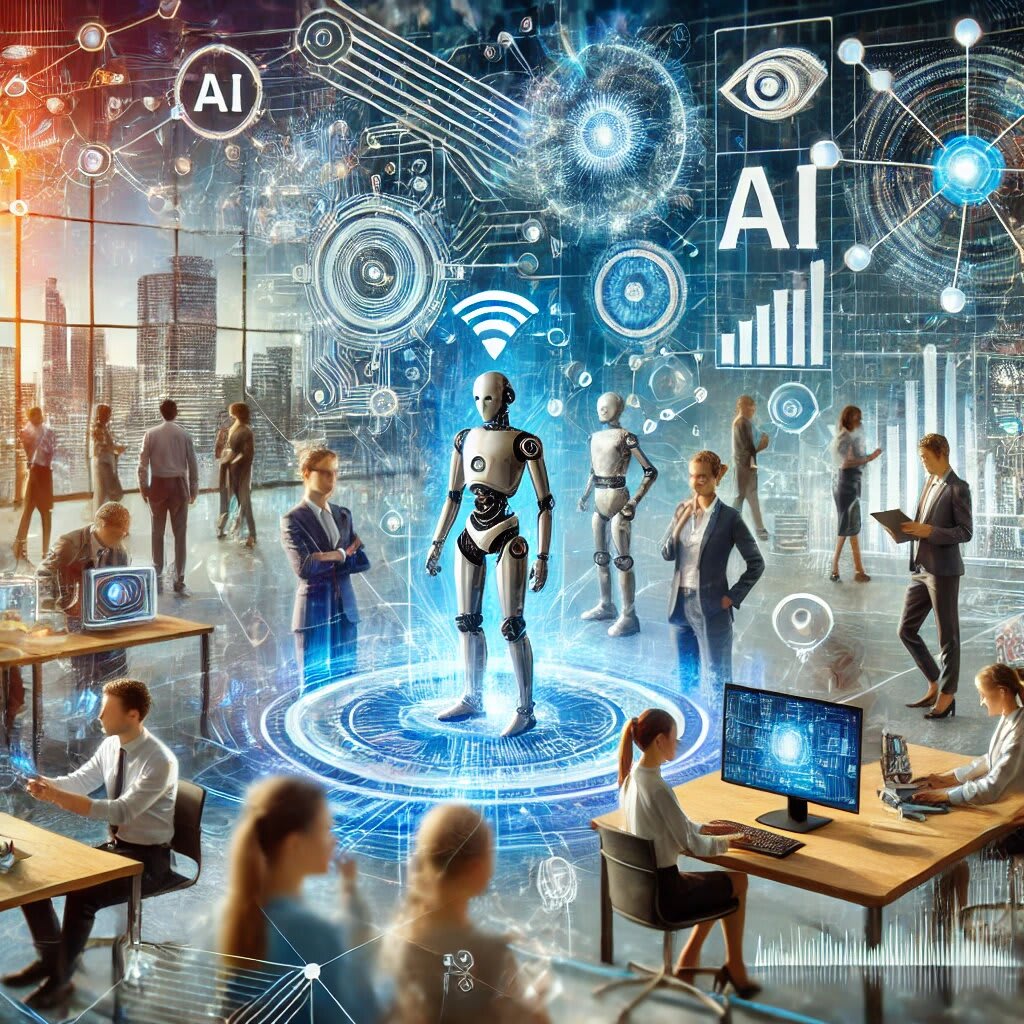
The Future of Work: How AI Will Change Your Job in the Next 5 Years
Artificial Intelligence (AI) is no longer a futuristic concept—it’s here, and it’s transforming the way we work across industries. From automating repetitive tasks to enhancing decision-making processes, AI is driving efficiency, innovation, and productivity. But what does this mean for your career? How will AI impact your job in the next five years?
In this blog, we’ll explore the key ways AI is changing the workplace, the skills that will be in demand, and how you can prepare for the future of work.
How AI is Transforming the Workplace
AI is reshaping how businesses operate by taking on tasks that require speed, accuracy, and massive data processing. Here are the key areas where AI is making an impact:
1. Automation of Repetitive Tasks
AI-powered tools are increasingly automating mundane and repetitive tasks, freeing up employees to focus on more complex and creative work.
Examples:
Chatbots handling customer service inquiries.
AI algorithms automating data entry and invoice processing.
Automated scheduling tools for meetings and events.
2. Enhanced Decision-Making
AI can analyze vast amounts of data and provide actionable insights, enabling faster and more informed decisions.
Examples:
Predictive analytics in marketing to identify customer behavior trends.
AI in finance to assess investment risks and fraud detection.
Supply chain optimization using AI-driven demand forecasting.
3. Personalization and Customer Experience
AI is transforming how businesses engage with customers by personalizing experiences.
Examples:
Recommendation engines (like Netflix and Amazon) offering tailored content or products.
AI-driven email campaigns based on user behavior.
Voice assistants like Siri or Alexa enhancing user interaction.
4. New Roles and Industries
As AI takes over repetitive tasks, new opportunities are emerging in fields like AI development, data science, and robotics.
Examples:
Roles like AI trainers, data annotators, and ethical AI specialists.
Growth of industries such as autonomous vehicles, AI-driven healthcare, and augmented reality.
Skills That Will Be in Demand
While AI will automate many tasks, it will also create a demand for human skills that machines cannot replicate. Here are the key skills to focus on:
1. Technical Skills
Data literacy: Understanding and interpreting data to make informed decisions.
AI and machine learning basics: Knowledge of how AI systems work and their applications.
Coding and software development: Skills in programming languages like Python and Java.
2. Human-Centric Skills
Emotional intelligence: The ability to empathize, communicate, and collaborate with others.
Creativity and innovation: Thinking outside the box to develop new ideas and solutions.
Critical thinking: Analyzing problems and evaluating solutions effectively.
3. Adaptability and Lifelong Learning
As AI continues to evolve, the ability to adapt and acquire new skills will be crucial.
Tips to stay adaptable:
Take online courses in emerging technologies.
Stay updated with industry trends and advancements.
Be open to exploring new roles or career paths.
How to Prepare for the Future of Work
The key to thriving in an AI-driven workplace is preparation. Here’s how you can future-proof your career:
1. Upskill Regularly
Take advantage of online learning platforms like Coursera, Udemy, and edX to acquire skills in AI, data analysis, and programming.
2. Focus on Collaboration
AI works best when paired with human input. Develop your ability to collaborate with both people and AI systems.
3. Build a Growth Mindset
Embrace change and see it as an opportunity for growth. A positive attitude toward learning will help you stay relevant in a rapidly changing job market.
4. Explore AI Tools
Familiarize yourself with AI-powered tools relevant to your industry. For example:
Use Grammarly for writing assistance.
Explore Tableau for data visualization.
Leverage Salesforce for AI-enhanced customer relationship management.
5. Embrace Ethical Awareness
As AI continues to play a significant role in decision-making, understanding its ethical implications is essential. Be aware of issues like bias, privacy, and accountability in AI systems.
Industries Most Affected by AI
1. Healthcare
AI-powered diagnostic tools and robotic surgeries are enhancing patient care.
Wearable devices are leveraging AI to monitor health metrics in real time.
2. Retail
AI is streamlining inventory management and creating personalized shopping experiences.
Automated checkout systems are replacing traditional cashier roles.
3. Finance
AI is revolutionizing risk assessment, fraud detection, and algorithmic trading.
4. Manufacturing
Robotics and AI-driven systems are optimizing production processes and reducing human error.
Conclusion
AI is not just reshaping jobs—it’s redefining the entire concept of work. While it will automate some roles, it will also create new opportunities that didn’t exist before. By staying adaptable, continuously learning, and leveraging the unique skills that make us human, you can thrive in the AI-driven workplace.
The future of work is already here. The question is: are you ready to embrace it? Start preparing today, and you’ll not only survive the AI revolution—you’ll thrive in it.
About the Creator
Dr.Writes
I’m a healthcare practitioner who loves sharing simple tips and ideas to help people live healthier, happier lives. My background in health allows me to break down complex topics into easy-to-understand advice that anyone can use.
Bridging Technical Expertise and Business Strategy in Manufacturing
Manufacturing has always been driven by technical knowledge. Engineers, technicians, and production specialists design processes, maintain equipment, and ensure products meet strict quality standards. At the same time, successful manufacturing companies must also focus on business strategy. Market demand, cost management, supply chain coordination, and competitive positioning all influence long-term success. Bridging technical expertise and business strategy in manufacturing allows organizations to combine operational excellence with strategic growth.
By Ian Schenkel Haliburton7 days ago in Education
Leveraging Prediction Markets to Enhance Strategic Planning
In today’s competitive business environment, making informed strategic decisions is crucial for long-term success. Prediction markets have emerged as a valuable tool for improving strategic planning by aggregating insights from diverse participants. These markets enable organizations to forecast outcomes through collective intelligence, providing a more accurate understanding of potential scenarios. By integrating prediction market data into planning processes, companies can anticipate risks, identify opportunities, and make better-informed decisions that support sustainable growth.
By Anthony Qi6 days ago in Education
The Forsyth House Fire
Since 1851, Forsyth House has stood on the corner of Union Street and Gordon Street in the heart of Glasgow. Its iconic, or was... because on Sunday 8th of March, 2026, a fire broke out in a small, seemingly un-named shop in the building and tore all that history down. As I write, the rubble is still unsettled and the street is still blocked off. Central Station is quiet on the upper level, and around 30 small businesses have quite literally gone up in smoke.
By S. A. Crawford3 days ago in The Swamp


Comments (1)
Great post! AI is transforming the way we work, and I appreciate the focus on building skills like creativity and adaptability. It’s a good reminder to stay ahead by learning and evolving with the tech.