
The Future of Education: Will We Still Need Schools in 2050?
"Exploring the rise of AI, virtual learning, and the end of traditional classrooms."

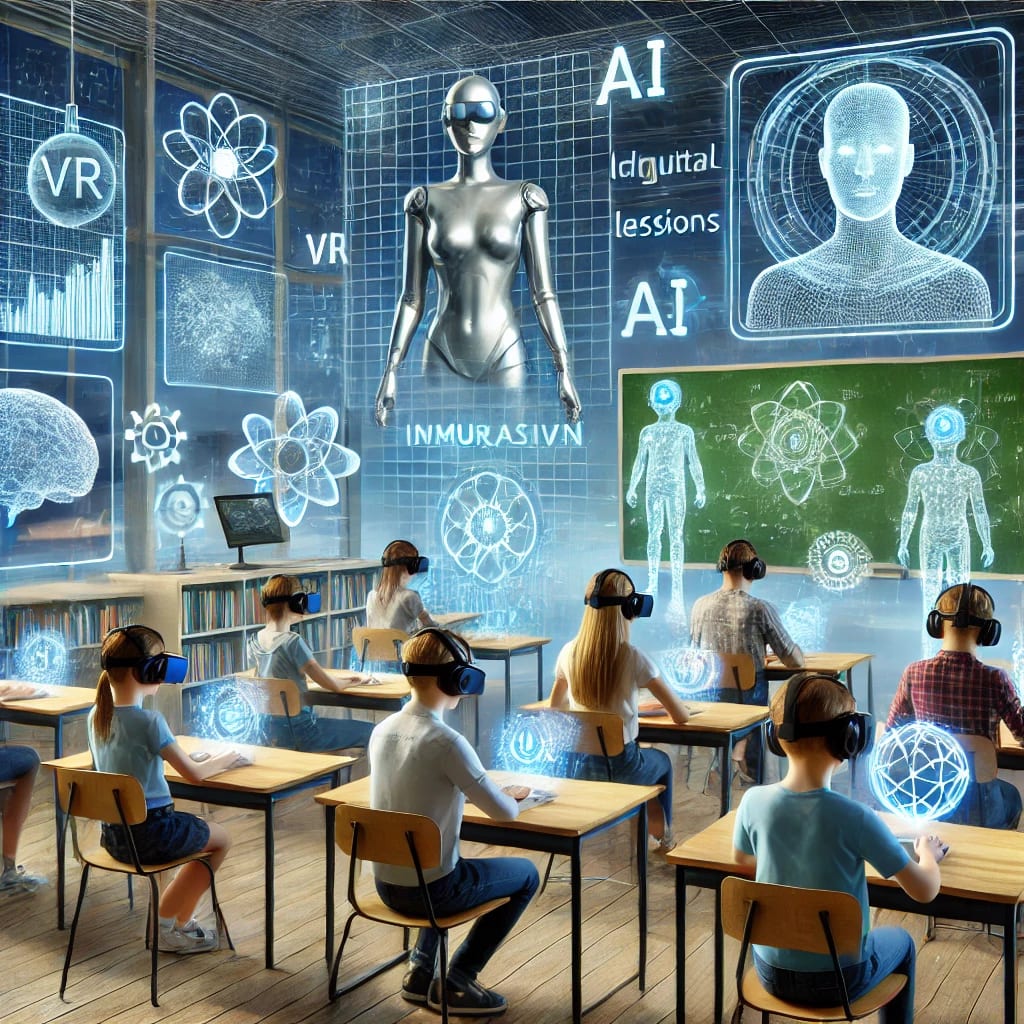
Imagine a world where students no longer sit in crowded classrooms, listen to monotonous lectures, or memorize facts for standardized tests. Instead, they explore immersive virtual worlds, learn from AI-powered tutors, and develop skills tailored to their unique strengths and passions. As technology evolves at breakneck speed, education as we know it is on the verge of a radical transformation.
For centuries, schools have followed a rigid structure: teachers instruct, students listen, exams determine success. But will this model still exist in 2050? Or are we heading toward a future where learning is decentralized, digital, and customized for every individual?
Let’s explore how artificial intelligence, virtual reality, neuroscience, and new learning philosophies are reshaping the future of education—and whether traditional schools will become obsolete.
The Shift Toward Personalized Learning
One of the biggest criticisms of today’s education system is its one-size-fits-all approach. Every student has different strengths, weaknesses, and learning speeds, yet they are all expected to follow the same curriculum. In 2050, this could become a thing of the past.
🔹 AI-Powered Tutors: Artificial intelligence will act as personalized educators, analyzing students’ strengths and weaknesses in real time and adjusting lessons accordingly. Imagine an AI tutor that knows exactly when you need more practice and when you’re ready to move on.
🔹 Adaptive Learning Platforms: Tools like Khan Academy, Duolingo, and Coursera already use algorithms to personalize learning. By 2050, education may be entirely self-paced, with AI curating a unique curriculum for each student.
🔹 Neuroscience and Brain-Computer Interfaces: Imagine wearing a brainwave-reading headset that detects when you lose focus and adjusts the difficulty level of your lesson to keep you engaged. Advances in neuroscience will enable education to become more intuitive and efficient.
Will this mean the end of traditional classrooms? Not necessarily—but it will force schools to evolve from rigid institutions into flexible, tech-driven learning hubs.
Virtual and Augmented Reality: The End of Textbooks?
In 2050, students might not need textbooks at all. Instead, they could step into historical events, conduct virtual science experiments, or explore space—all from their own homes.
🔹 Virtual Reality (VR) Classrooms: Instead of reading about ancient Rome, students could walk through the streets of the Colosseum using VR headsets. Subjects like history, biology, and physics could become fully immersive experiences.
🔹 Augmented Reality (AR) Learning: Imagine dissecting a 3D holographic frog in biology class or solving complex equations with visualized formulas floating in front of you. AR will make learning interactive and hands-on.
🔹 Global, Borderless Learning: With VR, students could join global classrooms with peers from different countries, erasing geographical limitations. A child in Tokyo could be in the same science class as a student in New York.
Traditional classrooms struggle to engage students. With VR and AR, learning will no longer be about memorization—it will be about experience.
The Role of AI Teachers: Will Human Educators Disappear?
A controversial question emerges: If AI can teach, do we still need human teachers?
🔹 AI as Assistants, Not Replacements: While AI tutors will handle repetitive tasks (like grading and personalized assessments), human teachers will shift toward mentorship, emotional intelligence, and critical thinking guidance.
🔹 Social and Emotional Learning (SEL): Human educators will focus on developing skills that AI cannot—creativity, empathy, collaboration, and ethical reasoning.
🔹 Lifelong Learning Mentors: Instead of just teaching children, educators might become learning coaches for people of all ages, helping individuals continuously reskill and adapt in a rapidly changing job market.
AI will enhance education, but it won’t replace the human connection that great teachers provide.
The Death of Traditional Degrees and Exams?
For decades, success has been measured through standardized tests and college degrees. But in a world where skills matter more than credentials, will these systems survive?
🔹 Skill-Based Learning Over Memorization: Instead of cramming facts, students in 2050 may focus on mastering real-world skills through project-based learning and AI-driven feedback.
🔹 Micro-Credentials and Digital Badges: Universities may become obsolete as companies prioritize certifications from online platforms like Google, Udacity, or Coursera over traditional degrees.
🔹 Blockchain Verification for Skills: Digital portfolios stored on blockchain technology could verify a person’s skills instantly—making diplomas less relevant.
If skills become the new currency of education, schools will have to redefine their purpose beyond just issuing diplomas.
The Rise of Self-Directed Education
Imagine a world where children design their own education, choosing what and how they learn. The rise of self-directed education models suggests that the rigid school system may give way to more fluid, interest-driven learning.
🔹 Unschooling and Student-Driven Curriculums: Schools like Montessori, Sudbury, and AltSchool already emphasize student-led learning. By 2050, mainstream education might follow suit.
🔹 Gamification of Learning: Platforms like Minecraft Education and Duolingo have shown that learning through games increases retention and engagement. Future schools may use fully gamified learning systems.
🔹 AI-Powered Learning Paths: AI could analyze a child’s natural talents and design a custom education plan, making learning both personal and enjoyable.
If education becomes self-paced, gamified, and passion-driven, the traditional school structure may become obsolete.
Final Thoughts: Will Schools Still Exist in 2050?
The future of education is uncertain, but one thing is clear: the traditional model of classrooms, rigid curriculums, and standardized tests will not survive unchanged. Whether through AI-driven learning, virtual reality classrooms, or skill-based assessments, education will become more personal, immersive, and global.
Will schools disappear entirely? Likely not. But they must evolve—from institutions of memorization to dynamic ecosystems of creativity, exploration, and lifelong learning.
The real question is: Are we ready to embrace the future of learning?
About the Creator
Ahmet Kıvanç Demirkıran
As a technology and innovation enthusiast, I aim to bring fresh perspectives to my readers, drawing from my experience.
Keep reading
More stories from Ahmet Kıvanç Demirkıran and writers in Education and other communities.
The Power of Serendipity: How Random Events Shape Our Lives
Think back to a moment in your life that changed everything. Maybe you met your best friend by accident, stumbled upon a career opportunity while lost in a new city, or read a book that shifted your entire perspective. These moments—unplanned, unexpected, and life-altering—are what we call serendipity.
By Ahmet Kıvanç Demirkıran11 months ago in Longevity
How Milwaukee Businesses Misjudge Mobile App Timelines?
Timeline optimism is one of the most expensive habits in software. In Milwaukee, it shows up quietly. A launch date is set to align with a trade show. A quarter-end deadline is chosen to please leadership. A six-month roadmap is approved because “the features aren’t that complex.” On paper, everything looks reasonable.
By Mary L. Rodriquez6 days ago in Education
The Insurrection Act
Introduction The Insurrection Act is a law in the United States of America. It allows the President of the United States to use the military to deal with serious problems inside the country. This law is very important because it can be used when there is a rebellion, violence, or lawlessness that cannot be controlled by normal police forces. The act has been in use for many years and is sometimes a topic of debate because it gives the President significant power.
By Farhan Sayed2 days ago in Education



Comments (1)
As an educator, I see that from the moment a person gives the first word to artificial intelligence, things will not lead us down bright paths. There must always be a measure. Very detailed article, and congratulations on your work!