
The French Revolution and its Impact on Europe
The French Revolution and its Impact on Europe

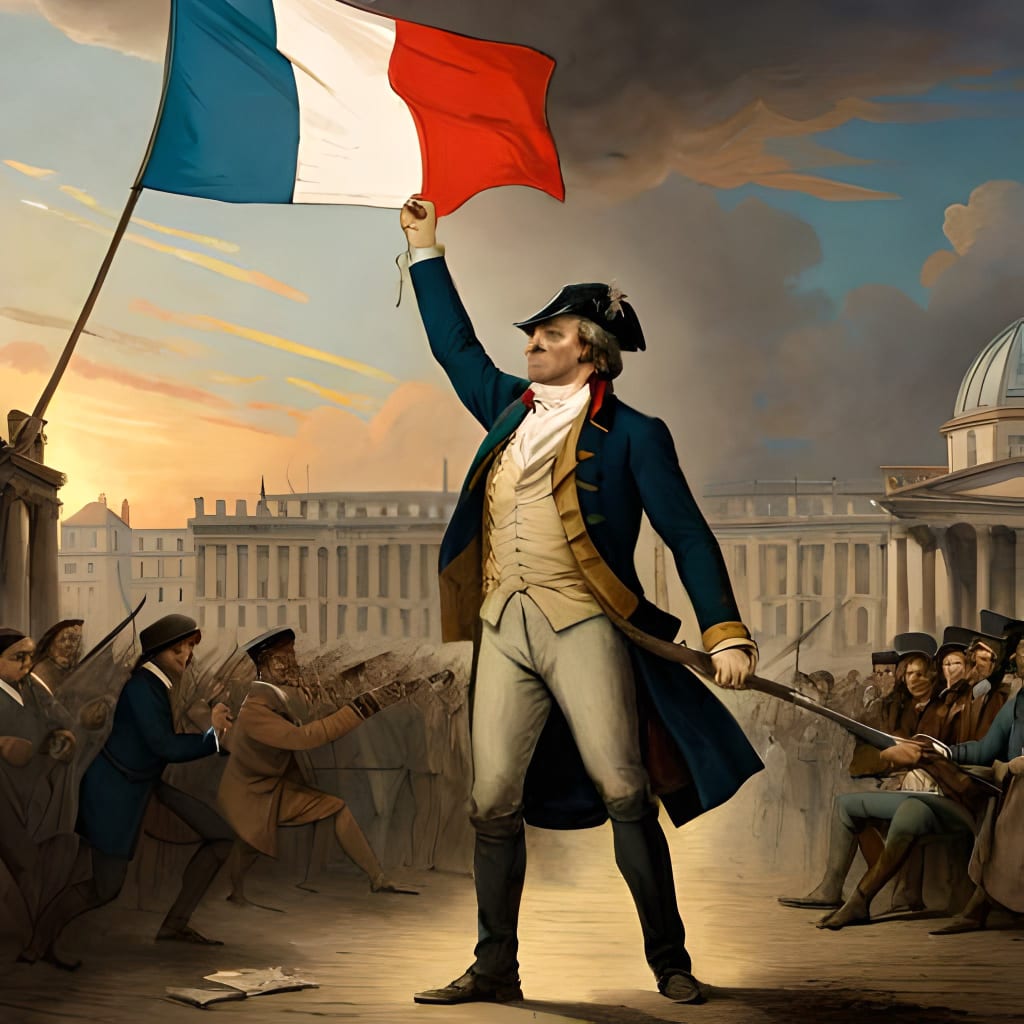
The French Revolution, which lasted from 1789 to 1799, was a pivotal moment in European history. It was a time of great social and political upheaval, as the French people rose up against their monarchy and established a democratic republic. The revolution had a profound impact on Europe, both in the short term and in the long term.
The revolution began as a movement for political reform, as the French people demanded more rights and freedoms. They were inspired by Enlightenment ideals, such as liberty, equality, and fraternity, and they sought to establish a government that would embody these principles. However, the revolution soon turned violent, as radical factions seized power and initiated a Reign of Terror that lasted from 1793 to 1794.
Despite its violent excesses, the revolution had a profound impact on Europe. It inspired similar movements in other countries, as people across the continent demanded political reform and greater rights. In particular, the revolution inspired the Irish Rebellion of 1798, the Haitian Revolution of 1791-1804, and the Belgian Revolution of 1830.
The revolution also had a significant impact on the balance of power in Europe. France emerged as a major European power, and its new republican government sought to spread its revolutionary ideals across the continent. This led to a series of wars that lasted from 1792 to 1815, as France fought against a coalition of European powers that sought to contain its influence.
One of the most significant consequences of the revolution was the rise of Napoleon Bonaparte. Napoleon was a military leader who rose to prominence during the revolution, and he eventually seized power in a coup in 1799. He established a new, authoritarian government that was modeled on the Roman Empire, and he embarked on a series of military campaigns that brought much of Europe under his control.
Napoleon's conquests had a profound impact on Europe. They brought an end to the Holy Roman Empire, which had been a central institution in Europe for centuries, and they established a new system of international relations that was based on the balance of power. Napoleon's rule also had a profound impact on the societies that he conquered, as he introduced a number of legal and administrative reforms that had lasting effects.
However, Napoleon's reign was short-lived. He was defeated by a coalition of European powers in 1815, and he was exiled to the island of Saint Helena, where he died in 1821. His defeat marked the end of the revolutionary era in Europe, and it ushered in a period of relative stability and conservatism.
In conclusion, the French Revolution was a pivotal moment in European history. It inspired similar movements across the continent, it had a significant impact on the balance of power in Europe, and it led to the rise of Napoleon Bonaparte. Its legacy can still be felt today, as the principles of liberty, equality, and fraternity continue to be central to European political and social thought.
Despite the many theories and depictions of the end of the world, the truth is that no one knows for sure what the future holds. While catastrophic events are a possibility, it is also possible that humanity will continue to thrive and evolve for many more years to come. Only time will tell what the end of the world, if it ever comes, will truly look like.
Despite the many theories and depictions of the end of the world, the truth is that no one knows for sure what the future holds. While catastrophic events are a possibility, it is also possible that humanity will continue to thrive and evolve for many more years to come. Only time will tell what the end of the world, if it ever comes, will truly look like.
About the Creator
Keep reading
More stories from R. Lingesh kumar and writers in Education and other communities.
Madam Rides the Bus
The story, Madam Rides the Bus illustrates the sensitive story of a young eight-year-old Tamil girl Valliammai. Valli was always curious to explore the outside world. She had no friends to play games with. So, her favourite pastime was to stand on the doorway of her house and watch all that was happening on the street outside. She would watch people get on and off the bus that travelled between her village and the nearest town. The bus that was filled with a new set of passengers filled her with a sense of unending joy. She had a strong urge to take a bus ride to explore the adventurous bus journey. Hence, she collected information about the bus timings by listening to the conversations of the people taking the bus ride. Soon she learnt that the bus journey from her village to the nearest town was approximately six miles. The bus fare cost thirty paise for a one way ride. So, Valli started saving enough money to take a ride on the bus.
By R. Lingesh kumar3 years ago in Education
How smart are crows?
In one of Aesop’s 2,500-year-old fables, a crow is searching for water. It spies a pitcher and discovers liquid inside— but it's beyond reach. Soon, the crow begins dropping pebbles into the pitcher. One by one, they displace the water, and the crow quenches its thirst. Interestingly, this fable turns out to be pretty accurate. In a 2014 experiment, scientists placed a food reward in a tube partially filled with water and watched as crow after crow dropped stone after stone in until the food was in beak-snatching distance.
By Munesh Yadava day ago in Education
Key Qualities to Look for in a Financial Advisor for Your Retirement Goals
Choosing a financial advisor is one of the most important decisions you will make as you prepare for retirement. The right advisor can help you create a strong financial plan, protect your savings, and guide you through complex decisions about investments, taxes, and income distribution. Since retirement planning involves long-term commitments, it is essential to work with someone who understands your goals and values. Knowing what to look for in a financial advisor ensures you choose a professional who can support your financial security for years to come.
By Keith D'Agostino5 days ago in Education




Comments
There are no comments for this story
Be the first to respond and start the conversation.