
The Four (4) C's of Aviation: Clear, Concise, Controlled, and Confident
plus+ the Pilot's four (4) C's set



Aviation is an industry that demands precision, skill, and attention to detail. To ensure safe and successful flights, pilots must adhere to a set of principles known as the four c's of aviation: control, communication, crew resource management, and cockpit culture.
In this presentation, we will explore each of these principles in depth, discussing their importance and providing real-life examples of how they can make all the difference in ensuring safe and efficient flights.
Control

The first C' of aviation is control, which refers to a pilot's ability to manipulate the aircraft's flight path. This involves understanding the aircraft's systems and using them to maintain stability and maneuverability.
Without proper control, an aircraft can quickly become unstable, leading to dangerous situations such as stalls or spins. Pilots must constantly monitor their control inputs and adjust them as necessary to ensure smooth, safe flight.
Communication

The second C' of aviation is communication, which is essential for ensuring that everyone involved in a flight is on the same page. Pilots must communicate with air traffic controllers, other pilots, and their own crew members to ensure that everyone knows what is happening at all times.
Clear communication is particularly important during takeoff and landing, when aircraft are most vulnerable to accidents. By communicating effectively, pilots can prevent misunderstandings and ensure that everyone is working together to ensure a safe flight.
Crew Resource Management
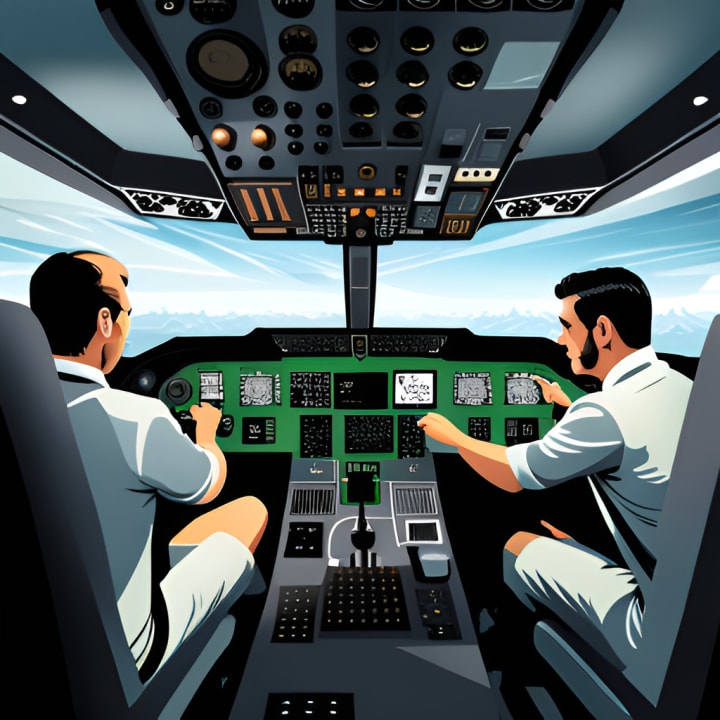
The third C' of aviation is crew resource management, which involves effective teamwork and decision-making. In complex situations, pilots must work together with their crew members to make decisions that will keep the flight safe and on track.
Effective crew resource management can prevent accidents by ensuring that everyone involved in the flight is working together and communicating effectively. By sharing information and making decisions as a team, pilots can ensure that everyone's skills and expertise are being used to their fullest potential.
Cockpit Culture

The fourth C' of aviation is cockpit culture, which refers to the norms and values that exist within a flight crew. A positive. cockpit culture encourages open communication, mutual respect, and a focus on safety above all else.
A negative cockpit culture, on the other hand, can lead to poor decision-making and unsafe practices. By promoting a positive cockpit culture, pilots can ensure that everyone is working together to make the flight as safe and successful as possible.

In conclusion, the four C's of aviation are essential principles for ensuring safe and successful flights. By prioritizing Control, Communication, Crew Resource Management, & Cockpit Culture, pilots can prevent accidents and ensure that everyone involved in the flight is working together to achieve a common goal.
We encourage all aviation professionals to embrace these principles and make them a central part of their practices. By doing so, we can create a safer and more efficient aviation industry for everyone.
We're also taught the 4 C’s of aviation as pertaining to pilots, specifically, in primary training. When faced with difficulty or difficult scenarios, such as getting lost or flying VFR (visual flight rules) into IMC (instrument meteorological conditions), the safest course of action in sequence is to Climb, Communicate, Confess and Comply with instructions. Here in lies where there's another set of C’s that has become more relevant and more critical to the flying experience, especially from the bird's eye view of the flight deck.
A pilot goes through four stages of proficiency when learning a new airplane/aircraft, a new set of skills, or working in a new environment. Those stages are Cautious, Compliant (or Current), Confident and Complacent.
The last of these can kill you....complacency!!!
Just because you’ve done something well a thousand times, doesn’t mean no vigilance and/or attention to details isn't required for the 1,0001st time. Like a golfer with a pre-shot routine, if something disturbs your normal rhythm, stop and go back through the steps again. The extra thirty seconds you spend could keep it from being a very bad day.
About the Creator
Yohannes Amanuel
Aviation professional since 2014' starting as many have at the very bottom of the totem pole, as an "underwing," line serviceman - to now - student traditional and remote pilot(UAVs).
Keep reading
More stories from Yohannes Amanuel and writers in Education and other communities.
How Has Artificial Intelligence(A.I.) Impacted the Aviation Industry?
Artificial Intelligence (A.I.), and its long reach have long now been apart of the Aviation industry and examples will be shown here to break the ice, and possibly calm the nerves of many who’ve been skeptical since its technological advancement.
By Yohannes Amanuel3 years ago in Education
Top 10 Essential Skills for Success in 2026
By 2026, the job market is no longer driven only by degrees or titles. Technology, especially Artificial Intelligence (AI), automation, and remote work, has changed how companies operate and how people work. Many routine tasks are now handled by machines, while humans are expected to do work that requires thinking, judgment, creativity, and emotional understanding. This shift means that skills — not just education — determine success. The following 10 skills are considered essential for 2026 because they combine technology awareness with human intelligence. Let’s understand them one by one, step by step.
By Talha khan6 days ago in Education




Comments
There are no comments for this story
Be the first to respond and start the conversation.