
The First Human Flight to Mars: A Reality of the 2030s or Just a Myth?
Space

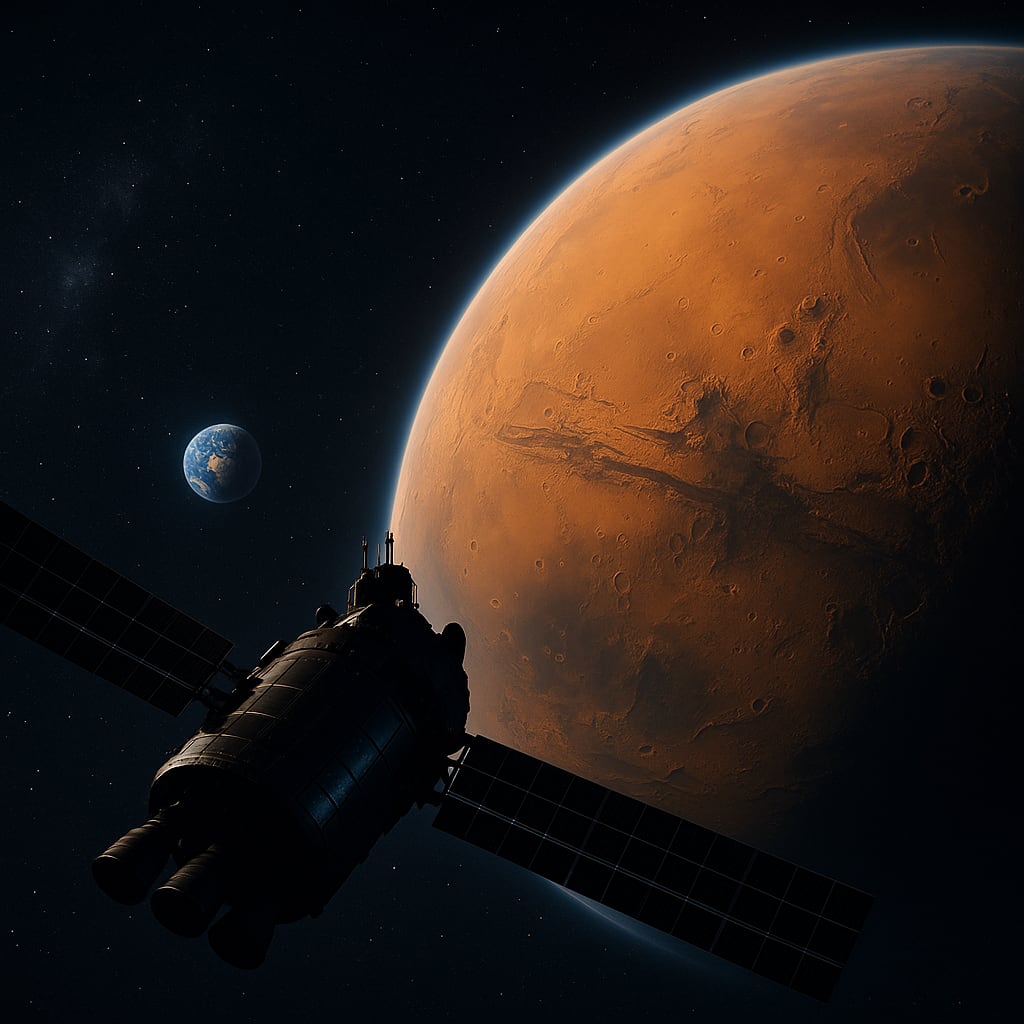
For centuries, Mars has been a canvas for human imagination. From H. G. Wells’ War of the Worlds to Hollywood blockbusters, the Red Planet has been portrayed as everything from a hostile wasteland to humanity’s next home. Today, however, the conversation about Mars has moved beyond fiction. Leading space agencies and private companies are drawing up blueprints for the first human mission. Some experts predict we could see astronauts set foot on Martian soil as early as the 2030s, while others dismiss the timeline as wildly optimistic. The truth, as always, is caught somewhere in between hope, hype, and hard reality.
Why Mars and Not Somewhere Else?
Mars isn’t the closest planet to Earth—that title goes to Venus—but it is the most promising target for exploration and potential settlement. Unlike Venus, with its crushing atmosphere and surface temperatures hot enough to melt lead, Mars offers a relatively hospitable environment: a day only slightly longer than Earth’s, polar ice caps that suggest accessible water, and soil that might be coaxed into supporting agriculture with the right technology.
In many ways, Mars has become a symbol of human ambition. If the Moon was the “first giant leap,” then Mars represents the next frontier. It is far enough to feel like another world, yet close enough that a determined civilization might actually reach it.
Who’s Racing to the Red Planet?
The players in the Mars race are as diverse as they are ambitious:
- NASA: The American space agency has publicly committed to sending humans to Mars by the mid-2030s. For now, NASA is focusing on the Artemis program, which aims to return astronauts to the Moon by the late 2020s. The Moon, NASA argues, will serve as a “training ground” for the more complex Mars expeditions.
- SpaceX: Elon Musk has been one of the loudest voices advocating for Mars colonization. His Starship rocket—still undergoing tests—has been designed specifically with Mars in mind. Musk has spoken openly about launching the first crewed missions in the 2030s, although his previous space-related timelines have often slipped by years.
- China: Not to be underestimated, China has revealed long-term plans for human exploration of Mars, even suggesting 2033 as a possible target date. With a successful track record on the Moon and recent rover missions on Mars, China’s ambitions are becoming increasingly credible.
Other nations and agencies: Europe, Japan, and India are contributing through joint projects, advanced robotics, and experiments that will likely form part of future Mars missions.
The Mountains to Climb
Despite the enthusiasm, getting humans to Mars is far from straightforward.
Technological barriers: A Mars trip would take between six and nine months one way. That requires not only enormous rockets but also life-support systems that can function flawlessly for years. Unlike the Moon, there’s no quick return if something goes wrong.
Medical risks: Space radiation is a serious threat. Astronauts would spend months exposed to cosmic rays far beyond Earth’s protective atmosphere. Bone loss, muscle atrophy, and the psychological strain of long-term isolation are equally daunting.
Financial realities: A single mission is likely to cost hundreds of billions of dollars. Maintaining political and financial support for such an ambitious project is notoriously difficult, especially given global economic uncertainties.
Political will: Space exploration has always been tied to politics. The Apollo missions were driven by Cold War competition. Today, international cooperation could be just as critical as rivalry.
Why Optimists Still Believe
And yet, despite these obstacles, optimism persists. Why? Because technological innovation is accelerating faster than ever before. Reusable rockets—once considered impossible—are now routine thanks to SpaceX. Robotics, artificial intelligence, and advances in renewable energy could make long-duration missions more manageable.
There’s also the factor of prestige. Just as the Moon landing cemented the United States as a global leader in science and technology, the first human step on Mars would be a cultural milestone on an entirely new scale. It’s a prize that nations and companies alike are eager to claim.
The Case for Skepticism
Skeptics counter that even the Artemis program—NASA’s much smaller step of returning to the Moon—has faced years of delays and ballooning costs. If landing on the Moon again in the 2020s is already proving so challenging, how realistic is Mars in the 2030s?
They also point out that Elon Musk’s grand promises about colonization have already shifted multiple times. While ambition is admirable, physics and budgets have a way of humbling even the boldest visions.
So, 2030s: Dream or Reality?
Here’s the likely scenario: By the mid-to-late 2030s, we will probably see the first human missions launched toward Mars, perhaps even orbital flights or landings with limited surface exploration. But the iconic moment—an astronaut planting a boot into Martian dust and declaring “We’ve arrived”—may not happen until the 2040s.
Even if the timelines slip, the significance remains. Mars is no longer just a dot of red light in the night sky or a metaphor for the unattainable. It is humanity’s next great adventure, one that blends engineering, courage, politics, and imagination. Whether in 2033, 2039, or 2045, the first human voyage to Mars is less a question of if than when.
About the Creator
Keep reading
More stories from Holianyk Ihor and writers in Education and other communities.
The Quipu Superstructure: A Cosmic Tapestry Stretching Across the Universe
When we talk about the “largest things in the universe,” it’s easy to imagine planets, stars, or maybe even black holes. But those are only the building blocks of something far greater. In recent years, astronomers have uncovered vast, interconnected patterns of galaxies that stretch across unimaginable distances. Among these discoveries is the Quipu Superstructure, a gargantuan arrangement of galaxies and galaxy clusters spanning nearly 1.3 billion light-years. To put that in perspective: if you could travel at the speed of light, it would take longer than the entire recorded history of the universe to cross its length.
By Holianyk Ihor4 months ago in Education
Kiranmala: the legend of the princess who considered magic mountain
Long ago, in a land far away, the queen was panicked, her grasp on reality seemingly slipping. She had given birth to two boys and one girl. But to her horror, before even meeting their father, each child vanished, something else taking their place. She faced accusations of witchcraft and demon sorcery. And though the king loved her, he was easily swayed. He soon grew doubtful and banished his wife, who left the kingdom in anguish. Little did they know, the queen’s jealous sisters were the ones to replace the newborns
By Munesh Yadav3 days ago in Education
The Human Guide Behind Technical Excellence
Mentorship of skilled technicians plays a decisive role in shaping strong careers and reliable work standards. Technical skill alone does not make a technician capable. Real growth comes from shared experience, steady guidance, and trust built over time. In many industries, mentorship fills the gap between classroom learning and real job demands. It helps technicians move from basic ability to confident performance. This article explores how mentorship supports learning, builds skills, and strengthens the future workforce.
By Michael Gastinel3 days ago in Education


Comments
There are no comments for this story
Be the first to respond and start the conversation.