
Did you know that animals perceive the world differently from humans? Let's explore some fascinating examples, starting with pigeons. Surprisingly, pigeons have superior vision compared to humans. They possess exceptional visual acuity, enabling them to notice intricate details. Additionally, pigeons have a remarkable field of vision spanning 340 degrees, almost twice as wide as a human's.
Moving on to snakes, their way of seeing the world is entirely distinct from ours. Snakes possess specialized infrared-sensitive receptors in their snouts. This remarkable adaptation allows them to detect the radiant heat emitted by warm-blooded mammals, providing a unique form of vision.
Cows, on the other hand, have limitations in their vision. They perceive the world differently due to the absence of certain receptors in their retinas. For instance, they cannot see the color red and primarily perceive variations of blue and green. Additionally, cows possess near-panoramic vision, except for a blind spot directly behind them, making it important to approach them from the front.
Horses, known for their grace and strength, have a blind spot directly in front of their faces due to the positioning of their eyes. They also lack the ability to perceive as many colors as humans do, and their world primarily consists of greens, yellows, and blues.
Fish have a unique visual system, with eyes that contain ultraviolet receptors and a more spherical lens than humans. This enables them to have an almost 360-degree field of vision. While they can perceive the same colors as humans, underwater light behavior makes it challenging for them to discern red shades. Deep-sea fish, however, possess the ability to see in the dark, which is quite impressive.
Sharks, despite their formidable reputation, have limited color vision and are unable to distinguish different colors. However, their vision underwater is clearer than that of humans.
Birds have fascinating visual capabilities. Unlike humans, birds can see ultraviolet light, which aids them in various tasks such as differentiating between male and female individuals of their species and navigating their surroundings effectively. Birds also possess excellent focus, as exemplified by falcons and eagles, which can pinpoint a small mouse from a distance of up to one mile. Pigeons, with their incredible attention to detail, can assist in finding small cracks in pavements and possess a field of vision considered twice as good as humans Insects, too, have intriguing vision patterns. Flies, for instance, have thousands of tiny eye receptors that collaborate to form a comprehensive picture of their surroundings. They have the remarkable ability to perceive everything in slow motion and can also see ultraviolet light, which aids them in communication. Bees, however, face challenges with the color red as they perceive it as a dark blue, presenting a unique perspective on their visual perception.
Rats, known for their resourcefulness, share a similar limitation to cows and bees in that they cannot see the color red. Furthermore, each of their eyes can move independently, resulting in them effectively seeing two images simultaneously. Although they are constantly seeing double, they manage to navigate their surroundings adeptly.
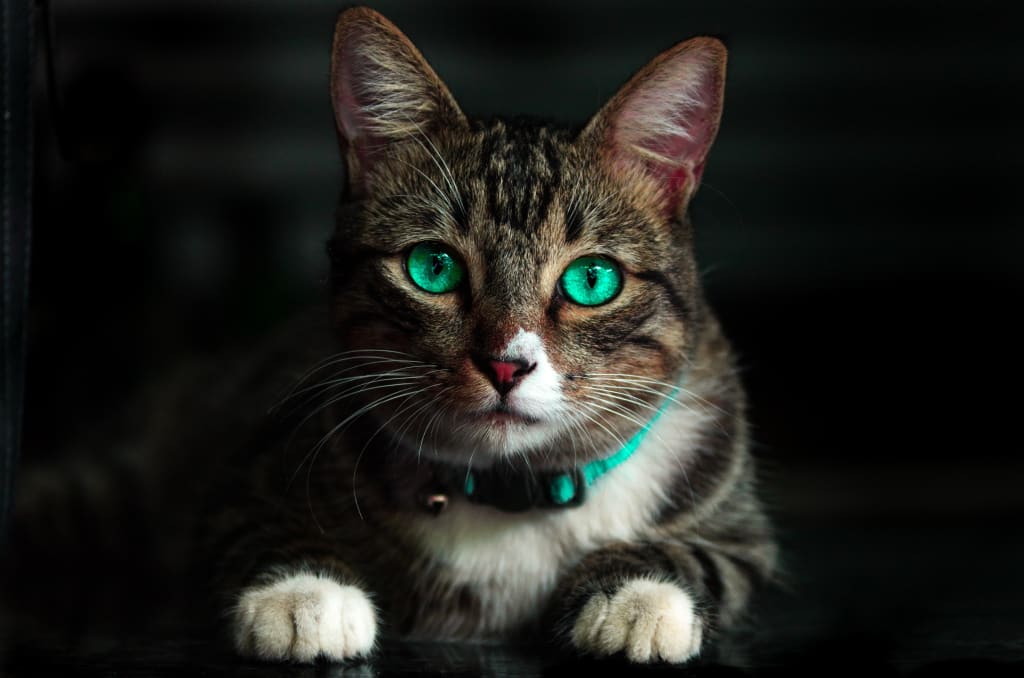
Cats have their own distinct visual perception. They are unable to see shades of red or green, but they can perceive brown, yellow, and blue hues exceptionally well. With their wide-angle view, cats have an advantage in observing objects on the sides. Interestingly, in pitch-black conditions, cats exhibit exceptional night vision, being able to see six times better than humans. Their pupils adjust effortlessly to varying light levels, giving them a magical ability to adapt to any lighting condition.
Dogs, our loyal companions, have their own unique visual abilities. They lack the ability to see the colors red and orange but excel in perceiving blue and violet shades. Furthermore, dogs have an impressive capacity to differentiate between
About the Creator
Keep reading
More stories from writers in Education and other communities.
Maximize Efficiency With 3D Animation Outsourcing Today
Deadlines are getting tighter. Budgets are under pressure. Creative expectations keep rising. Many studios, agencies, and product teams feel the squeeze when animation projects pile up faster than in-house resources can handle. That’s where 3D Animation steps in as a powerful production tool, one that doesn’t have to drain your time or team when handled strategically. By outsourcing the right way, companies unlock speed, flexibility, and consistent quality without sacrificing creative control.
By Lily Noblet6 days ago in Education
Built to Last: How Smart Leaders Design Businesses for Long-Term Sustainability
This understanding also encourages leaders to examine the relationship between profitability, responsibility, and long-term value creation. As they study emerging trends, they identify risks linked to resource depletion, regulatory changes, and shifting societal priorities. This recognition prompts them to act early and make decisions that balance economic performance with sustainable impact. As leaders adapt their vision to reflect these realities, they position their companies for steady growth in an unpredictable world.
By Alexander Schifter3 days ago in Education


Comments
There are no comments for this story
Be the first to respond and start the conversation.