
The Enchantment of Illusion: Inside the World of Magic and Wonder
How a Simple Top Hat, a Pair of Gloves, and a Wand Continue to Inspire Awe Across Generations

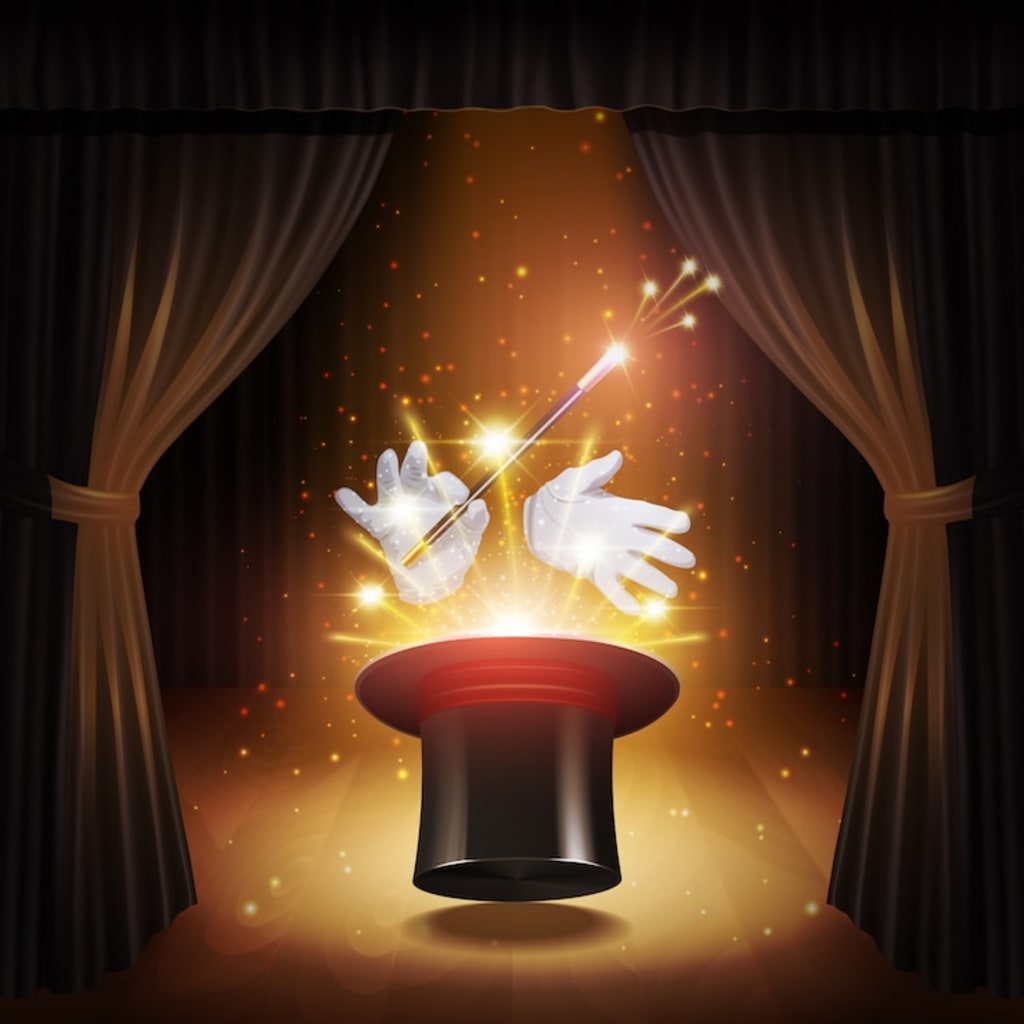
In the heart of a dimly lit theater, the heavy curtains part with a gentle sweep, revealing a lone top hat resting on a polished wooden stage. A warm amber spotlight floods the center, capturing floating gloves and a sparkling wand suspended mid-air. Golden sparks dance in the air like fireflies caught in a spell. For a brief moment, time seems to pause as magic unfolds before the audience’s eyes. This image, both whimsical and powerful, encapsulates the very essence of illusion—the ancient, evolving art of making the impossible seem real.
This visual is not just a piece of digital artistry; it is a symbol of humanity’s timeless fascination with mystery. Magic, as depicted here, is far more than entertainment. It is storytelling. It is history. It is a psychological dance between the performer and the audience, where trust, misdirection, and astonishment intertwine to create unforgettable moments.
The Evolution of Magic: From Rituals to Stagecraft
Magic as a performance art has evolved dramatically over centuries. Ancient civilizations like the Egyptians and Greeks included sleight of hand and illusion in their religious and ritualistic practices. In the Middle Ages, “magicians” were often feared, seen as sorcerers or witches, and many met grim fates due to widespread superstition.
However, by the 18th and 19th centuries, magic began transitioning into mainstream entertainment. Performers such as Jean Eugène Robert-Houdin—often referred to as the father of modern magic—transformed it from a street spectacle into a respectable art form. His refined approach to performance magic set the stage for generations to come, including the legendary Harry Houdini, whose daring escapes and feats of endurance captivated audiences worldwide.
The image of the floating gloves, wand, and hat is deeply rooted in this rich history. Each item has symbolic significance within the tradition of stage magic. The hat, often associated with the classic “rabbit out of the hat” trick, symbolizes the unknown—the place from which wonder emerges. The gloves represent elegance, precision, and concealment, while the wand is the quintessential instrument of power, misdirection, and flair.
The Psychology Behind the Performance
What makes magic so compelling is its unique ability to engage the brain’s mechanisms of attention and expectation. When a magician waves a wand and something disappears or appears seemingly out of nowhere, our minds scramble to reconcile what we just saw with what we believe to be possible. This cognitive dissonance is at the heart of magical amazement.
Magicians use a variety of psychological techniques to fool the mind. These include misdirection (diverting attention), priming (subtly preparing the mind for a false outcome), and cognitive overload (presenting so much information that the brain can’t keep up). All of these tactics are designed not just to deceive but to surprise—to create a sense of childlike wonder.
The glowing sparkles and mystical ambiance in the image evoke that emotional rush—the moment of the reveal. Whether it's a card changing suit or a person vanishing in a puff of smoke, the true magic lies in the gasp from the crowd, the moment when reality bends and the impossible feels within reach.
A Symbol of Infinite Possibility
The scene depicted—an empty stage with only magical items present—suggests more than a trick. It hints at the magician's unseen presence and the idea that magic exists whether we see the performer or not. This concept mirrors life’s unseen forces: luck, love, coincidence, hope—all intangible, yet deeply felt.
Interestingly, the image also speaks to the role of imagination. The audience doesn’t need to see the magician to believe. The glowing lights, levitating hands, and sparkling wand do the storytelling. It's a visual metaphor for how belief and perception can shape reality—just as a magician shapes the audience's experience with carefully crafted illusion.
The Modern Resurgence of Magic
In recent years, magic has experienced a resurgence, driven by television, YouTube, TikTok, and live performances that blend old-school techniques with modern storytelling. Artists like David Blaine, Derren Brown, and Shin Lim have brought a new level of sophistication to the art, fusing sleight of hand with psychological manipulation, theatrics, and even digital effects.
Virtual magic shows also gained popularity during the COVID-19 pandemic, proving that the art can adapt to any medium while maintaining its sense of wonder. Audiences are no longer limited to physical venues—magic can now be performed across continents in real time.
Still, despite technological advances, the core tools—the hat, gloves, and wand—remain iconic. These items are not just props; they are symbols of continuity, connecting modern magicians with their historical roots. The image of floating gloves and a wand bursting with golden light is a reminder that while methods evolve, the essence of magic stays the same.
Magic in Everyday Life
Beyond the stage, magic resonates in daily life. Every act of creativity—writing a story, painting a canvas, inventing a gadget—bears resemblance to a magician conjuring something from nothing. Children play pretend with the same intensity and sincerity as a seasoned illusionist. Even in science, great discoveries often feel magical until explained.
The floating elements in the image remind us that imagination defies gravity. Like the magician’s gloves, we can all reach into the unknown and pull out brilliance. We are, in many ways, magicians of our own destinies, crafting stories, experiences, and realities from our choices and dreams.
Conclusion: The Legacy of Wonder
The visual of a spotlighted stage with enchanted objects hovering in air is more than a representation of stage magic—it’s a tribute to the enduring human desire to believe in the extraordinary. It symbolizes hope, mystery, and the endless quest for understanding. The magician’s tools may appear simple, but within them lies a universe of emotion, history, and artistry.
As long as humans continue to wonder, to dream, and to ask, “How did they do that?”—magic will endure. It will float in mid-air, like the gloves and wand above the top hat, reminding us that not everything has to be explained. Some things are more beautiful when they remain a mystery.
So next time the curtain rises and the stage glows with golden light, let yourself believe—even just for a moment. Let the magic in.
About the Creator
Fazal Malik
"Welcome ! We're dedicated to making learning fun and accessible. Subscribe for educational videos, tutorials, and resources to ignite your curiosity."
Keep reading
More stories from Fazal Malik and writers in Education and other communities.
Into the Cosmic Unknown: A Lone Astronaut's Journey Through the Stars
In the quiet vastness of the cosmos, one figure stands as both a beacon of human progress and a symbol of infinite curiosity — the astronaut. The image above, a stylized and dramatic depiction of a lone astronaut drifting in space with a vivid, swirling nebula in the background, evokes powerful emotions and questions about our place in the universe. More than just an illustration, it is a portal into the dreams of humanity, where science, imagination, and existential wonder collide.
By Fazal Malik6 months ago in Education
The Five Pillars of Leadership That Elevate Teams and Transform Organizations
In today’s complex, fast-paced world, leadership isn’t just about giving orders or managing workflows—it’s about guiding people, shaping culture, and delivering lasting value. Whether in a startup or a multinational corporation, the most admired and effective leaders share a standard set of traits that set them apart. These traits don’t rely on job titles or industry jargon; they’re rooted in human connection, sound judgment, and purpose.
By Jaime Irick5 days ago in Education
'20/20'
"Do It Again" the track that would ultimately open the Beach Boys final album on Capitol Records which was released on February 10th 1969 had originally been released as a single in August of 1968. The track was the first of many post-Pet Sounds era throwbacks to the early Beach Boys sound which would become continually more cliched and eventually lead the Beach Boys to the level of self-parody they would eventually succumb to in the 1980s while their closest contemporaries The Beatles nearing the end of their run in 1969 would go on to be viewed as the most influential band of all time. However, the song itself is not bad on its surface, and it opens with a futuristic sounding (for 1969) drumbeat captured by then-Beach Boys engineer Stephen Desper using tape delays on the drums performed by Dennis Wilson and John Guerin. The song has been re-recorded numerous times over the years on various Beach Boys-related projects most notably the 2011 re-recording at Capitol studios featuring the five surviving Beach Boys at the time backed instrumentally by various members of both the Brian Wilson Band and Mike Loves touring "Beach Boys" to promote the then upcoming Beach Boys 50th Anniversary reunion tour in 2012. The hammering and power drill sound at the end of the song was an excerpt from a track called "Workshop" that was to be a part of the uncompleted "SMiLE" album.
By Sean Callaghan6 days ago in Beat


Comments
There are no comments for this story
Be the first to respond and start the conversation.