
The Echo Chamber of You: How Social Media Alchemy Turns Loneliness into Performance
Chasing Digital Affirmation While Our Real Lives Gather Dust
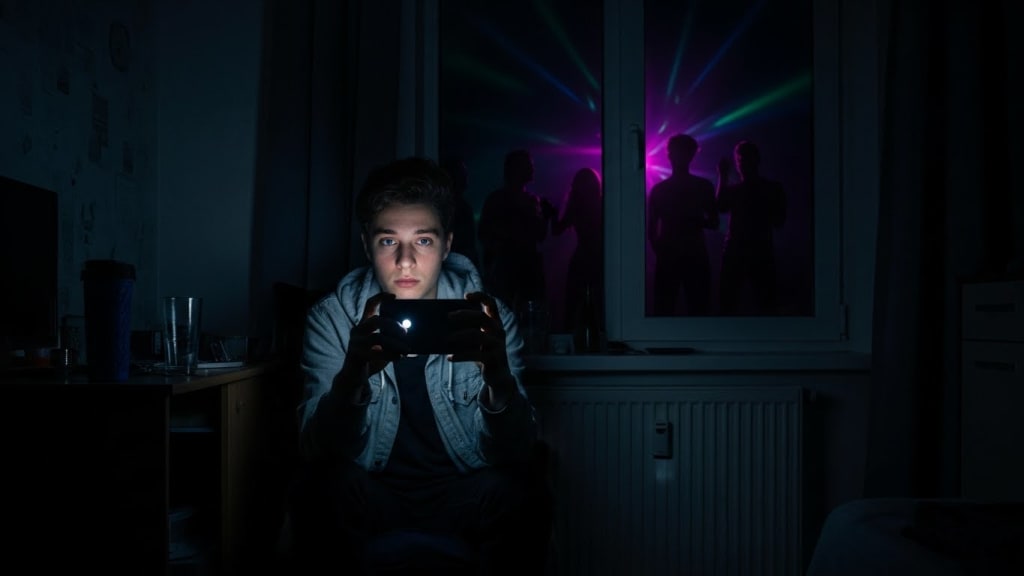
We are living through the great performance. Every day, billions of us take the raw, chaotic, often mundane material of our lives and run it through a digital refinery. We filter, crop, edit, and caption, transforming quiet evenings into #selfcare rituals, solo coffees into #latteart moments, and pangs of loneliness into curated narratives of resilient independence. Social media has gifted us a powerful, seductive alchemy: the ability to transmute the base metal of our lived experience—including our isolation—into the gold of social capital. But in this relentless pursuit of digital affirmation, we are committing a subtle but devastating act of self-betrayal. We are outsourcing our sense of worth to an audience of spectators, and in the process, forgetting how to simply be.
The mechanism is brilliantly simple and insidiously effective. A feeling of emptiness, a quiet Saturday night, a moment of self-doubt arises. The reflex is immediate: reach for the phone. We stage a scene—the perfectly angled book and blanket, the artfully scattered paperwork implying busy importance, the thoughtful gaze out a rainy window. We capture it, apply a filter that evokes a specific mood (warmth, nostalgia, cool detachment), and draft a caption that frames our solitude as chosen, meaningful, or aesthetically poignant. Then, we launch it into the world and wait. The likes, hearts, and fire emojis begin to arrive. For a moment, the chemical reward is real. Dopamine floods the system. The void is filled with a sense of visibility, of existing within the social sphere.
But this is a mirage. The connection is not reciprocal; it is transactional. We have traded a genuine, internal feeling (loneliness) for a metric (engagement). We have substituted the deep, resonant warmth of being known—in all our messy, unedited reality—for the shallow, fleeting heat of being noticed. The performance becomes a cage. We start to curate our lives not for our own enjoyment, but for their potential to be curated. We choose activities based on their "postability." We experience beautiful moments through the lens of how we will frame them later, fracturing our own presence. The trip isn't complete until the Instagram carousel is live; the meal is secondary to the photo. Our lived reality becomes a rough draft for our digital persona.
This creates a vicious, exhausting cycle. The more we perform wellness, success, or social abundance, the more we feel the silent pressure to maintain the facade. We hide our struggles, our failures, our boring Tuesdays, because they don't fit the narrative. This, in turn, makes everyone else's highlight reels feel even more real and our own behind-the-scenes feel even more inadequate. We scroll through a feed of everyone else's opening nights while we're stuck in the endless rehearsals of our own lives, forgetting that what we're seeing is everyone else's opening night, too. The result is "comparison despair," a loneliness compounded by the illusion that we are alone in being alone.
The most profound casualty is authentic vulnerability. Real human connection is built on the shared, unvarnished truth of our experiences: the "I had a tough day," the "I'm scared about this," the "I don't have it all together." Social media performance teaches us the opposite. It teaches us to package our pain as a lesson, our confusion as a quirky journey, our need as serene independence. We learn to signal rather than to speak. But a signal can only be acknowledged; it cannot be met, held, or comforted. It broadcasts a state but blocks the doorway through which another person could actually enter to join us in it.
Breaking free from this echo chamber requires a conscious detox of the performative instinct. It means asking, before posting, "Am I sharing this to connect, or to perform?" It involves practicing the radical act of experiencing moments for their own sake, letting a sunset be just a sunset, a good meal just a good meal, with no documentary evidence required. It means seeking out and nurturing the spaces where we can be unedited: a phone call with an old friend where you lead with your anxiety, a small gathering where no one takes their phone out, a journal entry that will never be seen.
True belonging doesn't happen when people applaud your performance. It happens when you are seen in your intermission—weary, makeup off, lines forgotten—and are welcomed still. It is built not on the highlight reel, but on the shared, silent understanding of the daily grind. The antidote to the loneliness of performance is not a better performance; it is the courageous, quiet decision to step off the stage, to put down the prop, and to whisper, in a real voice to a real person, "Here I am, actually. It's not all perfect. How are you, actually?" In that messy, unscripted exchange, we might just find the connection our curated feeds have been desperately, beautifully pretending to provide all along.
About the Creator
HAADI
Dark Side Of Our Society
Breaking Spiritual Strongholds
Many believers love God and sincerely desire to live victorious lives, yet they sometimes feel trapped by recurring struggles. These struggles may appear as persistent fear, discouragement, addiction, negative thinking, or spiritual oppression. No matter how much someone prays or tries to move forward, certain battles seem to repeat themselves.
By Errick Ruffin4 days ago in Education
My First Time Skiing and I Got Lost, Alone, in the French Alps
Looking back, I can trace some of my life’s biggest adventures to a simple action from my sister. She’d introduced me to Tommy (a very long time ago), a colleague of hers, who had overshared his penchant for Italian-looking women, and I ticked that box.
By Chantal Christie Weiss3 days ago in Humans



Comments
There are no comments for this story
Be the first to respond and start the conversation.