
The Crow Across Cultures
A Mysterious Bird with Many Meanings Around the World


In the vast realm of birds, few have inspired as much fascination, fear, and symbolism as the crow. Black-feathered and intelligent, the crow is found in various parts of the world — and almost everywhere, it holds a significant place in myth, folklore, and human imagination. But what’s most interesting is that the meaning of the crow varies greatly from culture to culture. In one country, it may be a messenger of death; in another, a symbol of wisdom and transformation.
Let us take a journey across the world to understand how this mysterious bird has been viewed throughout history.
The Crow in Native American Culture
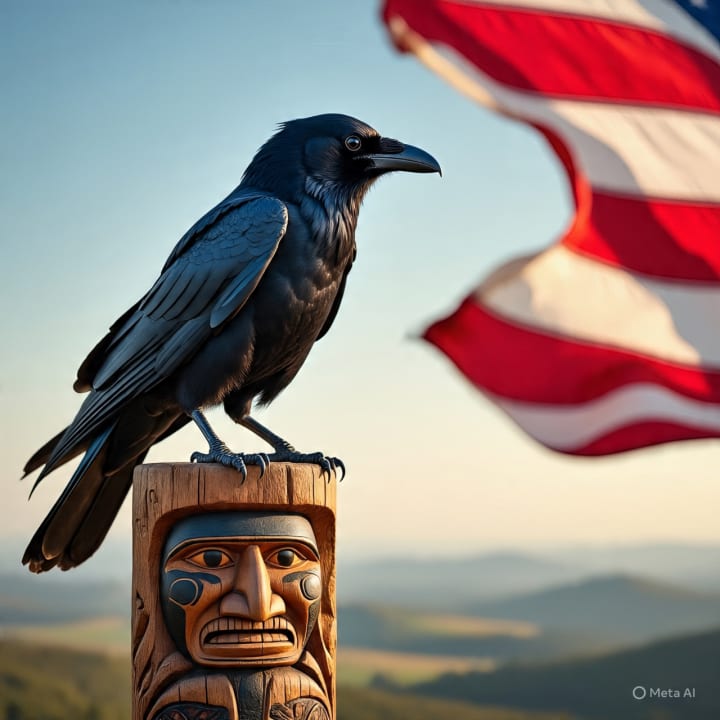
For many Native American tribes, the crow is seen as a creature of great spiritual importance. Far from being a harbinger of doom, the crow is often considered a wise and powerful totem. In the mythology of the Hopi and Zuni tribes, crows are regarded as protectors and are believed to bring rain, which is vital for agriculture in dry regions.
In other stories, the crow is known as a trickster — clever and mischievous, playing pranks but also teaching lessons. This dual role of wisdom and wit makes the crow a respected, though unpredictable, figure in Native American lore.

The Crow in Norse Mythology
The ancient Norse had a special place for birds — especially ravens and crows, which were closely related. The god Odin, who was known as the Allfather, had two ravens named Huginn (thought) and Muninn (memory). These birds would fly across the world each day and bring back news and secrets to Odin.
In this context, the crow becomes a symbol of knowledge and spiritual awareness. It reflects the power of observation, intelligence, and the ability to see what others do not. To the Norse people, crows were not just birds — they were the eyes and ears of a god.

The Crow in Japanese Folklore
In Japan, the crow — specifically the "Yatagarasu," a mythical three-legged crow — is seen as a divine guide. It is said to have led Emperor Jimmu, the legendary first emperor of Japan, to victory and to the founding of the Japanese nation.
The Yatagarasu is still used today as a symbol of guidance and justice. It appears in the logos of football teams and shrines, symbolizing support from the gods and the wisdom to make the right choices. In Japan, the crow represents not darkness, but direction
The Crow in Chinese Culture
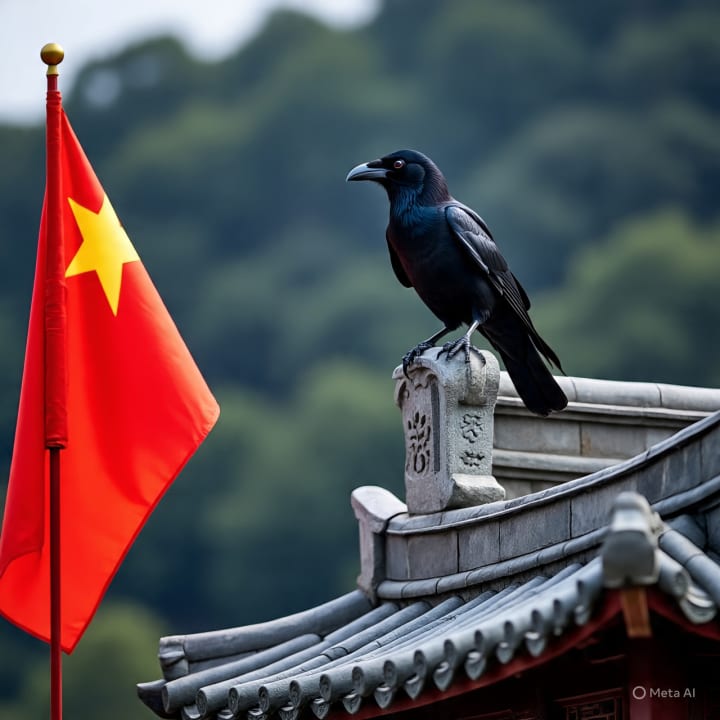
In Chinese mythology, the sun was once believed to have ten suns, each carried by a three-legged crow. Every day, one crow would rise to the sky, lighting up the world. But one day, all ten suns appeared at once, burning the earth. The hero Hou Yi shot down nine of them, leaving only one — the sun we know today.
This story reveals the crow as a creature of fire and celestial energy. The three-legged crow, known as “Sanzuwu,” remains a powerful symbol in Chinese art and is seen as a creature that connects heaven and earth. Unlike the usual image of a crow as dark and foreboding, this crow glows with brightness and energy.

The Crow in European Beliefs
In Europe, especially in medieval times, crows were often associated with death and darkness. Their black feathers and habit of feeding on dead animals made them symbols of the grave and the battlefield. It was believed that seeing a crow, especially near a home, was a bad omen.
However, not all views were negative. In Celtic mythology, the goddess Morrigan could transform into a crow and was associated with fate and war. She was feared and respected, and the crow, as her symbol, was seen as a powerful force of nature — not just evil, but necessary for the cycle of life and death.

The Crow in Indian Culture
In India, crows have a unique and often positive role in spiritual beliefs. During certain religious rituals, people feed crows as a way to honor their ancestors. It is believed that crows carry messages between the living and the dead, and that feeding them shows respect to the souls of the departed.
Crows are also considered intelligent and social creatures. In Hindu texts, the crow is linked to Shani, the god of justice, who rides a crow. Thus, the crow symbolizes both karma and spiritual connection.
A Bird of Many Meanings
So what is the crow — a trickster, a guide, a warning, a protector? The answer depends on where you are in the world.
In every culture, humans have looked at this clever, dark-feathered bird and seen something more than just a scavenger. They’ve seen reflections of life’s deepest mysteries — wisdom, war, justice, death, and rebirth.
Perhaps that’s why the crow continues to appear in literature, films, and stories. It reminds us that symbols are powerful, and that meaning is shaped not just by the bird itself, but by the eyes that see

In the end, the crow is not just a bird. It is a mirror — showing us our fears, our hopes, and our deep desire to understand the world around us.
Whether as a god’s messenger, a spirit of justice, or a shadow of destiny, the crow has earned its place in the stories of humanity.
About the Creator
Keep reading
More stories from Muhammad Bilal and writers in Education and other communities.
Markhor: The Majestic National Animal of Pakistan
Introduction The Markhor, scientifically known as Capra falconeri, is a wild goat species that inhabits the mountainous regions of northern and western Pakistan. It holds the honor of being the national animal of Pakistan, symbolizing bravery, resilience, and the wild beauty of the country's natural landscape. With its striking twisted horns, robust build, and noble presence, the Markhor represents not only Pakistan’s rich biodiversity but also the need to protect endangered species through conservation.
By Muhammad Bilal7 months ago in Education
Why the Sun Looks Red at Sunrise and Sunset: The Science Behind Nature’s Most Beautiful Light Show
The Sun Is Actually White Before explaining the red color, it’s important to clarify something surprising: The Sun is not yellow or red by nature—it emits white light.
By shahkar jalal7 days ago in Education




Comments (2)
great
💕