
The Complete Guide to School ERP Software: Features, Benefits & More
Streamline school operations, boost communication, and drive smarter decision-making with an all-in-one ERP solution tailored for modern educational institutions.
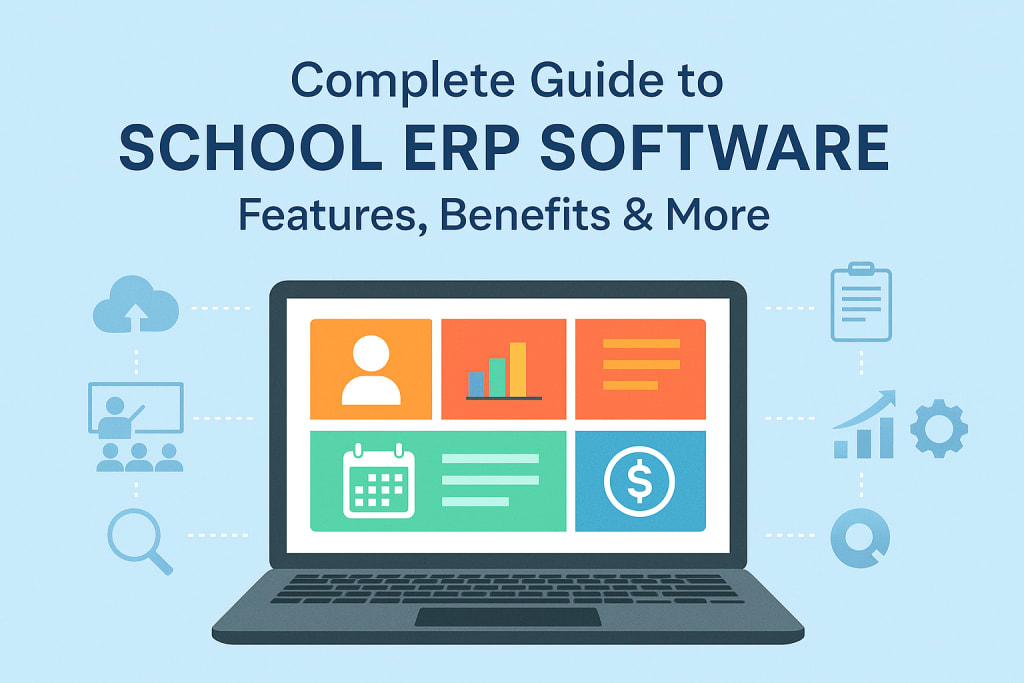
In today's rapidly evolving educational landscape, school administrators face the challenge of managing complex operations efficiently. School Enterprise Resource Planning (ERP) software has emerged as a vital tool to streamline administrative tasks, enhance communication, and improve overall institutional effectiveness. This comprehensive guide delves into the essential aspects of School ERP software, providing insights into its features, benefits, implementation strategies, and future trends.
The Importance of School ERP in 2025
The educational sector is undergoing a digital transformation, with institutions seeking integrated solutions to manage academic and administrative functions. School ERP software offers a centralized platform to handle various operations, from student enrollment to financial management, thereby reducing manual workload and minimizing errors. As schools aim for greater efficiency and transparency, adopting a robust ERP system becomes crucial.
What Is School ERP Software?
School ERP software is a comprehensive management system designed to automate and integrate the core processes of educational institutions. It encompasses modules for student information, attendance, examinations, fee management, human resources, and more. By consolidating data and processes into a unified platform, School ERP systems facilitate real-time access to information, enabling informed decision-making and efficient resource utilization.
Core Features of School ERP Software
A well-designed School ERP system includes a range of modules tailored to meet the specific needs of educational institutions:
- Student Information System (SIS): Maintains comprehensive records of student profiles, academic history, and personal information.
- Attendance Management: Automates tracking of student and staff attendance, offering real-time reports and notifications.
- Examination and Grade Management: Facilitates exam scheduling, grading, and report generation, ensuring accuracy and consistency.
- Fee and Finance Management: Streamlines fee collection, invoicing, and financial reporting, enhancing transparency and accountability.
- Human Resource and Payroll: Manages staff recruitment, payroll processing, leave tracking, and performance evaluations.
- Timetable and Scheduling: Assists in creating and managing class schedules, optimizing resource allocation.
- Library Management: Organizes library resources, tracking book issuance, returns, and inventory.
- Communication Tools: Enables seamless communication between teachers, students, and parents through messaging and notifications.
- Transport Management: Oversees transportation logistics, including route planning and vehicle tracking.
- Inventory Management: Monitors procurement and utilization of institutional assets and supplies.
Benefits of School ERP for Administrators
Implementing a School ERP system offers numerous advantages for school administrators:
- Operational Efficiency: Automates routine tasks, reducing administrative burden and allowing staff to focus on strategic initiatives.
- Data Accuracy and Accessibility: Ensures real-time access to accurate information, facilitating timely decision-making.
- Enhanced Communication: Improves interaction among stakeholders, fostering a collaborative educational environment.
- Regulatory Compliance: Assists in adhering to educational regulations and standards through systematic record-keeping.
- Cost Savings: Reduces paper-based processes and manual errors, leading to financial savings over time.
Choosing the Right School ERP Software
Selecting an appropriate ERP system involves careful consideration of various factors:
- Institutional Needs: Assess the specific requirements of your institution, including size, curriculum, and administrative complexity.
- Scalability: Ensure the software can accommodate future growth and evolving educational demands.
- User-Friendliness: Opt for an intuitive interface that facilitates ease of use for all stakeholders.
- Customization: Look for solutions that allow tailoring of modules to fit unique institutional processes.
- Integration Capabilities: Verify compatibility with existing systems and third-party applications.
- Vendor Support: Evaluate the quality of customer service and technical support provided by the vendor.
6. Implementation Strategy: Key Considerations
Effective deployment of a School ERP system requires strategic planning:
- Stakeholder Involvement: Engage administrators, teachers, and IT personnel in the planning and implementation process.
- Training Programs: Conduct comprehensive training sessions to ensure users are proficient in utilizing the system.
- Data Migration: Carefully transfer existing data to the new system, maintaining data integrity and security.
- Pilot Testing: Implement the system in phases, starting with a pilot program to identify and address potential issues.
- Feedback Mechanisms: Establish channels for continuous feedback to facilitate ongoing improvements.
Real-World Case Studies
Numerous educational institutions have successfully integrated School ERP systems, witnessing significant improvements in operational efficiency and stakeholder satisfaction. For instance, [Institution Name] reported a 30% reduction in administrative workload and enhanced parent-teacher communication post-implementation.
Common Mistakes to Avoid
To ensure a successful ERP implementation, avoid the following pitfalls:
- Inadequate Planning: Failing to define clear objectives and timelines can hinder the implementation process.
- Neglecting Training: Insufficient training may lead to underutilization of the system's capabilities.
- Overlooking Customization Needs: Choosing a rigid system that doesn't align with institutional processes can cause operational disruptions.
- Ignoring Stakeholder Input: Excluding key users from the decision-making process may result in resistance to adoption.
Future Trends in School ERP Software
The evolution of educational technology continues to shape the functionalities of School ERP systems:
- Artificial Intelligence (AI): Integration of AI for predictive analytics and personalized learning experiences.
- Mobile Accessibility: Development of mobile applications for on-the-go access to ERP functionalities.
- Cloud Computing: Adoption of cloud-based solutions for scalability and remote accessibility.
- Enhanced Security Measures: Implementation of advanced security protocols to protect sensitive data.
Conclusion
The adoption of School ERP software represents a significant step toward digital transformation in education. By streamlining administrative processes, enhancing communication, and providing real-time access to information, ERP systems empower educational institutions to operate more efficiently and effectively. As technology continues to advance, embracing such integrated solutions will be essential for schools aiming to meet the evolving needs of students, staff, and the broader educational community.
More Useful Resources:
Smart Education Tools Every Modern Educator Should Know
Top Educational Technologies Revolutionizing School Learning in 2025
Why Every Modern School Needs a Smart Management System in 2024
About the Creator
Keep reading
More stories from baileyemma and writers in Education and other communities.
Smart Education Tools Every Modern Educator Should Know
In today’s rapidly evolving educational landscape, technology is no longer a luxury—it’s a necessity. With digital natives filling our classrooms, educators must stay ahead by integrating smart education tools that not only enhance learning outcomes but also make teaching more efficient and data-informed.
By baileyemma8 months ago in Education
Time Management Hacks Every Entrepreneur Should Know
Running a startup demands more than hustle—it requires precision in how you use your time. As a founder, your daily choices directly impact your company’s growth, culture, and long-term sustainability. Without the right strategies, it's easy to get overwhelmed by tasks and lose sight of what truly matters. Mastering a few smart productivity habits can dramatically improve how you work.
By Per Jacob Solli5 days ago in Education
The "Free" Lead Trap: Why New Real Estate Agents Are Paying a Hidden Price
In the early stages of a real estate career, an agent’s most precious asset isn't their luxury car, their high-end camera gear, or a downtown office lease. It is their time. Yet, for many new professionals, time is the one resource they are most willing to squander in exchange for the "dopamine hit" of a smartphone notification.
By SiftlyLeads4 days ago in Education



Comments
There are no comments for this story
Be the first to respond and start the conversation.