
The Classroom That Changed Everything
In a broken school in a forgotten town, one teacher showed us that education wasn’t just about facts—it was about freedom.

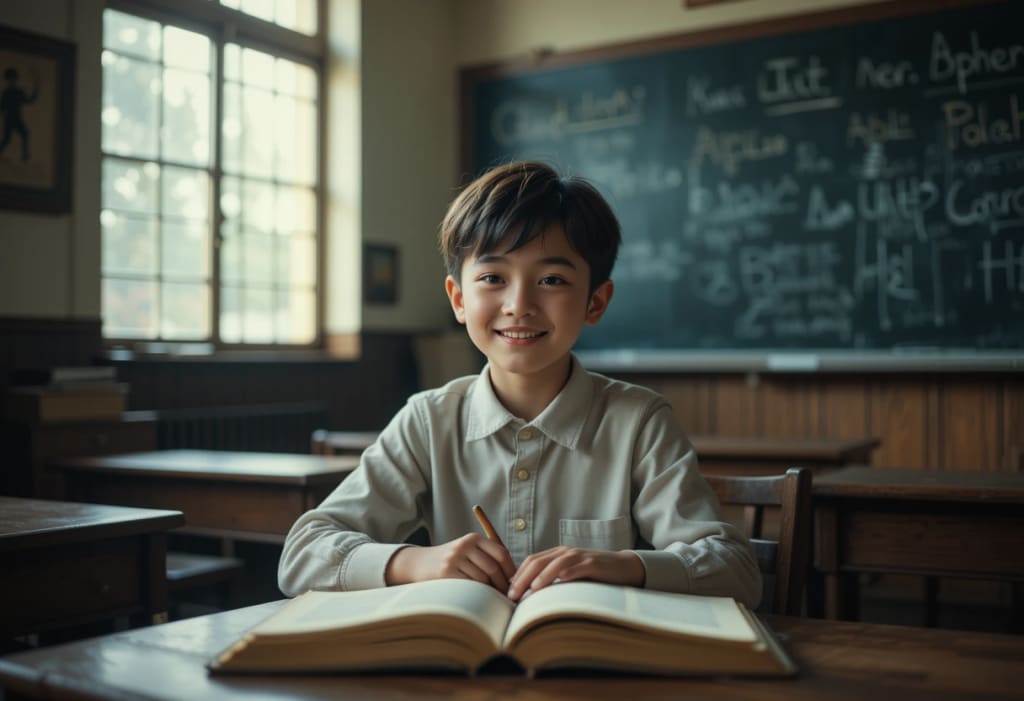
The Story:
I grew up in a small town where the library closed at 5 PM, and dreams tended to dry up before they ever took root.
Most people didn’t go to college. Many didn’t finish high school. Education wasn’t a ladder—it was a locked door, and no one knew where the key had gone.
Our school was a crumbling building with leaky ceilings, flickering lights, and textbooks older than we were. It smelled of chalk dust, fried food, and sometimes despair. Teachers came and went. Some lasted months, some weeks. They looked through us, not at us. Until Mrs. Elara walked in.
The Teacher We Didn’t Expect
She didn’t look like a hero. She wore mismatched earrings, always had ink on her fingers, and drank black coffee from a chipped mug that said, “Ask Me About Books.”
But from day one, she saw us.
Really saw us.
“I don’t care if you remember the date the Roman Empire fell,” she said in that first class. “I care if you understand why empires fall—and how to keep yours from falling too.”
We stared at her like she was mad.
But she kept going.
Education Wasn’t What We Thought
Instead of just reading textbooks, she gave us stories—tales of scientists who failed a hundred times before they changed the world, poets who were homeless before their words earned Nobel Prizes, mathematicians who hid their genius because of who they loved.
She let us ask questions. Big, wild, uncomfortable questions:
“Why don’t we learn about poor people in history?”
“Why do we memorize answers instead of making up our own?”
“Why does everyone say college is the only way to succeed?”
She never punished curiosity. She fed it.
One Day, She Brought a Mirror
Literally.
She put it in front of the class and said, “This is the most important textbook you’ll ever use.”
Then she handed out blank notebooks.
“I’m not grading these,” she said. “These are yours. Write what you learn—not just facts, but truths. Not just answers, but you.”
Some of us wrote poems. Others drew diagrams. Some wrote about the things we were too scared to say out loud—divorces, poverty, fears, dreams.
For the first time, school didn’t feel like a cage.
It felt like a door
How Education Changed Us
By the end of the year, things were different.
Rosa, who used to fall asleep in class, started turning in essays that made us cry. Jamal, who never spoke, built a model of a city powered by solar energy. I stopped skipping school.
We started believing we were more than just numbers in a file.
And all of it—every change—began with someone treating us like we mattered.
Mrs. Elara taught us that education isn’t a system—it’s a fire. And once it’s lit, it doesn’t go out.
Where We Are Now
That was ten years ago.
Rosa became a writer. Jamal’s studying environmental engineering. I’m now a teacher myself—working in a school just like the one we came from.
I keep a chipped mug on my desk. It says, “Ask Me About Dreams.”
Why Education Still Matters
People talk a lot about how broken the system is—and it is. But education is not just about systems, tests, or grades.
Education is hope. Education is power. Education is how we rewrite our stories.
In a world that often tells you what you can’t be, the right education tells you everything you can.
We didn’t all become straight-A students or win awards. But we became people who knew how to question, create, and care.
And that’s more valuable than any test score.
Final Thought:
If you’re wondering whether teaching matters, or whether education can still change lives—remember this:
Sometimes, one teacher.
One student.
One class.
Can start a revolution.
About the Creator
Keep reading
More stories from waseem khan and writers in Education and other communities.
7 Online Skills That Can Change Your Financial Future in 2026
7 Online Skills That Can Change Your Financial Future In today’s digital world, one skill can completely transform your life. Just a decade ago, making money online sounded unrealistic to many people. Today, thousands of people are building careers, businesses, and even financial freedom using only their laptops and internet connections. The truth is simple: the internet has created opportunities that never existed before. But the biggest mistake most people make is waiting for the “perfect moment” to start learning. The reality is that learning just one valuable online skill can open doors to income streams you never imagined. Here are seven powerful online skills that can truly change your financial future. 1. Content Writing Content writing is one of the easiest online skills to start with. Every website, blog, and online business needs high-quality content to attract readers and customers. If you can write helpful, interesting, or informative articles, you already have the foundation for this skill. Content writers earn money by writing: Blog posts Website content Product descriptions News articles Platforms like freelance marketplaces, blogging websites, and digital publications are always looking for good writers. With practice, many writers turn this skill into a full-time career. 2. Graphic Design In the online world, visuals matter. Businesses need logos, social media graphics, advertisements, and brand designs to attract attention. Graphic design allows creative people to turn their imagination into income. Even beginners can start by learning simple tools and gradually improving their skills. Graphic designers can work with: Small businesses Online brands Content creators Marketing agencies A single well-designed logo or brand package can sometimes earn more than weeks of traditional work. 3. Video Editing Video is the most powerful form of content on the internet today. From social media platforms to online courses, videos dominate the digital world. But most creators don’t have the time or skill to edit their own videos. This is where video editors come in. If you learn how to cut clips, add music, create smooth transitions, and improve video quality, you can become extremely valuable. Video editors are needed by: YouTubers Businesses Online educators Social media influencers The demand for video editing continues to grow every year. 4. Social Media Management Millions of businesses rely on social media to reach customers. But many business owners don’t know how to grow their pages, create content, or engage with their audience. Social media managers help brands: Plan content Post regularly Respond to followers Grow their audience With the right strategy, social media managers can manage multiple accounts and earn steady monthly income. This skill combines creativity with marketing knowledge, making it highly valuable. 5. Digital Marketing Digital marketing is one of the most powerful online skills you can learn. It involves promoting products, services, or brands through online channels such as search engines, social media, and email. Digital marketers help businesses get: More website visitors More customers More sales Companies are willing to pay well for people who can increase their revenue. Learning digital marketing can open doors to freelance work, remote jobs, or even your own online business. 6. Web Development Every business needs a website. But building a professional website requires technical skills. Web developers create and maintain websites using coding languages and development tools. Although this skill takes more time to learn than others on this list, it is also one of the highest-paying online skills. Many web developers work remotely and build websites for clients all around the world. Once you gain experience, the opportunities become endless. 7. AI Content Creation Artificial intelligence is rapidly changing the online world. Many creators and businesses now use AI tools to produce content faster and more efficiently. AI content creators use technology to generate: Articles Images Videos Marketing content People who understand how to use AI tools effectively have a huge advantage in the modern digital economy. Instead of replacing creativity, AI often amplifies it. Those who learn how to combine creativity with technology will be ahead of the curve. Final Thoughts The internet has made it possible for anyone, anywhere in the world, to build valuable skills and create new income opportunities. But knowledge alone is not enough. The real difference comes from taking action. Pick one skill from this list and start learning today. Practice consistently. Improve a little every day. Over time, that single skill could become the foundation of a completely different financial future. Because sometimes, all it takes is one skill to change everything.
By Baseer Shaheen 7 days ago in Education


Comments (1)
Very good 💯