

The Broken Bridge
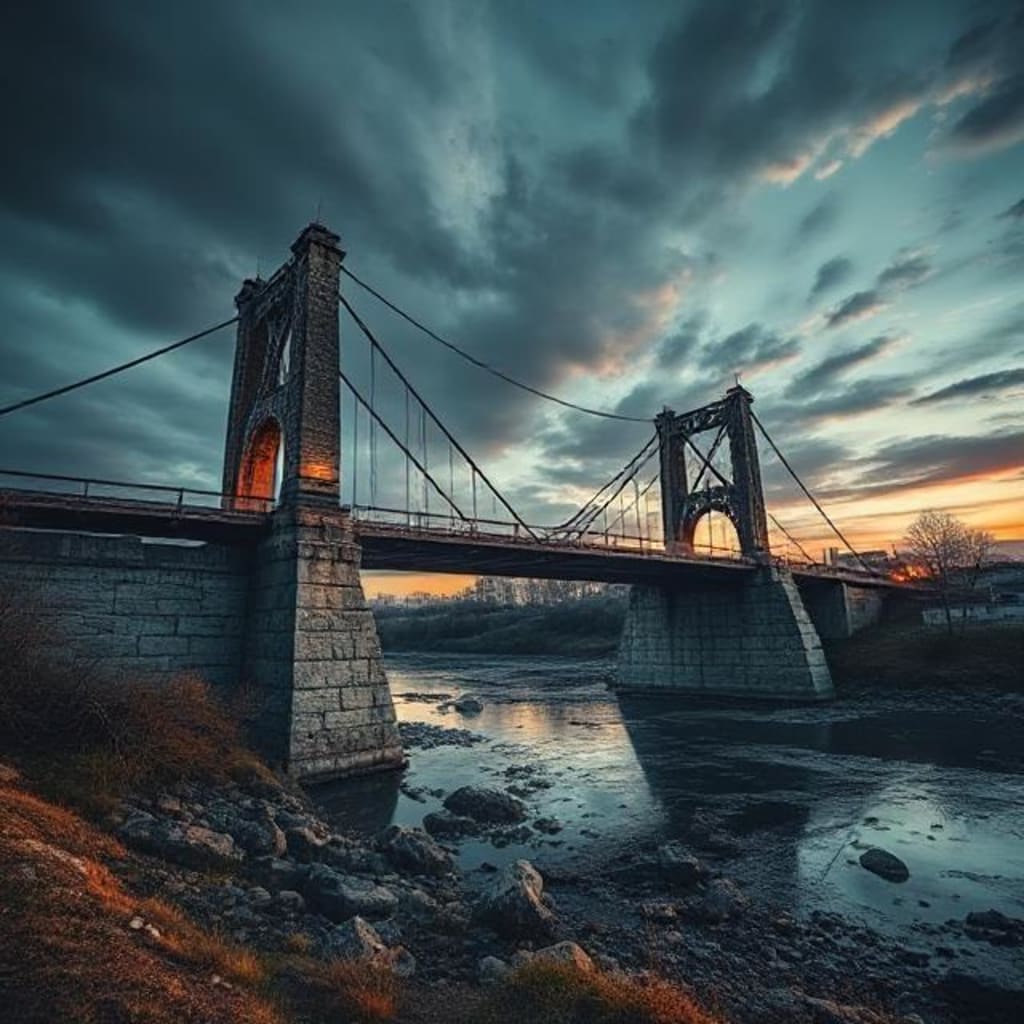
In a quiet village nestled between two hills, a narrow wooden bridge connected the east side to the west. This bridge was more than just a path across the river — it was a symbol of trust, built by the ancestors of the villagers, repaired by generations, and respected by all. But over time, as the younger generation got busier and more self-centered, the bridge started to decay.
Among the villagers was a young man named Raju. He was smart, hardworking, and ambitious. Raju had always dreamed of leaving the village to work in the big city. His mother, Meena, was a widow who raised him with great effort and love. She supported his dreams but often reminded him of the importance of his roots.
“Don’t forget where you came from, Raju,” she would say. “The bridge may be old, but it holds the stories of everyone who crossed it.”
Raju usually nodded, but he never paid much attention to the bridge or its condition. In his eyes, the world beyond the hills held more value than anything in the village. One day, he received a job offer from a well-known company in the city. Excited, he packed his things and prepared to leave. That evening, the villagers gathered to wish him farewell. His mother gave him a pouch of dry food and said, “Take the east bridge tomorrow. It's still standing, but please promise to come back.”
Raju smiled and said, “Of course, Ma. I’ll return a successful man.”
The next morning, Raju walked toward the bridge. As he crossed it, he noticed that some planks were weak, and a few nails were loose. He thought for a moment, “This bridge won’t last another monsoon. Someone should fix it.” But instead of informing anyone, he kept walking, thinking, “It’s not my problem anymore.”
Years passed.
In the city, Raju built a name for himself. He earned wealth, respect, and admiration. But with success came pride. He rarely called home and never visited. Occasionally, he would send money to his mother but avoided conversations about the village.
One day, Raju received a letter. It was short and in shaky handwriting:
“Raju, I’m very ill. I wish to see you once more. Please come home. — Ma”
His heart sank. Guilt rushed in like a flood. Without wasting time, he boarded the next train and journeyed back. As the train neared his village, memories came rushing back — playing in the fields, bathing in the river, and his mother’s stories near the fireplace.
He reached the station and began walking toward the bridge. But when he arrived, his heart dropped.
The bridge was broken.
A large section in the middle had collapsed, washed away by the last monsoon. The villagers had stopped using it and began taking a longer route around the hills. But that route would take hours, and Raju didn’t have that time.
Desperate, he ran toward a group of children nearby. “Why hasn’t anyone repaired the bridge?”
An old man, who overheard, replied, “Everyone’s too busy now. People just find another way or leave things broken. Just like you did years ago, Raju.”
Raju’s face turned pale. The words pierced deeper than he expected.
He sat near the riverbank, thinking. The bridge hadn’t broken in a day. It had been weak even when he left. And he had walked away from it, just like he had walked away from his responsibilities.
That night, under the stars, Raju gathered wood, ropes, and nails. Using whatever he could find, he began repairing the bridge by lantern light. Some villagers watched from a distance, whispering. Slowly, a few joined in. Old and young, men and women — everyone came together. What Raju started alone became a village effort.
By dawn, the bridge was repaired.
Raju ran across it, reached home, and found his mother lying on a cot, weak but conscious. Her eyes lit up when she saw him.
“You came,” she whispered.
He held her hand. “I did, Ma. I’m sorry I was late.”
She smiled faintly. “You came through the bridge?”
“Yes. We fixed it.”
Her eyes welled up with tears. “You fixed more than just wood and nails, my son. You fixed what was broken inside.”
Moral of the Story:
Don’t walk away from the things that connect you to your roots. Responsibilities may not be glamorous, but ignoring them can cost more than you realize. Small actions today can save bridges tomorrow — both literal and emotional.
About the Creator
Keep reading
More stories from VISHWANATHA and writers in Education and other communities.
The Wise Farmer and the Young Apprentice
The Wise Farmer and the Young Apprentice In a quiet village surrounded by fields of green, there lived a humble farmer named Hari. His farm was small but prosperous. Every season, his crops flourished, and his animals were healthy. The villagers admired him not only for his success but also for his wisdom and kind heart. Hari believed that knowledge wasn’t just for the books—it was something that should be passed down to others.
By VISHWANATHA9 months ago in Education
Prevention First: How Proactive Medical Care Builds Stronger Communities
Preventive medical care plays a critical role in shaping healthier communities. When people receive care before illness develops, they avoid many severe conditions. This approach improves quality of life and reduces strain on healthcare systems. Moreover, prevention supports long-term wellness rather than short-term treatment. Communities that prioritize preventive care experience lower rates of chronic disease. As a result, individuals remain active and productive. Preventive care, therefore, serves as the foundation for sustainable public health.
By St. John's Community Health5 days ago in Education
Starting Strong: Learning the Basics of Investment Management
Investment management involves managing money set aside to grow over time. It is about deciding how and where to put money so that it earns more in the future. This process includes choosing among options such as stocks, bonds, or real estate. It also involves planning how long to hold these investments and how to react when markets change. For beginners, learning about investment management is the first step toward gaining control over their financial future.
By Winston Feng3 days ago in Education


Comments
There are no comments for this story
Be the first to respond and start the conversation.