
The Wise Farmer and the Young Apprentice
moral story

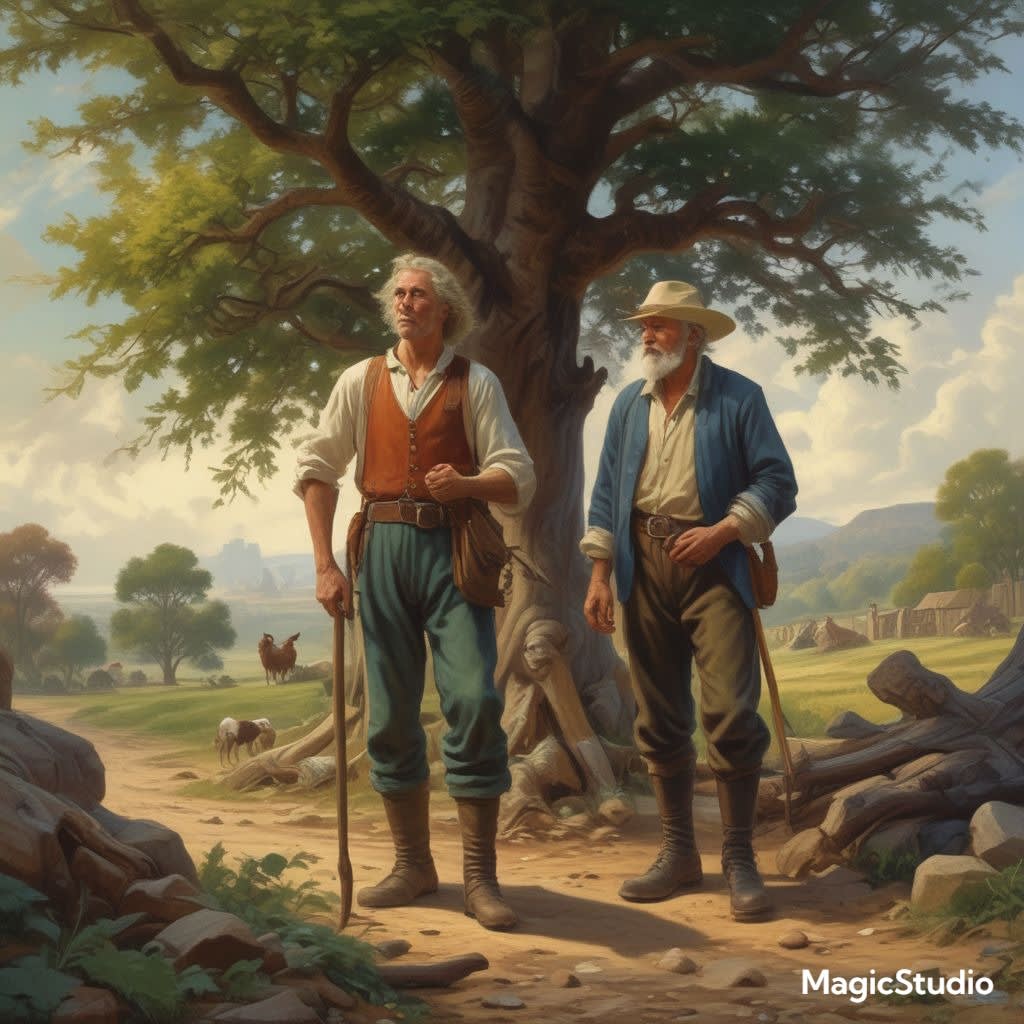
The Wise Farmer and the Young Apprentice
In a quiet village surrounded by fields of green, there lived a humble farmer named Hari. His farm was small but prosperous. Every season, his crops flourished, and his animals were healthy. The villagers admired him not only for his success but also for his wisdom and kind heart. Hari believed that knowledge wasn’t just for the books—it was something that should be passed down to others.
One day, a young man named Raghav came to Hari, seeking to learn the ways of farming. Raghav had heard of Hari’s success and wanted to become a farmer just like him. Eager to start his journey, Raghav approached the old farmer and asked, “Hari, please teach me your ways. I wish to learn how to grow a thriving farm.”
Hari, who had seen many young people come and go with their dreams of becoming successful farmers, agreed to take Raghav under his wing. “Come to my farm tomorrow, and I will show you the first lesson,” Hari said with a kind smile.
The next morning, Raghav arrived early, eager to begin. As he walked through the gates of Hari’s farm, he was struck by the beauty of the fields and the harmony of the animals. Hari motioned for Raghav to follow him as they walked toward the barn.
“Your first lesson,” Hari began, “is about the importance of patience. Farming is not a quick path to success. It requires understanding the land, waiting for the right moment to plant, and nurturing it as it grows.”
Raghav was eager to get started. “I understand, Hari. I’m ready for whatever you teach me. What should I do?”
Hari smiled and handed Raghav a simple shovel. “Your task for today is to dig a hole. But you must be careful. Don’t rush. Take your time to ensure the hole is perfect.”
Raghav was puzzled. He thought that digging a hole would be simple and quick. But since Hari had asked him to do it carefully, he took his time. The sun rose higher in the sky, and as the hours passed, Raghav dug slowly, making sure that every part of the hole was just right. He dug and dug, until he was exhausted. By the time the hole was complete, he realized that an entire day had passed.
Exhausted, Raghav sat down on the ground and looked at Hari, who was calmly observing him. “Hari, I spent the entire day digging just one hole. It feels like a waste of time. Shouldn’t I be planting seeds by now?”
Hari chuckled softly. “You have learned your first lesson, Raghav. It may feel like a waste of time, but the work you put in today is not wasted. The hole you dug is not just about its size or shape. It’s about the patience and attention to detail you practiced. The earth will give you what you need when you give it what it requires. Just like in life, if you rush through things, you’ll miss the small but important details.”
Raghav sat in silence, pondering Hari’s words. He realized that the work hadn’t been about the task itself, but about learning to slow down and focus.
Over the next few weeks, Raghav worked alongside Hari on the farm. Each day, Hari gave him tasks that required patience—planting seeds one at a time, carefully watering the crops, and tending to the animals with kindness. Raghav began to understand that farming wasn’t just about hard work; it was about building a relationship with the land and the creatures who lived on it.
One day, as the season changed, the crops began to grow. The seeds Raghav had planted sprouted into small shoots, and soon, the fields were lush with green plants. Raghav’s excitement grew as he saw the results of his efforts, but he quickly learned another lesson.
“The crops are growing beautifully, Hari,” Raghav said. “But they are not yet ready for harvest. How do I know when to pick them?”
Hari smiled gently. “Raghav, you must wait. The crops will let you know when they are ready. There is a time for planting, a time for growing, and a time for harvesting. It is not about rushing to the end. It’s about understanding the rhythm of nature.”
Raghav, though eager to see the fruits of his labor, listened to Hari’s advice. He waited patiently as the crops matured, trusting the process. Over time, the plants became strong and healthy, and when the time was right, Hari guided Raghav in harvesting the crops.
When Raghav finally stood in the field, holding the abundance of what he had cultivated, he realized how much he had learned. The hard work had paid off, but it was the lessons of patience, timing, and understanding that made the reward so meaningful.
One evening, as they sat on the porch overlooking the fields, Raghav looked at Hari and said, “I came to you wanting to learn how to be a farmer. But what I’ve learned from you is far greater than that. You’ve taught me that in life, we must be patient and take the time to understand the world around us. Success doesn’t come from rushing—it comes from careful, thoughtful work.”
Hari smiled and nodded. “Indeed, Raghav. The land, like life, teaches us the value of patience. Success doesn’t happen overnight. It is the result of consistent, mindful effort.”
As the seasons continued to change, Raghav became a skilled farmer in his own right, known not only for his thriving farm but also for his wisdom and patience. He shared the lessons he had learned with others, and in time, the village flourished, with every farmer understanding the true value of patience and careful work.
And so, the wisdom of the wise farmer was passed down, from one generation to the next, reminding everyone that the journey toward success is not about haste, but about taking each step with purpose and care.
The End.
About the Creator
Keep reading
More stories from VISHWANATHA and writers in Education and other communities.
The Golden Seed
The Golden Seed Once upon a time, in a peaceful village nestled between green hills, there lived a wise old man named Kavi. He was known for his deep knowledge and gentle spirit. People from near and far would visit him to seek guidance for their problems, whether it was about life, relationships, or personal struggles. Kavi had a reputation not just for his wisdom but also for his kindness and patience.
By VISHWANATHA9 months ago in Education
Preparing Health Systems to Perform Under High-Stakes Crisis Conditions
High-stakes crises have become an increasingly common challenge for health systems worldwide. Whether dealing with infectious disease outbreaks, natural disasters, mass casualty incidents, or cybersecurity breaches, healthcare organizations must be ready to respond rapidly and effectively. Preparation is essential not only to ensure patient safety but also to maintain operational stability during times of extreme pressure. Health systems that invest in proactive planning, strong leadership, and resilient infrastructure are better equipped to manage crises without compromising care quality. Preparing for high-stakes situations requires a comprehensive approach that focuses on readiness, coordination, and continuous learning.
By Craig Kent4 days ago in Education



Comments
There are no comments for this story
Be the first to respond and start the conversation.