
The Biggest Secrets and Mysteries of Ancient Egypt
Learn about the history of Egypt

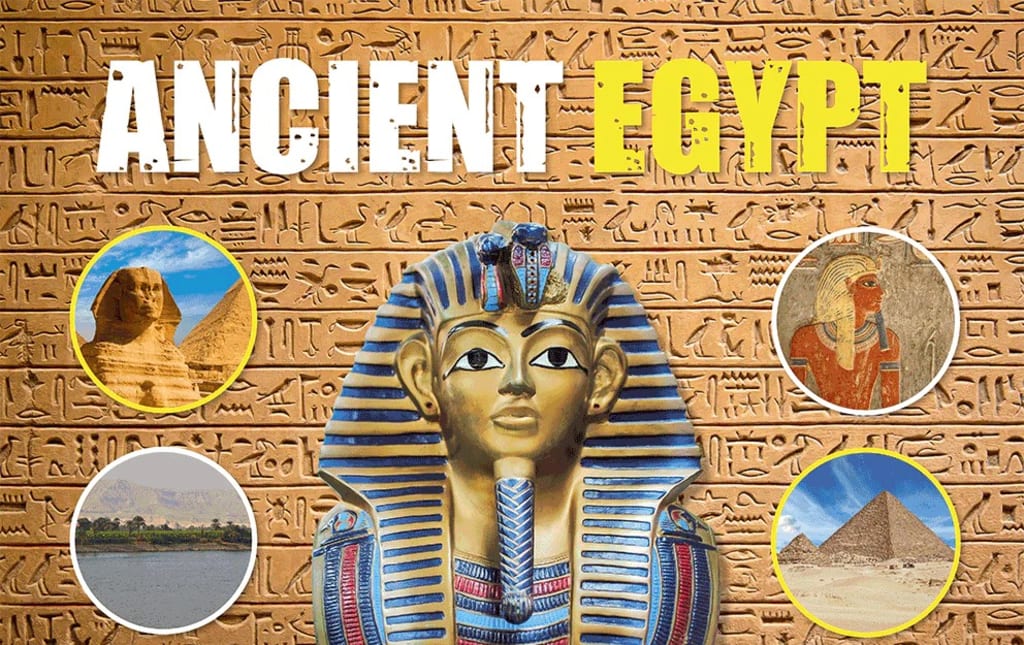
More than four millennia ago, the ancient Egyptians ruled a vast empire, leaving behind a rich legacy of art and architecture that still captivates us today. Despite this wealth of knowledge, they also left behind numerous mysteries that continue to baffle even the most seasoned scholars. Perhaps the most enduring of these mysteries is how the Egyptians were able to construct awe-inspiring structures such as the pyramids without modern machinery or advanced technology. These near-impossible feats have led some to speculate that intelligent extraterrestrial beings may have visited the Earth, bringing with them the necessary knowledge and tools to accomplish these incredible feats.
Although the idea of ancient aliens is not taken seriously by mainstream experts, there are several ancient Egyptian mysteries that remain unexplained to this day. One such mystery is the identity of the Sea Peoples, a group of maritime warriors who repeatedly attacked Egypt, Turkey, Syria, Palestine, and other territories for nearly a century. Despite detailed records of their attacks, little is known about who these people were, where they came from, or where they went.
The first references to the Sea Peoples date back to the 13th century BC during the reign of Merantau, who claimed to have killed 6,000 of them after they allied themselves with the Libyans. However, the most detailed accounts come from Ramses III, who fought a series of catastrophic battles against the Sea Peoples around 1170 BC. One inscription reads, "They desolated its people, and its land was like that which has never come into being." Ramses III described the Sea Peoples as a mixture of tribes, including the Sheridan, Kara-set, Denyen, Shekel, Ash, and others.
The reason why the Sea Peoples attacked in the first place remains unknown, although some speculate that they may have been displaced from their homeland by famine or natural disasters. Regardless of their origins, the Sea Peoples returned to Egypt in the mid-12th century BC, intent on conquering the country. Ramses III led his forces to defend his kingdom, defeating the Sea Peoples on land and decimating their fleet at the 1175 BC battle at the Delta, where Egyptian archers lined the banks of the Nile and rained arrows on the enemy's ships.
Although the mystery of the Sea Peoples remains unsolved, there is no denying the incredible impact they had on ancient Egypt and the world at large. And while we may never know the truth about these mysterious maritime warriors, their legacy continues to intrigue us and inspire us to explore the many mysteries of our ancient past.
The war had weakened Egypt considerably, but it also marked the end of the Sea Peoples' reign. Just as mysteriously as they had appeared, they vanished, leaving behind questions that linger to this day. The Temple of Dendera, dedicated to the goddess Hathor, is one of the most enigmatic ancient Egyptian temples. Located 2.5 kilometers southeast of Dendera, it is one of the best-preserved Egyptian complexes, with the central temple being buried by sand and burned until the mid-nineteenth century. The main temple features reliefs that are unlike any other ancient Egyptian artwork and are commonly known as the Dendera light. The images engraved on it have raised questions about how advanced the Egyptians really were. The bulb-like object featured on the relief has led some to believe that the ancient Egyptians were given the power of electricity 4000 years ago by time travelers or ancient aliens, which enabled them to construct the pyramids and other monuments. However, most Egyptologists have dismissed this claim, saying that there is evidence of certain but seen as we are talking over 4000 years ago it's not visible to the naked eye. The mainstream interpretation suggests that the relief is a mythological depiction of a jet pillar and a lotus flower spawning a snake, symbolizing aspects of Egyptian mythology. The life and death of King Tutankhamun is another mystery that has captivated people's imaginations. British archaeologist and Egyptologist Howard Carter discovered Tutankhamun's nearly intact tomb in November 1922. Tutankhamun was about 17 when he died and was likely to have inherited the throne at the age of just eight or nine. He is thought to have been the son of Akhenaten, commonly known as The Heretic King, and he ruled for approximately ten years. Despite being surrounded by valuable treasures, Tutankhamun's tomb was small, leading to speculation that he died suddenly, and his intended tomb was a much grander affair that was not finished at the time of his death. The cause of his death is still uncertain, but in 2010, scientists found traces of malaria parasites in his mummified remains, which may have contributed to his death. In 2018, a new theory emerged, suggesting that Tutankhamun may have died in battle, which could explain why he had no heart.
Initially, it was thought that the sphinx lost its nose to Napoleon's army, but drawings from the 18th century showed that the nose was already missing before Napoleon's time. It is now widely believed that it was shot off by the Turks. The sphinx's beard is on display in the British Museum. The most intriguing aspect of the sphinx is what is underneath it. There are three known passages into or under it, and the tomb of Osiris is located 95 feet below the surface behind the structure. Evidence suggests that there are more passages, as workers discovered a series of tunnels and pathways in 1995, some of which descended underground near the sphinx. Archaeologists also found anomalies in the form of hollow spaces or chambers just a few meters below the ground on either side of the sphinx. However, the Egyptian government does not allow any further exploration due to the cost of upkeep and restoration, as the sphinx is deteriorating from smog, humidity, and wind. Preservation efforts take priority over further exploration, meaning it may be many years before all the secrets of the Great Sphinx are revealed. Despite this, the mysteries of the ancient Egyptians continue to captivate people's imaginations, and many are drawn to their way of life and the enigmas they left behind.
About the Creator
Keep reading
More stories from Iddriss Khalid and writers in Education and other communities.
Whatsapp Hacking Exposed
PROTECT YOUR SELF FROM WHATSAPP HACKING Whatsapp has achieved its current level of popularity by being the first mobile application to offer free messaging to all users, thereby attracting a large user base who could easily register their mobile numbers without providing additional information. Over the years, Whatsapp has also introduced various features that users have come to love, inspiring other messaging platforms to adopt similar interfaces. However, the app's widespread usage has made it a target for hackers who attempt to compromise users' accounts. In the event of such a security breach, it can be a significant problem for users. Therefore, in this article, we will guide you on how to determine if your account has been hacked and outline the necessary steps to take in response.
By Iddriss Khalid3 years ago in Education
Institutional Email: What It Is, What It’s For, and How to Use It
There’s a huge difference between “having an email” and having an institutional email. A personal inbox is fine for everyday stuff. An institutional email works like an official key: it verifies who you are inside a school, university, or company—and it unlocks doors a personal email simply can’t.
By News Trends Go2 days ago in Education




Comments
There are no comments for this story
Be the first to respond and start the conversation.