
The Best Japanese Learning Books: A Complete Guide
Master Japanese Faster: Top Textbooks and Tools to Guide Every Step of Your Language Journey

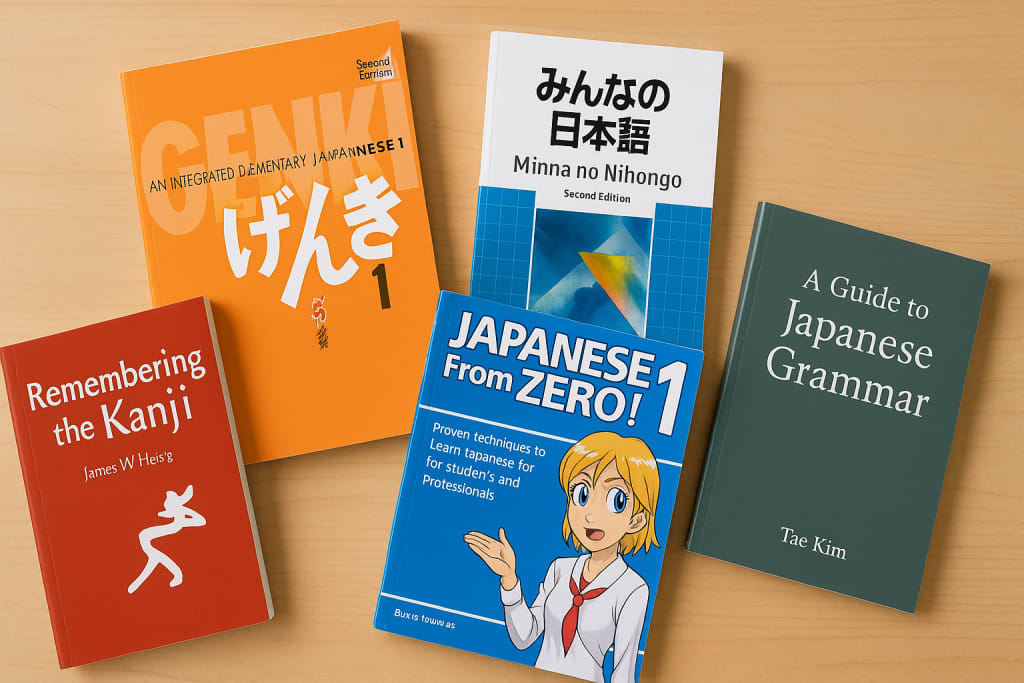
Learning Japanese can be a rewarding experience, but finding the right resources to guide your journey is essential. Among the many tools available, textbooks remain one of the most popular and effective ways to learn. A good Japanese textbook will help you master everything from basic grammar to advanced sentence structures, while also providing essential vocabulary and cultural insights.
In this guide, we’ll go over some of the best Japanese learning books, offering a range of options for learners at various levels. Whether you're just starting out or looking to refine your skills, there's a textbook out there that can support your journey. Additionally, we’ll show you how Migaku can enhance your learning experience alongside these books, helping you to study Japanese in a more dynamic and immersive way.
1. Genki I & II
• Level: Beginner to Intermediate
• Overview: One of the most widely recommended textbooks for beginners and intermediate learners, Genki I and Genki II are comprehensive books that cover essential grammar, vocabulary, and kanji. They feature clear explanations, practice exercises, and conversations based on everyday situations, making them an excellent starting point for learners.
• Why It’s Great for Learning Japanese: Genki provides a strong foundation in both speaking and writing. It’s structured so that learners can tackle grammar and vocabulary in manageable chunks. The books are complemented by an extensive workbook that reinforces what you’ve learned.
• Tip: Use the workbook alongside the main textbook for extra practice. Don't rush through the grammar explanations; take time to absorb each lesson.
2. Minna no Nihongo
• Level: Beginner to Intermediate
• Overview: Minna no Nihongo is another staple of Japanese language textbooks. Like Genki, it’s designed for beginners and offers thorough coverage of grammar and sentence structures. However, Minna no Nihongo is a bit more immersive, as it focuses heavily on learning through immersion, offering a lot of practice exercises and dialogues in Japanese.
• Why It’s Great for Learning Japanese: It is often considered one of the most comprehensive Japanese textbooks. The book’s structure allows you to slowly build your skills while keeping everything in context. It’s particularly great for learners who want to be constantly exposed to real Japanese usage.
• Tip: Since Minna no Nihongo is written mostly in Japanese, beginners might want to use it alongside a translation book or a glossary for support.
3. Tae Kim's Guide to Japanese Grammar
• Level: Beginner to Advanced
• Overview: Tae Kim’s Grammar Guide is widely regarded as one of the most accessible and useful resources for learners of all levels. It’s available both as a book and an online resource, which is incredibly useful for learners looking to dive into Japanese grammar in a clear and systematic way. Tae Kim’s explanations are straightforward and detailed, making even complex grammar rules easy to understand.
• Why It’s Great for Learning Japanese: This book is especially effective for learners who want to understand the underlying structure of the language, such as how sentences are formed. It goes deep into grammar while offering practical examples and explanations.
• Tip: Pair this with a textbook like Genki or Minna no Nihongo for a more rounded learning experience.
4. Japanese from Zero!
• Level: Beginner
• Overview: Japanese from Zero! is a series of textbooks aimed at beginners, which introduces vocabulary, grammar, and kanji in an easy-to-understand format. The series is known for its friendly tone and progressive approach to learning, with lessons organized in a way that gradually builds on previous knowledge.
• Why It’s Great for Learning Japanese: The book is well-suited to learners who want to start from the very basics. It’s also great for self-study, with lots of exercises and clear explanations. Additionally, it emphasizes kanji from the very beginning, which helps learners develop their reading skills early on.
• Tip: If you’re completely new to Japanese, this book is a great way to get started. Consider pairing it with other resources to expand your vocabulary and practice more complex sentence structures.
5. Remembering the Kanji by Heisig
• Level: Beginner to Advanced
• Overview: If you’re serious about learning kanji, Remembering the Kanji by James Heisig is a must-have. This book doesn’t focus on grammar or vocabulary, but instead helps you learn how to recognize and recall kanji. Heisig’s method involves associating each kanji with a memorable image or story, which helps learners recall their meanings and readings.
• Why It’s Great for Learning Japanese: This book is ideal for learners who want to master kanji efficiently. It’s great for memorization and allows learners to learn kanji without feeling overwhelmed by the sheer number of characters.
• Tip: Since this book doesn’t teach kanji readings in context, be sure to practice your kanji with other reading materials to reinforce your understanding.
6. An Integrated Approach to Intermediate Japanese
• Level: Intermediate
• Overview: This textbook is perfect for learners who have already mastered the basics and are ready to move into more complex aspects of the language. It includes detailed lessons on grammar, kanji, reading comprehension, and vocabulary, all within a cultural context. An Integrated Approach to Intermediate Japanese also focuses on real-world Japanese, such as news reports and conversations.
• Why It’s Great for Learning Japanese: It provides learners with an immersion experience and introduces more advanced concepts in a manageable way. It also offers a variety of exercises to reinforce the material and keep learners engaged.
• Tip: Pair this book with additional resources like watching Japanese TV shows or reading manga to fully immerse yourself in the language.
How Migaku Can Enhance Your Learning
While textbooks are essential for mastering the foundations of Japanese, Migaku can take your learning to the next level by allowing you to learn Japanese through real-world content. Migaku is an immersive platform that lets you learn directly from native content, such as anime, YouTube videos, and Netflix shows.
By using Migaku, you can practice Japanese in the context of real-life conversations, hear various accents, and gain exposure to slang and idiomatic expressions. You can also use its features, like instant word definitions, pronunciation guides, and spaced repetition systems (SRS) for vocabulary retention, to reinforce what you’ve learned from textbooks.
Conclusion
Finding the right textbooks is crucial for learning Japanese, and the options we’ve listed above are among the best in the market. Whether you’re just starting or moving toward intermediate or advanced levels, there’s a textbook that can meet your needs. Pairing textbooks with immersive learning tools like Migaku is an excellent way to accelerate your language acquisition and ensure you understand the cultural context and real-world usage of the language.
By using Migaku, you can deepen your understanding of Japanese, engage with authentic content, and take your language skills to new heights. Start exploring Migaku today, and complement your textbook learning with immersive, interactive experiences! To explore more about Migaku and how it can enhance your Japanese learning, check out Migaku's Blog on Best Japanese Textbooks.
About the Creator
Keep reading
More stories from Daily Blog and writers in Education and other communities.
Why Experiential Learning Is Essential for Student Success
Experiential learning transforms education from passive absorption to active participation, making it indispensable for students preparing to enter an increasingly complex workforce. Traditional classroom settings often fall short in developing the practical skills employers demand, creating a significant gap between academic knowledge and real-world application.
By Daily Blog7 months ago in Education
What is Affiliate Marketing: A Beginner's Step-by-Step Guide
Affiliate marketing is a performance-based online business model that generates over $12 billion annually in the U.S. alone and continues to grow as e-commerce expands. At its core, affiliate marketing allows individuals to earn commissions by promoting products or services created by other companies. Affiliates share unique tracking links through websites, blogs, social media, email lists, or videos, and earn a percentage of each sale or action completed through those links. Because affiliates don’t handle product creation, inventory, payment processing, or customer support, it’s one of the most accessible ways to monetize an online presence.
By Mohammad Sufyaan6 days ago in Education




Comments
There are no comments for this story
Be the first to respond and start the conversation.