
The AI Revolution and the Future of Work
Navigating Opportunities, Risks, and Skills in an Automated World

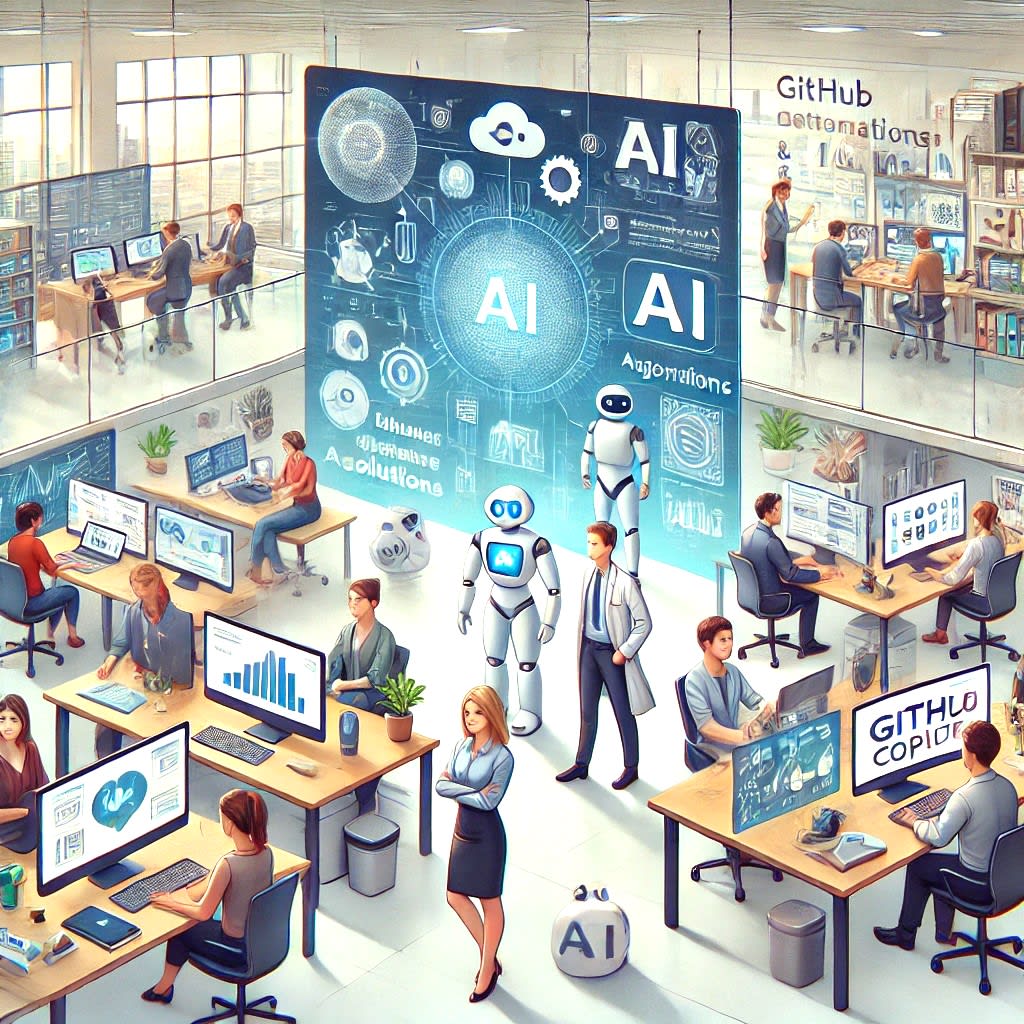
Artificial intelligence (AI) is a transformative force shaping the 21st century in an age of rapid technological advancement. AI has made the leap from the realm of science fiction to the real world, from self-driving cars to ChatGPT. The impact of artificial intelligence (AI) on work in the future is being questioned as automation and smarter algorithms are developed. Despite its complexity, the response is undeniably transformative. The Rise of AI in the Workplace AI is rapidly reshaping workplaces. According to McKinsey's projections, half of the current work tasks could be automated by 2025. AI-driven robots and chatbots are becoming increasingly important to manufacturing, logistics, and customer service. However, AI is enhancing human capabilities rather than replacing them. For instance, engineers use machine learning to simulate climate solutions, marketers rely on algorithms to predict consumer behavior, and doctors use AI to diagnose diseases more quickly. Fears of job displacement persist despite these advances. AI will result in the creation of 97 million new jobs worldwide by 2025, according to a report from the World Economic Forum from 2023. The problem lies in the skill gap because many workers do not have the skills they need for these new jobs. Opportunities: AI's Positive Side Even though some people are worried about AI's impact, the technology also opens up a lot of opportunities for growth and innovation. This is how: New Industries, New Jobs: AI is making completely new paths for careers. Emerging positions include "AI ethicist," "data detective," and "robot-human collaboration manager." A combination of technical skills, creativity, and emotional intelligence are required for these positions. Democratizing Expertise: Canva empowers non-designers to create professional content, and AI-powered tools like GitHub Copilot assist developers in writing better code. This leveled the playing field, making it easier for entrepreneurs and small businesses to compete. Solution of Major Global Issues: AI speeds up the resolution of major global issues. AlphaFold by Google DeepMind, for instance, makes use of AI to predict the structures of proteins, advancing drug discovery. Renewable energy optimization is also being improved by climate models powered by AI. Problems: The Dangers We Can't Avoid AI’s rapid rise presents challenges that demand attention.
Polarization in the Workforce: AI poses a particular threat to low-skilled, repetitive positions, potentially increasing income inequality. The OECD warns that 27% of jobs in advanced economies are at risk of automation.
The Skills Gap: New skills in AI literacy, data analysis, and critical thinking are needed by millions of workers. Industries may experience severe talent shortages if education programs are not readily available. Ethical Dilemmas: AI systems can exhibit bias, raising concerns about fairness. For example, facial recognition systems have been criticized for misidentifying people of color. Additionally, AI-generated deepfakes pose serious threats to misinformation control.
"The key challenge isn’t just developing AI—it’s ensuring it aligns with human values," warns Microsoft CEO Satya Nadella. The Skills You Need to Advance Your Career To remain competitive in the AI-driven workforce, employees must develop skills that machines cannot replicate. These are some: Flexibility: Continuous education is essential. Courses in coding, digital marketing, and AI fundamentals are available on platforms like Coursera and LinkedIn Learning, allowing employees to upgrade their skills. Emotional Intelligence (EQ): Leadership, empathy, and collaboration remain uniquely human traits. While AI can analyze data, it cannot motivate teams or resolve interpersonal conflicts.
Critical Thinking: Questioning AI outputs is crucial. According to Karim Lakhani, a researcher at Harvard, "AI is a tool, not an oracle." Human judgment remains essential for interpreting data and making informed decisions.
The Ethical Imperative: Building an Inclusive AI Future
Policies and ethical frameworks that are inclusive are necessary to ensure that AI benefits society. While Silicon Valley advances AI rapidly, 3 billion people worldwide still lack internet access, risking a deepening digital divide. Solutions include:
Regulatory Frameworks: The EU’s AI Act aims to restrict high-risk AI applications, such as social scoring, to promote fairness and accountability. AI ethics research has also received funding from Canada. Corporate Accountability: Organizations like Salesforce are appointing Chief Ethical AI Officers to look for bias and fairness in algorithms. Grassroots Advocacy: Employees can advocate for transparency in AI deployment, ensuring ethical practices in areas like hiring algorithms and productivity monitoring.
Final Thoughts: Accept Change and Shape the Future The AI revolution is no longer a distant possibility—it is our present reality. Its impact on the workforce is profound, yet not predetermined. By embracing reskilling initiatives, advocating for responsible AI practices, and leveraging technology to enhance human potential, we can create a future where humans and machines collaborate harmoniously. AI's potential is transformative, but the power to guide its impact lies in our hands.
About the Creator
Keep reading
More stories from Rocky Brahma and writers in Education and other communities.
The Future of High-Speed Travel: Supersonic Jets and Their Impact on Aviation
The development of supersonic jets, which promise to shorten flight times and redefine global connectivity, is a paradigm shift in aviation technology. These aircraft could cut travel times on long-haul routes in half by traveling faster than sound (Mach 1, or 767 mph at sea level), changing our perceptions of distance and international travel. While supersonic flight is not new—pioneered by the iconic Concorde in the 20th century—today’s innovators aim to overcome historical limitations by creating efficient, eco-friendly, and economically viable supersonic jets for the modern era.
By Rocky Brahma12 months ago in Education
Casie Hynes and the Shift Toward Meaningful Mathematics Learning
Casie Hynes is part of a growing conversation among educators who are reexamining how mathematics is taught in today’s classrooms. Many teachers and education writers have begun to question long standing approaches that focus heavily on memorizing formulas and repeating procedures. Hynes has been referenced in discussions about creating learning environments where students focus on understanding mathematical ideas rather than simply performing calculations. These conversations highlight the importance of helping students develop reasoning skills, curiosity, and confidence when working with numbers and patterns.
By Casie Hynesa day ago in Education
Empowering Your Financial Journey: The Role of Wellness and Coaching
Financial success is not only about numbers, budgets, and investment strategies. It is also deeply connected to mindset, habits, and overall well-being. Many people work hard to improve their financial situation, yet they often overlook the emotional and behavioral aspects that influence financial decisions. Empowering your financial journey means recognizing that financial wellness and coaching can play a powerful role in building lasting stability and confidence.
By Mario Payne6 days ago in Education


Comments
There are no comments for this story
Be the first to respond and start the conversation.