
The Future of High-Speed Travel: Supersonic Jets and Their Impact on Aviation
Breaking the Sound Barrier: Innovations, Challenges, and Sustainable Solutions in Modern Aviation

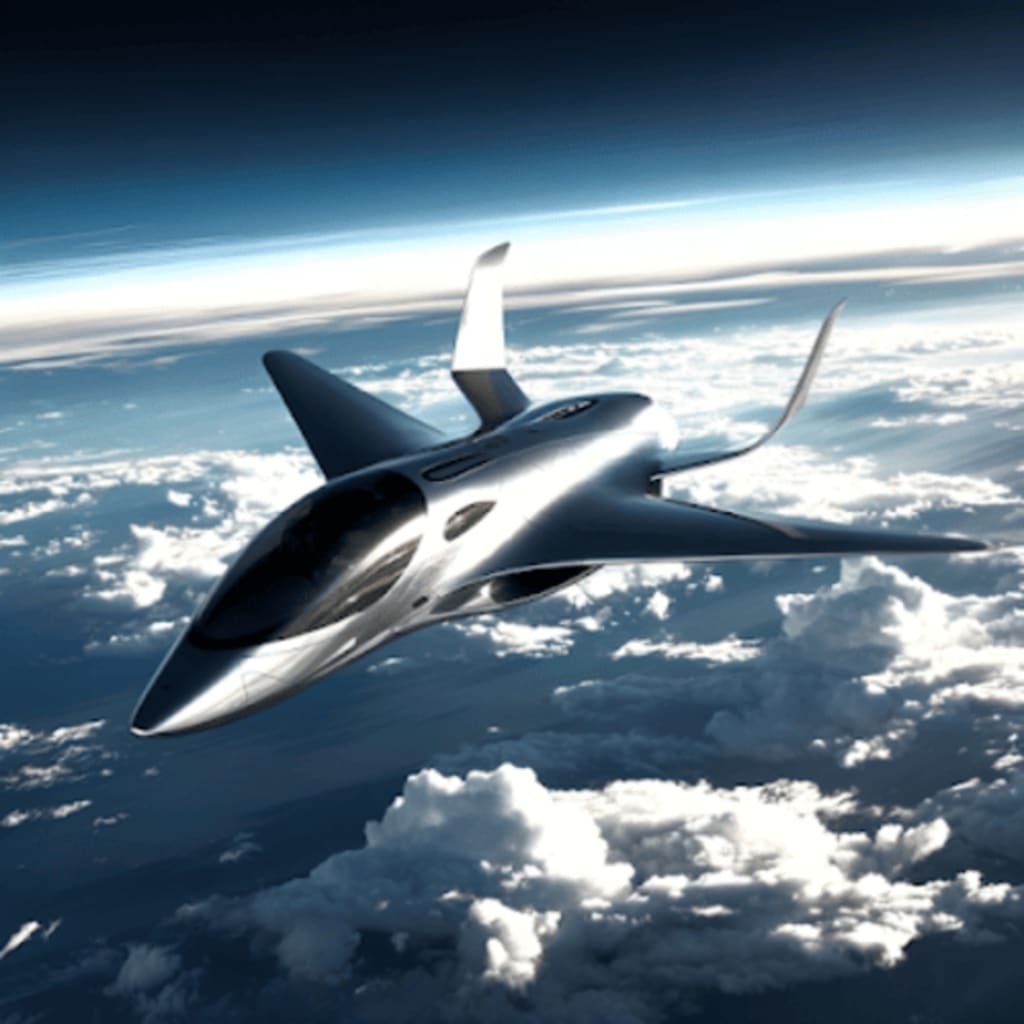
The development of supersonic jets, which promise to shorten flight times and redefine global connectivity, is a paradigm shift in aviation technology. These aircraft could cut travel times on long-haul routes in half by traveling faster than sound (Mach 1, or 767 mph at sea level), changing our perceptions of distance and international travel. While supersonic flight is not new—pioneered by the iconic Concorde in the 20th century—today’s innovators aim to overcome historical limitations by creating efficient, eco-friendly, and economically viable supersonic jets for the modern era.
A Short Introduction to Hypersonic Travel The British-French Concorde is still the most well-known supersonic aircraft in history. It was operational from 1976 to 2003 and cruised at Mach 2 (1,534 mph). This cut down on the amount of time it took to fly from New York to London over the Atlantic to just 3.5 hours, as opposed to today's 7–8-hour subsonic flights. However, its legacy was marred by difficulties such as high operating costs, a small seating capacity (only 100 passengers), and stringent noise regulations. The Concorde's deafening sonic boom—a shockwave resembling a thunderclap that occurs when breaking the sound barrier—restricted its flight paths to flights over water and away from densely populated areas. Despite its retirement due to declining profitability and public backlash over noise and emissions, the Concorde proved that supersonic travel was technically feasible, setting the stage for modern advancements.
Modern Innovations in Supersonic Aviation
With cutting-edge technology, companies like Boom Supersonic and aerospace giant Lockheed Martin are reimagining supersonic travel today. A flight from New York to London would take 3.5 hours on Boom's Overture jet, which is expected to debut in 2029. It is designed to carry 80 passengers at Mach 1.7 (1,304 mph). The Overture, in contrast to the Concorde, places an emphasis on sustainability, with plans to operate entirely on sustainable aviation fuel (SAF) and produce zero carbon emissions. In the meantime, the X-59 QueSST experimental aircraft developed by Lockheed Martin and NASA aims to reduce sonic booms. The X-59 aims to soften the disruptive shockwave into a quieter "sonic thump" by improving its aerodynamics. This could convince regulators to lift restrictions on supersonic flights over land. Without causing any disruption to the communities below, this breakthrough could open up new routes, such as Los Angeles to Tokyo in less than six hours. Problems with the Economy and the Environment Supersonic jets face significant obstacles despite advancements. Consumption of fuel is still a big problem because flying at supersonic speeds takes a lot more energy than flying at subsonic speeds, which raises concerns about emissions. While SAF offers a greener alternative, its production is still limited and costly. In addition, the aviation industry's objective of zero emissions by 2050 necessitates that developers of supersonic aircraft place a high priority on fuel efficiency and carbon-neutral operations from the beginning. Noise pollution is another barrier. Current international regulations, such as the FAA’s ban on civil supersonic flights over U.S. land, stem from the Concorde’s disruptive sonic booms. Policymakers and communities may remain skeptical until real-world testing demonstrates minimal noise impact, even with quieter designs like the X-59. Supersonic travel must strike a financial balance between affordability and profitability. With ticket prices that are comparable to those found in business class today, early models like Boom's Overture will likely target premium markets like luxury tourism and business travelers. However, just as subsonic air travel transformed into a mass-market service, scaling production and improving operational efficiency may eventually democratize access. The Road Ahead: A Faster, More Sustainable Future
The revival of supersonic travel hinges on three pillars: innovation, regulation, and sustainability. Fuel inefficiency could be addressed by advancing engine technology, such as hybrid electric systems and hydrogen propulsion. For instance, Rolls-Royce is exploring adaptive cycle engines that optimize performance across subsonic and supersonic speeds.
Frameworks for regulation must also change. In 2023, the FAA proposed new noise standards for supersonic aircraft, signaling a willingness to revisit decades-old restrictions. Collaborative efforts between governments and manufacturers will be essential to establish safe, practical guidelines for overland routes.
Sustainability, however, is non-negotiable. Public and investor scrutiny of aviation’s environmental impact means supersonic projects must integrate eco-friendly solutions from inception. Startups like Hermeus, developing a Mach 5 hypersonic jet, are already prioritizing hydrogen-compatible engines and low-emission designs.
Conclusion: Redefining Global Connectivity
The use of supersonic jets has the potential to further condense the world, making it possible to take day trips across continents and facilitating unprecedented economic and cultural exchange. Yet, their success depends on addressing the lessons of the Concorde era: reducing costs, minimizing environmental harm, and earning public trust.
As companies race to launch the next generation of supersonic aircraft, the vision of a sustainable, high-speed aviation future grows clearer. By marrying cutting-edge engineering with climate responsibility, the industry could usher in an era where speed and sustainability coexist—transforming not just how we travel, but how we live in an interconnected world.
About the Creator
Keep reading
More stories from Rocky Brahma and writers in Education and other communities.
Blockchain and Decentralized Technologies: The New Digital Paradigm
Blockchain and other decentralized technologies are changing the manner in which we interact with one another, conduct our businesses, and exchange information. At first, blockchain was only conceived of as a digital form of currency, such as in the case of Bitcoin, but applications are now being deployed into the areas of finance, supply chain management, and even health care. Indeed, the technologies have become instrumental in providing solutions on several aspects that aim for more transparency, security, and efficiency across various fields of activities.
By Rocky Brahmaabout a year ago in Education
Unlocking Value: A Strategic Guide to Opportunities in the Foreclosure Market
The foreclosure market develops when property owners fail to meet mortgage obligations, and lenders initiate legal processes to recover unpaid loans. As a result, these properties often return to the market under different conditions than traditional listings. Moreover, lenders typically aim to sell quickly to minimize losses, creating pricing advantages for informed buyers. Because of this structure, foreclosure properties may present opportunities for investors who approach them with preparation and discipline.
By Michael O'Sullivan Hamptona day ago in Education
Free Laptop with GED Classes 2026: How Low-Income Adults & Students Can Get One
Earning your GED is a powerful step toward better jobs, higher pay, and long-term stability — but trying to study without a reliable laptop makes everything harder. The good news? In 2026, several legitimate programs and nonprofits are still giving free laptops specifically to people working on their GED or HiSET.
By Free Laptops From Governmenta day ago in Education


Comments (1)
Wow! An amazing future! Good job!